Noon

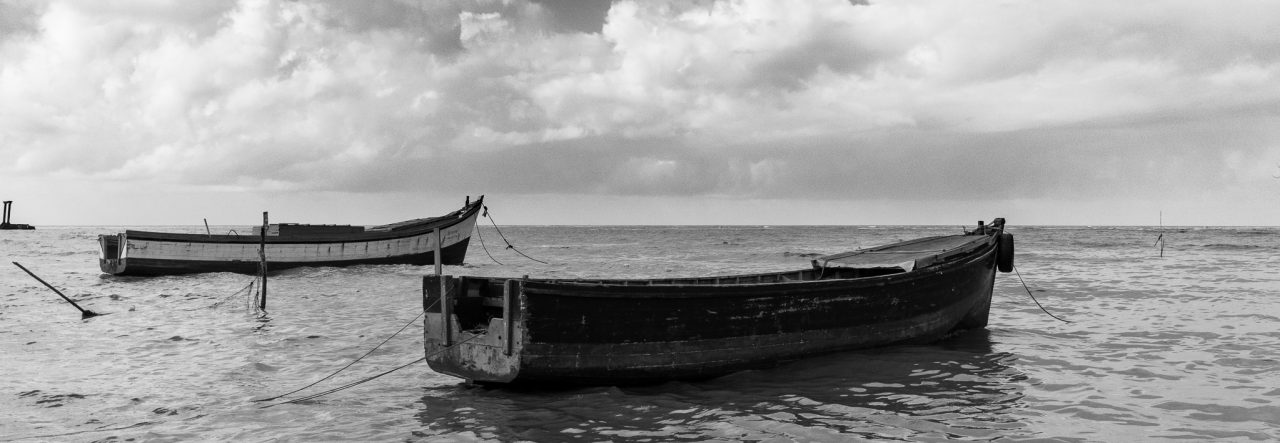
Most photographers will tell you that the worst time to go shooting outdoors is noon, with the midday sun directly overhead casting deep shadows on people’s faces, or flooding subjects with overhead light giving it very little dimension, this applies to landscapes as well… As Lady Luck would have it, that’s when I get to go outside… at midday, whether it’s to accompany Nikhil on his walk or leaving work on a Saturday… it’s the noon sun I usually have to shoot under.

This one is not the type of thing I normally do, but something about it caught my eye and I shot it… left it to percolate for almost a year, then went back to it with fresh eyes.

Not something that many may like, but here it is anyway 🙂


Click on the image to see in the in Gallery with others from the Black and White Collection

Perception

Lately, I’ve been very busy, although depending on your point-of-view I might also have been giving priorities to the “wrong” things; for my myself, I say I’ve been busy.

I tell people that I’ve been busy, so I haven’t updated this blog, and updated the Deck Project, they look at me askance and think I’m either lying or stretching the truth, but it’s a matter of perception I suppose.

Often, what we see in a photograph is also a matter of perception, this image is one I overlooked when choosing my photo for week 9 of the Deck Project this year; when I say “overlooked”, I mean that I did not see then the potential that I saw when going back through the images the second time.

I was looking at a photograph recently of what appeared to be a woman holding a young girl lying limp across her arms, I later realized that it was a young man in her arms, but the combination of dark hair and a dark material near the head gave the long hair I usually associate (firstly) with girls, the features of the youth were very smooth and “pretty”, and he was attired in a hospital gown, all adding together to skew my perception.

I’ve also been trying to look at scenes differently and change my perspective, also altering my perception of the scene itself.  Anyway, all of this preamble is just to introduce you tot he image that I had also titled “Perception” 🙂


12:55 pm  |  Red filter  |  Canon 60D, Sigma 10-20mm lens

1/320s, f/11, ISO 100, 10mm  –  Processed in Lightroom and Nik Silver Efex


Click on the image to see it larger in the Black and White Gallery of the Collection.

Singed

Have you ever latched onto a word with unusual fascination?  When I first read or heard certain words, there was an undue fascination that I got for them, one of those was “singed”…  No, it has nothing to do with singing, so no funny quips about that 🙂  Another one was “chaos”, that one was simply because I’d read it in a book and had formed this pronounciation in my head that turned out to be completely wrong.

So… back to “singed”

It was the first week of 2014, and I was walking the seawall looking for a few photographs when I came across the piece of singed wood… it was laying across another piece of wood forming a cruciform shape, the harsh midday sun cast a strong shadow and I decided that it might make a decent photograph 🙂

I also took the opportunity to try out LightZone to process it from start to end… I finally found how to straighten the horizon in it… using the crop tool just like in LightRoom (silly me couldn’t find it the first time I was processing an image in it).  I must say, that while there are some things I miss from this piece of software, it is a very powerful application, and the integration of the changes into the saved file (JPG or TIF) makes it easy to go back and adjust the processing.

LightZone also professes to be able to work as a plugin to LightRoom, so if you just want some of the neat features in LZ, you can try it as a plugin.  For an OpenSource (read that as FREE) software, it is powerful and user-friendly, this is not a stripped down software, but a full fledged product for RAW image processing.

Now… to the image.  It probably won’t rank as a great photograph, but I liked it and it gave me a good opportunity to try out LightZone


Canon EOS 60D, Sigma 10-20mm  |  1/160s, f/9, 10mm, ISO 100


Click on the image to see it in the Gallery along with other images in the Black and White collection

2014 Deck – Week 01

Welcome back to my Deck Project, a photography project of one photo for every week of the year, giving me 52 photos for the year. (and there are 52 cards in a Deck of normal standard cards, not counting Jokers, hence the name Deck Project)

I start the year at a very familiar place, the seawalls, living on the coastland of Guyana gives us easy access to the sea and the extensive shoreline.

Recently there was a discussion about how Guyanese (among many others) prefer to use pirated software instead of paying.  This has primarily to do with a difference in income levels and the cost of many software can easily exceed the salaries of the average or even above-average Guyanese.  The cost of such popular photo-processing software as Adobe Lightroom and Corel AfterShot Pro has declined in recent years making it more affordable, but the habit of acquiring pirated copies persists.  After this discussion I remembered Nikhil posting about an Open Source photo-processing software called LightZone, and I decided to give it a good try (even though I do own and use Adobe Lightroom)

This photo for the first week of the 2014 Deck Project was processed primarily in LightZone (but since I use Lightroom to interface with my website, I used Lightroom to tag/keyword and upload the image)  LightZone is surprisingly versatile and powerful, I think I’ll be using it  a bit more to experiment with some features as well as to encourage those who can’t afford Lightroom or AfterShot to try something that’s Free but also pretty powerful.


Canon 60D, Sigma 10-20mm  |  1/125s, f/8, ISO100, 10mm

Seawalls near Thomaslands, Georgetown


Click on the image to see it in the Gallery

2013 Deck – Week 44

In recent years I’ve taken less and less Diwali photographs, probably because I choose to spend the time with my family, and seeing as we’re not Hindus, we don’t usually light up Diyas, and the area I spend the time in is not usually very well-lit.  This year was not very different, with the exception that in-laws decided to light a few Diyas, especially for the children to experience it, so I got a few photos of Diyas 🙂

As soon as I had taken this one, I knew that it would be my choice for the Deck Project, it just had the right feel for me, some people think it is simple and don’t see in it what I see, but that’s the thing about photos, every person has their own reaction, so I never usually expect people to love the ones I do.

Here’s my offering from Diwali.


Canon 60D, Canon 40mm Lens |  1/60s, f /2.8,  ISO 1600


Click on the image to see it in the Gallery

2013 Deck – Week 31

I’d hate for a week to go by and not take a photo, not only would it halt the Deck Project, but I’d personally feel empty, but some weeks, the ones I do manage to take still leave me feeling that I should have tried to find more time to go further afield looking for something “extra”

That being said, there’s always something in the few that were taken, if I look at them with “fresh eyes” or just forget about what isn’t there and concentrate on what is…  This was one of those photos that at first glance I discarded, yet when scrolling through I thought I saw something that wasn’t there before.. not sure what it is, but I felt it differently… and processed it right away with that feeling…

I hope you like it.


Click on the image for a better view in the Gallery

From the Bandstand

Sheltering from a light rainfall, I took the opportunity to snap a few photos of this gentleman walking on the wall… the rain didn’t bother him, and here he’s even taking a drink out of that bottle 🙂


Canon Rebel T1i  |  Sigma 17-50mm  |  1/640s, 17mm, f/11 ISO 400

Click on the image to see it in the Gallery along with many other images from my journey in Sepia images 🙂

Working With Wides

Well, I wanted to say “Playing with a Wide-angle Lens”, but I couldn’t resist the alliteration. 🙂

The word wide is relative, so I’ll describe how I use the terms, these are probably not industry accepted descriptions, so don’t quote me 🙂   Your basic entry-level DSLR usually comes with a kit lens that has a range of focal lengths from 18mm to 55mm, this I consider to be a wide telephoto lens, at the widest end (18mm) you get a nice wide view and at 55mm you get closer to close up of the subject, I consider somewhere around 33mm (on the crop-sensors) to be somewhere around “normal” (mind you, I’ll be talking from the stand-point of an APS-C sensor or crop sensor, a full frame or micro-four-thirds is an entirely different scenario)

Since this is the standard kit lens that most people get, we don’t often see it as wide, so that’s when we go Ultra-wide.

My favourite wide-angle lens (OK, the only one I have in the Ultra-wide category) is the Sigma 10-20mm, this produces pleasing images for me, and I love working with it.  You get some amount of distortion at the wider end (understandable) but this tends to be good in certain circumstances.

Often, in architectural photography, you can use wides and ultra-wides to capture more of the interior, and convey more of the sense of space and more of what encompasses the room.

At other times, you can use them closer to the subject to give an increased sense of distance, even accentuate the distortion by being close (do this with people’s faces, and you’ll get some weird effects)

I used the ultra-wide to capture the corner of this building (New Building Society), along with parts of the sidewalk and sky (and a pedestrian) 🙂

There are many things you can do with a wide, many of which I don’t do, I don’t normally put it right up to people’s faces and click, but I’ve seen those photos, and it’s a neat effect  🙂

What I did in this next image was to use the ultra-wide to adjust the sense of scale, I used a fire-hydrant in the foreground to dwarf a three-story building in the background.  One thing that I liked about this shot was that I didn’t have to worry about electricity wires!

The best way to see what your wide-angle lens or your ultra-wide angle lens can do is to put it on the camera and go have fun.  Sometimes it makes compositions tricky as it tends to include everything, even things you may not want, but like working with any focal-length, it’s up to the photographer to adjust framing and composition for these things.

I mentioned using wide-angle lenses for interior architecture, well I doubt if a tent falls under the category of architecture, but I suspect the engineers who came up with the idea for this tent would appreciate the use of the wide-angle for impact  🙂  And would you look at the view!  🙂


All images above were shot with the Sigma 10-20mm on a Canon body, Click on the images to see them in the Collection along with others in their respective Galleries.

2012 Deck – Week 49

As Christmas draws near, I think it is important to remember the real reason for Christmas, the birth of Jesus Christ, our Lord and Saviour, who came for one reason and one reason only, to save us, unworthy humans, whose faults and failures make life the interesting journey that it is.

Probably the most quoted verse of the Bible is from the Gospel of John, Chapter 3, Verse 16

For God so loved the world, that he gave his only begotten Son, that whosoever believeth in him should not perish, but have everlasting life.

He came to teach us how to love and how to live life through love of our fellow man (and woman), and for his teachings, for his belief, he was crucified and died for us, for our sins.

We celebrate the birth of a man who came not to live for us, but to die for us, that we may live, love and be loved!

Click on the image to see it in the Gallery, along with the other images for the Deck Project to date  🙂

2012 Deck – Week 35

In June of this year Imran Khan had done an article on the new insurgence of young (and not so young) Photographers in Guyana in the form of the Facebook Group Guyana Photographers, this was recently re-blogged on the GuyanaPhotographers.com site.  In it he mentioned that the Seawalls seem to be a favourite or default location for their “treks”, this is very true.

With most of the population of Guyana living on the Atlantic coast, this is inevitable; with the majority of (accessible) roads meandering along the coast, this is inevitable; with the majority of the coastland given over to farming (and now housing) leaving the only scenic areas being the seawalls stretching from east to west along the coast, this is inevitable.

I’m not saying that there aren’t more places that would make nice photographs, there are, they are just not as “easy” to get to.  You can read “easy” as being “not too expensive to get to”, “not too arduous to get to”, “not needing to plan a trip weeks in advance” and  ‘not requiring a four wheel drive vehicle with a winch and hi-lift” to get there.  🙂

So, for someone who has a full-time job but would still like to get a nice photograph, as Imran so accurately pointed out, the Seawall becomes the “default” location  🙂

With that said… here’s a pair of Jhandi Flags… on the sea shore, just in front of the Seawall

Click on the image to see it better in the Gallery, along with all the other entries for this year’s Deck Project.