Photography; I shoot what I like, and sometimes people like what I shoot. All photos are copyright to Michael C. Lam unless explicitly stated otherwise.
After two years of doing this, I think that this is what keeps me intrigued in photography, the weekly search for a photograph. While Nikhil has embarked upon his Daily Photography project this year (I hope he goes the full 366) I know my limitations, I won’t be trying that anytime soon.
I think that this image is somewhat appropriate to the year, the crazy Armageddon stories and to my photography. If you believe the Mayan Calendar theorists and many of the other Doomsday predictions regarding the year 2012, then you’re probably hoping, like myself, that I get some really good photographs this year! 🙂
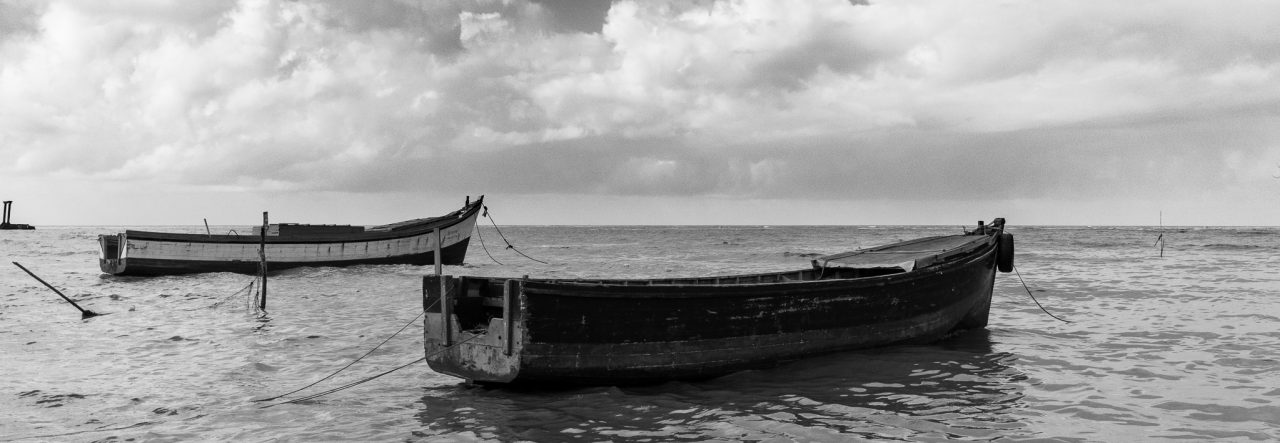
This was taken on New Year’s Day, because of my interests in HDR, I thought that I would try another Black and White HDR, this one was taken at midday, I think the originals were 2ev apart.
It was a breezy day (forgot my tripod again, so this was hand-held for all three exposures), and very overcast, lots of clouds as you can see.
Just a little ramble from me, this is not instructional in the literal sense. A fellow blogger and photographer, Nigel (or greysqrl) always asked me to write a tutorial on my monochromes and specifically my black and white photographs, but I’ve never felt that I had an “art” to it or a specific sequence of steps in the methodology to really do a tutorial type of blog, so I thought that at least I can do some rambling or musing on the subject.
Back when I shot with the Canon S5 Super-Zoom bridge camera (basically a hyped-up point-and-shoot) there were several colour modes including black and white and sepia, so I had disciplined myself to taking the scenes that appealed to me in these aspects in those modes, so I never had a full-coloured version of the photograph for any sort of comparison. So for me, the idea of a scene being in monochrome always started out before I pressed the shutter-button.
After I started using a DSLR (for now the Canon T1i or 500D) I learnt about post-processing further, using RAW images, etc. Now, I still consider many scenes in monochrome and earmark them for that specific type of processing later, but I also change my mind about some scenes that were not considered for monochrome initially.
What makes a good monochrome image? I really never thought about it, I just “feel” that some scenes make better monochromes than others. I am sure that as I continue my photographic journey I will learn more about what actually makes a good monochrome, to me it’s a “old” looking scene, or a scene with high contrasts, or in many of Nikhil’s cases one with lots of texture 🙂
How do I process a monochrome image? Since all my current images start out as full coloured, it is usually that “feel” that helps me select the ones for monochrome, either that or the new method of processing as colour and then it doesn’t quite come out the way I want and I send it over to monochrome just to see what would happen 🙂
I use Lightroom as my primary image processing and workflow application, but the majority of my monochromes are done in Nik Silver Efex (after some processing in Lightroom). I take each photo on its own merit, some need to be treated softly while others need to be more contrasty and structured. Nik Silver Efex has a range of presets that you can view easily and then do your own fine-tuning.
With scenes that have clouds (I seem to have many of those now) I always go for bringing out or enhancing the detail in the clouds. The dynamic range captured using a single exposure is not (always) a true representation of what the human eyes saw or can see. Often I would look at the scene and see the nice detail in the foreground, then look up and see the layering in the clouds, but when the photograph is taken I lose some detail, and In post=processing I try to retain that detail that I saw.
Dry Docked?
This particular photo was not intended as a monochrome image, the upper portion of the boat (or lower portion in the image, since the boat is upside down) was yellow and I had initially intended to emphasize that, but it didn’t work out as planned.
There was a challenge recently in the Guyana Photographer’s FaceBook page, it was about silhouettes, while there seemed to be various interpretations on the theme, I noticed that not everyone had the same idea of a silhouette.
Although many dictionaries seem to have similar definitions, they usually go back to the original meaning, referring to “cut-outs”, the explanation that I like the best I came across on Wikipedia (yes, I know, not always the most reliable of sources, but its accurate here), “A silhouette is the image of a person, an object or scene consisting of the outline and a basically featureless interior, with the silhouetted object usually being black”. I think this explanation covers the idea of a silhouette regardless of the medium used to illustrate it.
This image I intentionally under-exposed when I took it to capture more detail in the sky and less in the foreground and objects between myself and the horizon, although I did under-expose I apparently didn’t do so enough since I still had to adjust the black levels to get what I wanted 🙂
Although the tree-line takes prominence in this image, the real interest is the child on the wall walking into the sunset. Intentionally under-exposing the photograph is one way I know of getting the silhouettes that we try for in images like this. Getting the right exposure is important, goodness knows I’m still trying with that, but learning when to over-expose the photograph and when to under-expose it can create those moments that are more memorable than an average exposure 🙂
The Walk Home
For a better look, click on the image to see it in the Gallery.
I had shortlisted four images for this blog-post, two of them were too much in keeping with the general theme of the last few weeks, so I discarded those (for later publication) and one was somehow reminiscent of photos I’ve seen from Nikhil and some other local photogs, so I ended up with this one.
I titled it “Ritual at Dawn” because I had inadvertently caught some people in the frame, I think they may have been Hindus out to perform a seaside ritual (I think I should enquire more about this)
I was a bit dissatisfied with the original capture, but was taken enough by the scene to try to “salvage” the image. I tried a single image HDR tone-mapping, but that didn’t work out as I expected. I then decided to go for a pseudo-HDR, since I hadn’t actually taken multiple exposures, I created the multiple exposures in Lightroom (using a 1.5ev on the original image) In the image with the +1.5ev I wanted to get more detail from the rocks on the shore, so I used a gradient to adjust the exposure in that area. Using the three new exposures I did an HDR process in Nik HDR Efex Pro, and although the full-coloured resulting image was OK, I thought that in this instance I would get a better image using a black and white HDR rendering.
Sometimes we just take a walk out to the seawall for, well, a walk 🙂 We go to see the boats, walk in the water, enjoy the breeze… well, the children go walking in the water anyway.
This photo was taken on one of those walks, there’s a spot at Lusignan where the boats that have finished their day’s fishing are moored, the fishermen are finishing up their day’s work, where the catch of the day is off-loaded and packed for sale, it was at this spot we walked to, my daughter and her cousin are down at the water’s edge, and I’m walking ahead to look back and, or course, snap some photographs 🙂
I could try saying a lot more, but I think in this instance the photo can speak for itself 🙂
Last year Nikhil and I were unfortunate enough to be robbed, I did a post on it back then, although we were quite traumatised and our families admonished us to stop walking “all about the place” taking photographs, we haven’t stopped, and in that year we’ve made many more friends in the photographic circle in Guyana. Thanks to Fidal and his idea of a Group on Facebook, we have been fortunate to meet other local photographers of varying expertise and different visions, just seeing what they’ve been doing has emboldened us to see a brighter future for photography in Guyana.
As a symbolic gesture we returned to the scene of the crime, this time, with more caution, and I was armed with a monopod! 🙂
The afternoon was not ideal for me, but I decided to try an HDR looking towards the spot where we were attacked and robbed.
Return to the Scene
Click on the image for a better view in the Gallery.
On this week, I only went out to take photos on one occasion, and on that occasion I took 45 photos, and I was way odd that afternoon, most were very underexposed. It wasn’t that I wasn’t feeling in the mood, I was fairly enthusiastic, I was enjoying the fresh air, the brief walk, and the scenery, but I never once looked down at the screen to check my photos, no chimping.
I was fairly disappointed but one of them had to work 🙂 I chose one that appealed to me in a general sense and felt that it would work well in monochrome, after playing with the processing for a while I found I wasn’t getting what I felt the scene needed, so I took the file into Nik’s HDR Efex to try a single image BW tone-mapping, and amazingly got what I thought was a good final processed image. I would never consider this a true HDR, since I only used one image, but the tone-mapping of the HDR software helped bring out the details that I wanted in this image.
Since the members of the Guyana Photographers (Facebook Group) started doing PhotoWalks it has provided me with other opportunities to get out and do some photography, as well as to see and admire the photos emerging in the group from these walks, there truly is a lot of enthusiasm and talent among the members.
On one of those walks (this one was to the villages of Good Hope and Triumph, I got what I thought were good shots, then I saw what others put up and realized that mine were all just OK 🙂
I fell into the trap set by all the enthusiasm and put my better shots onto the Group’s Page, without thinking to reserve at least one for this post, so a-hunting I went through my images for one that I could use. You can check out some of the photos from the group in the 3rd Photo Walk album Facebook.
Making Time. If anyone has ever figured out how to get more hours out of the day, please let me know 🙂 Once in a while you just have to stop, and slow down. Back in August (yes I’m writing this blog several months late) I was visiting with my in-laws and we decided to take a drive/walk out to the seawall at Lusignan. I took some photos (many left to be processed) but I processed two sequences that I had intended for HDRs, and was somewhat satisfied with this one.
I think that I was still standing in the village of Lusignan, but I was looking towards Annandale, I was told that somewhere ahead of me was an area known as Courbaine Park and (probably more to the left) is an area called Sand Reef. As usual, when taking outdoor HDR images I tend to go for the clouds, there was a very nice layering and depth (or height) to the clouds.
I used Nik HDR Efex to merge and tone map the image.
Skies Over Annandale
I’m hoping to sneak in a blog post or two to catch up before the end of the year 🙂
It is not every week that I can come up with something that pleases everyone, so this week don’t expect something that pleases you 🙂 but if it does, hooray!
I went to the Essequibo Coast a few weekends back for a wedding (photos from which I don’t have permission to share as yet), I took photos other than wedding ones, so here is one from the first day there, which happened to be the last day of the 30th Week of 2011.
It seems that from the North-West region to the Corentyne Coast there is a common theme on the shores of our land, Jhandi Flags! You can’t seem to walk the beaches, sea-walls or the coastline in general without seeing them.


 The Michael Lam Collection's Blog