
A walk on the sea,
Adrift on a wayward cloud,
Awash in sunlight.
Click on the image to see it in the Collection along with others in the Black and White Gallery.
Photography; I shoot what I like, and sometimes people like what I shoot. All photos are copyright to Michael C. Lam unless explicitly stated otherwise.
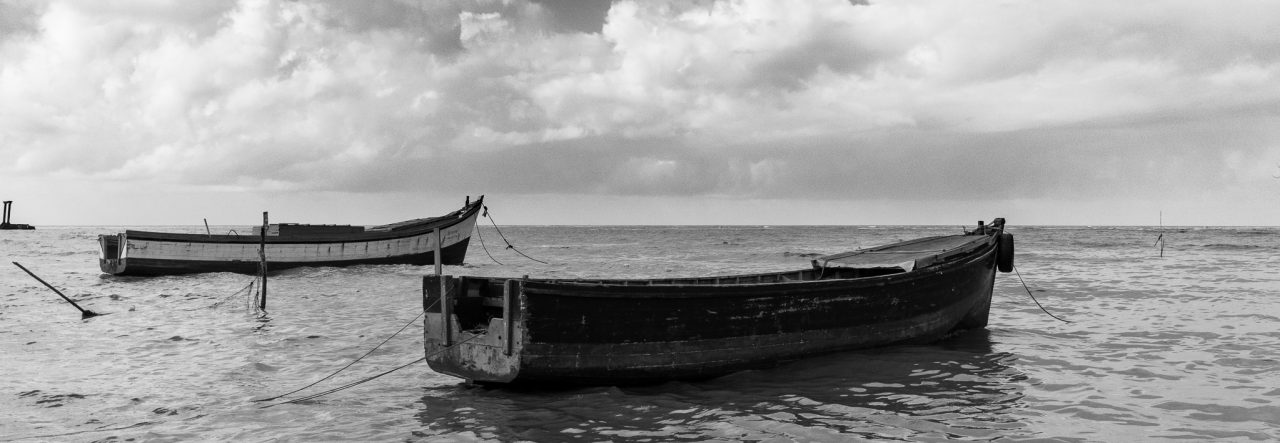
A walk on the sea,
Adrift on a wayward cloud,
Awash in sunlight.
Click on the image to see it in the Collection along with others in the Black and White Gallery.
Sometimes, its necessary to stop, let everything that’s weighing on your mind take a backseat, and just let the wind, the waves, the sun and the sand speak to you.

Canon EOS 60D, Sigma 10-20mm | Thomaslands, Georgetown, Guyana | 2015
Click on the image to see it in the Gallery along with other Black and White images
Last year sometime, someone called me to tell me that there was an old house on Regent Street that was being put up for sale, and they were letting me know just in case I wanted some photos before the new owners took over (and who would more than likely tear it down); I wish more people would call me like this actually.
I went out one Sunday morning, and took a few photos, some just to record the building, others with a more studied eye to the scene, and as usual I was always on the look-out for one or two that I think stand out from the rest; this is one of those.

Canon EOS 60D, Sigma 10-20mm | Regent & Light Streets, Georgetown, Guyana | 2015
Click on the image to see it in the Gallery
The idea that someday, someone in power would choose to make the decision to fix the beautiful structure that is Georgetown’s City Hall is likely a dream, one that may remain unfulfilled.
As it is, most of us can see that is makes more financial sense to let it fall to pieces and then put up a square unattractive concrete block of a building with no character and no appeal, probably all because of years of neglect, and the squandering of taxpayers monies.
Should it be fixed? That depends on your view I suppose. Guyana’s tourism depends largely on natural wonders like Kaieteur and the animals of the rainforest, as well as upon the old-world Victorian/Colonial architecture that is still evident in many structures along the “Heritage Trail”, but are our tourist numbers enough to justify spending millions of dollars on rehabilitating this beautiful building?
What would I know? I’m just a citizen 🙂

Canon EOS 60D, Sigma 10-20mm | City Hall, Georgetown, Guyana. 2015
Click on the image to see it in the Gallery
I don’t do a lot of sunrise or sunset photos anymore, I guess unless there is something particularly appealing to use with it it’s just another sunrise or sunset to me, and that is probably a sad thing, as they are beautiful moments.
I was on a little impromptu photowalk with Fidal and another photog last year, it was actually Halloween day; we stopped at the seawall at Victoria village before continuing on to Mahaica and I took a few photos there, one of which I’ve come to like. It really is nothing spectacular, but the composition, the pastel colours and the sunrise moment gives it a nice peaceful vibe 🙂

Canon EOS 60D | Sigma 10-20mm | Victoria Dawn 15-0355 | Victoria Village, East Coast Demerara
Of course, those who know my work, will know that to see a landscape in colour (especially along the seawall) is a rarity these days 🙂
Click on the image to see it in the gallery.
Whether it’s over the coastal villages, the riverain areas, the open savannahs or the mountains, seeing a bird soaring gives a sense of freedom, a sense of wonder, a sense of space.
Of course, that might be just me.
Somewhere along the trip, my friend (a bit hard to believe I’ve known her since primary school days) Praharshanie mentioned she had loved one of Nikhil’s photos of a bird over the mountains, and that I should take one. I have probably taken a few over the years, but none that really worked for me. We were sitting on the benches by Charlie’s place at Yakarinta when we saw this scene, and of course, camera(s) in hand I set to shooting a few frames to see what I could get.
So, I like this one enough to share. 🙂

March 2016 | Canon EOS 6D, Canon EF 24-105 | Yakarinta, North Rupununi, Guyana
Click on the image to see it in the Gallery
I was reading somewhere recently (online) a caption for a photograph that said “crossing Kurupukari” and it occurred to me that some people probably genuinely think that the river that they are crossing with the pontoon/ferry is actually called Kurupukari – the river is none other than the mighty Essequibo.
Kurupukari is apparently the historic name of the Amerindian village now known as Fairview, which happens to be the only Amerindian village located within the Iwokrama Rainforest Programme Site. The rapids or waterfalls seen near the “crossing” is referred to as the Kurupukari Rapids or Kurupukari Falls, the area on either side of the river where the pontoon/ferry and boats come ashore is/are referred to as the Kurupukari Landing; this landing allows for the transport of vehicles across the Essequibo River along the Linden-Lethem Trail / Road.
I’ve taken many photos at the crossing, as have many other people, it has a scenic quality that is endearing but not necessarily easy to capture on camera. While photographing it this last March I realized what was one of the things that I loved about it, it was the openness, the width of the river, the wide expanse of sky above. In this photo I try to convey that sense of openness and also the scale (there’s a boat/canoe crossing the river).

Canon EOS 60D, Sigma 10-20mm | Essequibo River, Kurupukari, Guyana, 2016
Click on the image to see it in the Gallery
Shooting in a Rainforest can be fun, rewarding even, but there are some parts of Guyana that are not quite rainforest, where the variety of trees forms a tangle of verdant threads in a patchwork green tapestry, and it’s hard to take a photograph to show the scale or the beauty… this is where I like to think is the type of area most Guyanese generally call “the bush”; although to most of us coastland dwellers, the “bush is anywhere beyond the towns that have visible treelines blocking your view 🙂
This one was taken just past 58 Mile, Mabura area. Even in this quick snap you can see a fair variety in the trees, of note is the scale of the vegetation to the vehicle disappearing up the road.

Canon EOS 6D, Canon EF 24-105 f/4L
Click on the image to see it in the Gallery.
The physical structure that believers gather within to offer thanks and praise to a higher being, their God, is often referred to as a church, temple, masjid, mandir, among many other names; but to me this is simply a shelter over the heads of those gathering; growing up as a Roman Catholic we are taught that the church is the people, yet we all refer to the building as the church 🙂
At 58 Mile, Mabura, along the Lethem trail there’s a church building that I almost always photograph in passing, I’ve meant to walk over on more than one occasion, but never did. I don’t know which Christian denomination it belongs to, but seeing a quaint little church against the backdrop of the forest usually makes me think if we were seeking a “place” to gather and worship, maybe out in the open among God’s creation is where it can be every once in a while, to remind us of the wonders of this home we call earth and the God who we believe created it and us.

Church at 58 Mile, Mabura. | Canon EOS 6D, Canon EF 24-105mm L
Another church that has caught my eye a few times as we travel through the Pakaraima mountains is the RC Church of St Francis of Assisi at Rukumuta village in the Pakaraima Mountains. I have photographed it a few times but never caught the essence of it, I think this time I may have done it justice, although I excluded the building entirely (it’s to the right of the end of the frame of the photograph) I think that the idea of a church sitting here, feels right.

St Francis of Assisi RC Church, Rukumuta, Pakaraims Mountains, Guyana.
Canon EOS 60D, Sigma 10-20mm
I’ve often heard people complain about how the missionaries to the third world forced people to convert to Christianity, and while the idea certainly doesn’t sit well with me, the Amerindian people whom I have met, who are Christian never said anything about it, they don’t seem to dwell upon it like some westerners seem to, but I am sure that if the old beliefs are still there in some villages, I do hope that someone is keeping them up and recording them.
This reminded me of something I read last Sunday, about Saint Casilda. According to legend, around the end of the first millennium, she was the daughter of a Muslim King, despite the conflict between Christians and Muslims she showed great kindness to the Christian prisoners. She reportedly was cured of an illness while still a young woman by the healing waters from the shrine of San Vicente, and converted to Christianity soon after.
As I see it, she simply changed her method of worship, not her way of living nor the God she worshiped. Is it possible for us to be open-minded about the existence of God, and the possibility that no matter what we call him/her, no matter what methods we use to praise God, that we can all be one people, that anyone showing kindness to another can be acknowledged for it and accepted as a fellow human being?
Click on the images to see them in the Collection along with other images in the Sepia Gallery.
 If you find it easy to choose photographs for display, exhibition or publication, then you’re likely not approaching it the right way; unless you’ve had many years experience in critically eliminating pieces, I doubt it would ever be easy.
We all have some emotional attachments to the photographs we take, and we have favourites for periods of time, then those favourites change as we add new pieces to our collection, or our styles of photography evolves.
When I started uploading photos online to show family and friends, it was always the pretty photos, this was what photography was for me at the time, all about getting as many pretty photos that others might appreciate, after all, why else would I take photos, right?
As I continued learning about Photography as Art and the Art of Photography, my ideas of what I wanted included in the photograph changed, and the photos changed along the way. As I keep learning, I am sure the photos will continue to evolve (whether they get better or worse is up in the air at this point).

In late 2011, local journalist Neil Marks convinced the board of the National Art Gallery at Castellani House to host an exhibition of photographs by Nikhil Ramkarran and myself; this was, at the time, the most important decision making we would have to do photographically, deciding what to exhibit. After consultations with Ms Bissember, the curator at the time, we decided on a common theme that would not have us showing any and everything, but still allow for some latitude to accommodate the diverse style and subject matter of two photographers; titled “Coastal Wanderings”, it allowed us to use imagery taken along the coastal regions of Guyana (although a few non-coastal images did sneak in)
 Looking back, I can see my inexperience at the decision making process clearer, but it had a combination of the pretty pictures as well as some that had a bit more depth artistically. Georgetown and the East Coast of Demerara featured heavily, as that is where most of my photography is done.
Collectively, I think my photos were incoherent, there was no thread that really connected them together well unless you really stretched your imagination. It was a first showing of the photographs that my friends and family knew me for, with images ranging from Mashramani, to buildings, to flora and fauna, to landscapes; styles ranging from colour to black and white, standard single shot images to multi-exposure High Dynamic Range images, to a multi-image stitched panorama; in short, everything but the kitchen sink.
I don’t regret my choices, it allowed me to learn, especially from the comments made by all, from regular folk just visiting the exhibition to artists giving their own insight into what they saw.
In 2012, there was a return to the arts for the Government as they jump-started the once-abandoned Visual Arts Competition, and this time Photography was included as a category; this was big! Other than small scale self-serving photography competitions hosted by companies or organisations that were often geared solely to acquiring images for their use, there had never been a proper photography competition that treated the works as art.
 The problem of choosing three images from all that I had taken in the last 5 years was immense. What would the judges be looking for? What were their ideas concerning photography? Would they approach it as most people do and look for the pretty pictures, did they want more abstract type images, what type of subject matter may most impress them? At the time, it was impossible to decide, so I pretty much played it safe. I submitted the ever beautiful
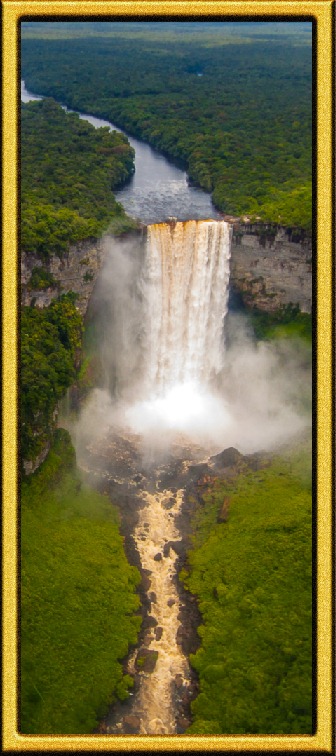
  Kaieteur, this was the obvious “pretty picture”, the other two were different, one was “Shooting the Breeze”, a semi-silhouette styled image taken on the sea-wall, and the third was a black and white titled “Final Entrance Opening” that was a personal favourite at the time, this eventually went on to be awarded the Bronze medal.
So, what did I learn this time? For one, these judges were not looking at the photographs as photographs, they were looking at them as works of art, and that they were not interested in something that is just a pretty picture; sunsets and sunrises, flowers and bright colours were not as effective because they lacked the compositional elements and execution that would have made them better works of art, and not just a pretty picture.
The first competition to focus solely on Photography was hosted by the government in 2014, it was done as part of the Republic Celebrations, and called “Capture Guyana”; this time the tables had been turned on me, and I was asked to be a part of the judges’ panel; I thought that this time, since it is not my photographs, it should be easier to decide, after all, I can look at them without having had any emotional attachment to any of the images. This was not the case. Being part of the Guyana Photographers’ group exposed me to the works of many talented individuals, and as we all mostly share our best works, when the submissions were in, I found that I had previously seen the majority of entries.

Having another photographer, formally trained in the genre, and an artist who was not a photographer on the panel made the decision easier; discussions ranged from photographic techniques used, to composition, to the effective use of colour or black-and-white, and many other aspects of the images themselves.
How did we, as judges, choose the best? I had learnt some things from the 2012 GVACE, so we approached it as “art”, even taking into consideration the photographic techniques used, the primary consideration was “art”; composition, use of colour, subject matter, lighting, and the other usual suspects.
Whenever there were photographs that I had deeper knowledge of than I thought appropriate, I deferred decision to the other judges, while I think I can be impartial, it was better to be safe and not let my opinions have more weight than they should.
 Also in 2014, there was the next iteration of the GVACE, having gone through the choice process for the 2012 GVACE, as well as being involved in the judging process for Capture Guyana, I felt I had a better handle on choosing my images. Of course, that pesky emotional attachment is almost impossible to over-ride.
I had recently started my first photography project, something I called Oniabo, something that not many people knew I was doing, since I was not sure where I was going with it myself.
I chose one image from the Oniabo core collection titled “Elemental – 5549”, and one from the extended collection titled “Trident’s Wrath”, both monochrome or black and white images as that is part of the Oniabo theme, and the third image was a pretty picture, one that was sure to garner some attention, a diya and pointer broom, a very Guyanese image I think, titled “Diwali”
As you can tell, I also tried to play it safe as this was sure to be a different panel of judges than the one two years prior, and maybe, just maybe, a pretty photo might be what they’re looking for, I was wrong again. Although I thought that Trident’s Wrath was more impacting, I knew deep down that the best of the three was “Elemental”; which earned a spot in the short-list of finalists.
 Here’s the thing, you can’t predict what a panel of judges may like, unless you know beforehand exactly who they are, and their personal preferences when it comes to art. The judges from the GVACE 2012 and the judges from the GVACE 2014 chose distinctly different winners, in content and in the type of image executed by the photographers.
Do I know what I may enter this year? Frankly, no. I think I have one in mind, but three? not yet.
Chose wisely when composing, chose wisely when executing the photo, choose wisely when processing, choose wisely when printing and framing; any photograph that you consider entering is a totality of these things. Personally, once I have the first three covered, I’m happy, but the final product is something that you are presenting, so the printing and framing are important, you do after all want someone to look at it and say “I’d like to hang that on my wall!”

Click on the images to see them in the collection.
 The Michael Lam Collection's Blog