2013 Deck – Week 05

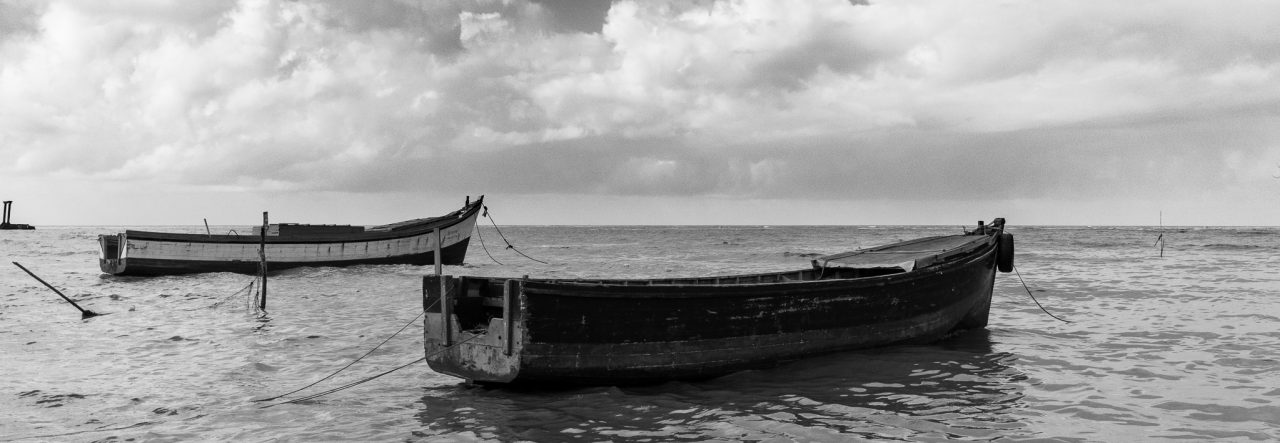
Maybe it’s because I am a coast-lander that I feel the draw of the sea, but I keep going to the seawalls, if not for a photograph then just to feel the breeze, and hear the sounds of the waves.

This photo was taken at Ebb Tide, when the tide was beginning to recede from the shores, and as I stood there I could feel the wind around me, hear the sound of the waves as the crashed upon this rock and smell the salt in the air (which was probably not good for the camera)


As always, click on the image to see it in the Gallery

2013 Deck – Week 03

Although I like to think of myself as a photographer who likes to take Landscape photos, there is not a lot of scope for that living in the city, but I’ve always had an interest in capturing images of buildings, especially old ones that may not survive due to neglect or just continued development (or any number of other reasons)

During the third week of the year, I had an inexplicable desire to take some photos of St Rose’s High School, just before attending a presentation by Hew Locke (an artist with some amazing work), Nikhil and I took a walk around the block, and I got my chance to take a few images.

To emphasize the building more, I used an “orange filter” setting whilst processing, this darkened the sky and made the building more pronounced.  Although I did not intend to combine “street photography” into it these two boys strolled past just as we were there.

As always, click on the image to see it in the Gallery


2013 Deck – Week 02

During week two of this year, I actually used at least three of my lenses, including the ultra-wide Sigma 10-20mm.  On Friday, Fidal had arranged that we meet for a drink near Ogle, but before we went,  he and Rosh suggested we go to the seawall nearby to get in a few shots 🙂 (we were joined by Savita and TJ, if you must know)

As it turned out, that was a pretty good idea, there was a lovely sky above and some unusual streaming clouds (probably from the jets passing), and I got down into the grass to get a low perspective shot.


While processing it I remembered a song that I probably hadn’t heard since I was much younger, I had come across it on an LP my father had, it was called “Grazing in the Grass” by Friends of Distinction; it was one of those 70s songs, and I didn’t understand the lyrics then, and I don’t quite understand them now (yes I went and listened to it again), but then, I probably need to be high on something for those lyrics to make sense to me.  You can check the song out for yourself  🙂

As always, click on the image to see it in the Gallery.

Working With Wides

Well, I wanted to say “Playing with a Wide-angle Lens”, but I couldn’t resist the alliteration. 🙂

The word wide is relative, so I’ll describe how I use the terms, these are probably not industry accepted descriptions, so don’t quote me 🙂   Your basic entry-level DSLR usually comes with a kit lens that has a range of focal lengths from 18mm to 55mm, this I consider to be a wide telephoto lens, at the widest end (18mm) you get a nice wide view and at 55mm you get closer to close up of the subject, I consider somewhere around 33mm (on the crop-sensors) to be somewhere around “normal” (mind you, I’ll be talking from the stand-point of an APS-C sensor or crop sensor, a full frame or micro-four-thirds is an entirely different scenario)

Since this is the standard kit lens that most people get, we don’t often see it as wide, so that’s when we go Ultra-wide.

My favourite wide-angle lens (OK, the only one I have in the Ultra-wide category) is the Sigma 10-20mm, this produces pleasing images for me, and I love working with it.  You get some amount of distortion at the wider end (understandable) but this tends to be good in certain circumstances.

Often, in architectural photography, you can use wides and ultra-wides to capture more of the interior, and convey more of the sense of space and more of what encompasses the room.

At other times, you can use them closer to the subject to give an increased sense of distance, even accentuate the distortion by being close (do this with people’s faces, and you’ll get some weird effects)

I used the ultra-wide to capture the corner of this building (New Building Society), along with parts of the sidewalk and sky (and a pedestrian) 🙂

There are many things you can do with a wide, many of which I don’t do, I don’t normally put it right up to people’s faces and click, but I’ve seen those photos, and it’s a neat effect  🙂

What I did in this next image was to use the ultra-wide to adjust the sense of scale, I used a fire-hydrant in the foreground to dwarf a three-story building in the background.  One thing that I liked about this shot was that I didn’t have to worry about electricity wires!

The best way to see what your wide-angle lens or your ultra-wide angle lens can do is to put it on the camera and go have fun.  Sometimes it makes compositions tricky as it tends to include everything, even things you may not want, but like working with any focal-length, it’s up to the photographer to adjust framing and composition for these things.

I mentioned using wide-angle lenses for interior architecture, well I doubt if a tent falls under the category of architecture, but I suspect the engineers who came up with the idea for this tent would appreciate the use of the wide-angle for impact  🙂  And would you look at the view!  🙂


All images above were shot with the Sigma 10-20mm on a Canon body, Click on the images to see them in the Collection along with others in their respective Galleries.

Expression

During this season when many people wish for World Peace, Goodwill among Men, we also see many young lovers finding new ways to express their love for each other.

Many novels and movies have lines like “I’ll shout it to the Heavens”, but it seems that in Guyana, we have a new method… “I’ll paint it on the Seawall!”

Some man (or woman, we are living in a new age) seriously meant for the subject of their amorous intent to see the writing on the wall  🙂

Click on the image above to see it in the Gallery along with other images done using the HDR (High Dynamic Range) multiple exposure method.


This image is an HDR composite of three exposures, I stood there waiting for the traffic to clear long enough for the three exposures  🙂


A Photo’s Worth

Recently, Dwayne Hackett posted a question on Facebook, looking to garner from others what they thought, “What is a picture worth?”, and of course at least one person used the old adage of “a thousand words”.  I am sot certain of Dwayne was trying to get at philosophical or monetary answers  🙂

For more than a century we’ve heard that a picture is worth a thousand words, usually meaning that a complex idea can be expressed in a single image, but what is a photo actually worth?  My answer was “A photo’s worth is weighed differently by each viewer, it depends on how the photo affects them.”  For me this answer works for both the philosophical and monetary.

The most expensive Photograph on record (as of today) is the Rhein II by Andreas Gursky, which sold at auction last year for $4.3 Million, the cheapest may be that passport sized one you recently got for your American Visa Application 🙂  Which one is worth more?  To the Visa applicant, it is certainly the passport sized one, without which they can’t submit the forms, to an artist, the Rhein II certainly surpasses the “mug-shot” 🙂

While the simplicity and boldness of the Rhein II appeals to my artistic senses, a photo that sold for one-seventh of its value appealed to me much more, that would be Ansel Adams’ “Moonrise”, but that is because of how that photo affects me, and so I find more “worth” in that image.

Last year I dealt with this similarly in my post for the 23rd Week of the Deck Project, you can check it there for reference  🙂

I had taken this photo while on a walk with Nikhil and Sharon, hen I had downloaded the images, I had decided that this one was not going to make the cut, and left it aside, but after Dwayne’s question, something sparked an interest in the image.  I had used ISO500, I had shot into the sun, and I had done this dangling the camera downward simply because I was too lazy to get down in the rocks to properly compose the image, so I wasn’t enthusiastic about it  🙂

I didn’t think the resulting image was worth my time and effort to process, but I went back and while it is grainy from the high ISO and from the subsequent processing, I like it.  It may not have the same impact on a Christian as it would on a Hindu, it would not have the same effect on a North American as it would on someone from the Caribbean, each would decide it’s worth, it’s value as a photograph differently.  For many this may be worthless, for me, it was worth saving, worth the time and effort in processing, and if anyone reading this blog-post realizes the worth in their own photos, then this blog-post was worth writing.

2012 Deck – Week 35

In June of this year Imran Khan had done an article on the new insurgence of young (and not so young) Photographers in Guyana in the form of the Facebook Group Guyana Photographers, this was recently re-blogged on the GuyanaPhotographers.com site.  In it he mentioned that the Seawalls seem to be a favourite or default location for their “treks”, this is very true.

With most of the population of Guyana living on the Atlantic coast, this is inevitable; with the majority of (accessible) roads meandering along the coast, this is inevitable; with the majority of the coastland given over to farming (and now housing) leaving the only scenic areas being the seawalls stretching from east to west along the coast, this is inevitable.

I’m not saying that there aren’t more places that would make nice photographs, there are, they are just not as “easy” to get to.  You can read “easy” as being “not too expensive to get to”, “not too arduous to get to”, “not needing to plan a trip weeks in advance” and  ‘not requiring a four wheel drive vehicle with a winch and hi-lift” to get there.  🙂

So, for someone who has a full-time job but would still like to get a nice photograph, as Imran so accurately pointed out, the Seawall becomes the “default” location  🙂

With that said… here’s a pair of Jhandi Flags… on the sea shore, just in front of the Seawall

Click on the image to see it better in the Gallery, along with all the other entries for this year’s Deck Project.

“Par” for the course

In October of 2009, I witnessed my second Parhelion, or Sundog, a natural phenomena, it wasn’t anything spectacular as those you see in the more northern or southern regions, but a complete halo around the sun, really large halo.

They are apparently caused by the effect of the sunlight passing through ice-crystals in the air (we’re in the tropics, ice-crystals??).  In the photo above, you can see the relative size compared with the portion of Central Garage’s building sticking out of the corner  🙂

A few nights ago, my friend Savita messaged me asking if I’d seen the moon that evening, on looking, I was amazed to see the same effect with the moon, called a Parselene.

Given my experience with lunar sky photography, I did not expect a great image out of it, so I’d say this one is just about par for the course  🙂

It may be difficult to see, depending on your monitor’s calibration  🙂  With the naked eye, I could actually see the rainbow of colours in the halo, off to the right of the image is the power-line to my house  🙂

As always, click on each image to see them better in the Gallery.