
A walk on the sea,
Adrift on a wayward cloud,
Awash in sunlight.
Click on the image to see it in the Collection along with others in the Black and White Gallery.
Photography; I shoot what I like, and sometimes people like what I shoot. All photos are copyright to Michael C. Lam unless explicitly stated otherwise.
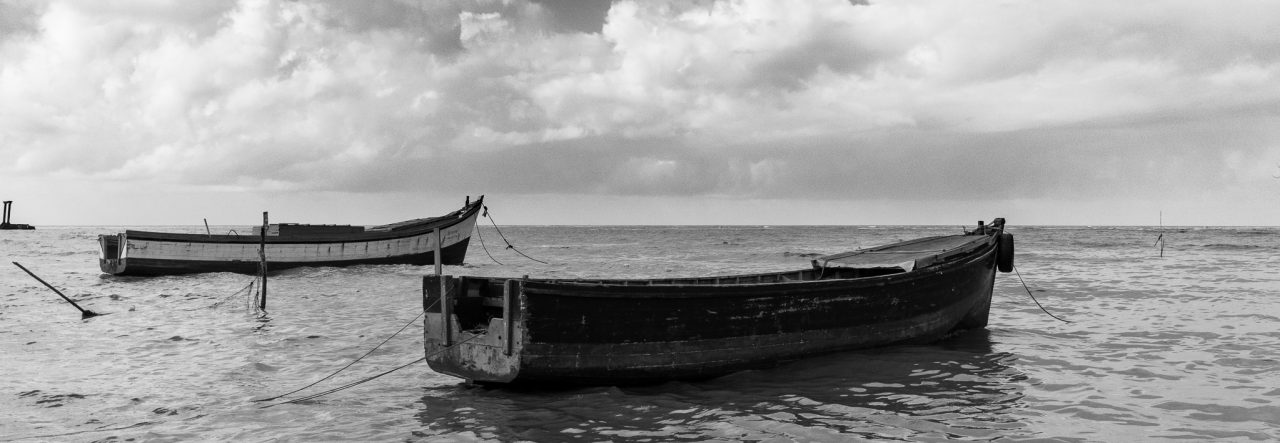
A walk on the sea,
Adrift on a wayward cloud,
Awash in sunlight.
Click on the image to see it in the Collection along with others in the Black and White Gallery.
Sometimes, its necessary to stop, let everything that’s weighing on your mind take a backseat, and just let the wind, the waves, the sun and the sand speak to you.

Canon EOS 60D, Sigma 10-20mm | Thomaslands, Georgetown, Guyana | 2015
Click on the image to see it in the Gallery along with other Black and White images
I don’t do a lot of sunrise or sunset photos anymore, I guess unless there is something particularly appealing to use with it it’s just another sunrise or sunset to me, and that is probably a sad thing, as they are beautiful moments.
I was on a little impromptu photowalk with Fidal and another photog last year, it was actually Halloween day; we stopped at the seawall at Victoria village before continuing on to Mahaica and I took a few photos there, one of which I’ve come to like. It really is nothing spectacular, but the composition, the pastel colours and the sunrise moment gives it a nice peaceful vibe 🙂

Canon EOS 60D | Sigma 10-20mm | Victoria Dawn 15-0355 | Victoria Village, East Coast Demerara
Of course, those who know my work, will know that to see a landscape in colour (especially along the seawall) is a rarity these days 🙂
Click on the image to see it in the gallery.
 If you find it easy to choose photographs for display, exhibition or publication, then you’re likely not approaching it the right way; unless you’ve had many years experience in critically eliminating pieces, I doubt it would ever be easy.
We all have some emotional attachments to the photographs we take, and we have favourites for periods of time, then those favourites change as we add new pieces to our collection, or our styles of photography evolves.
When I started uploading photos online to show family and friends, it was always the pretty photos, this was what photography was for me at the time, all about getting as many pretty photos that others might appreciate, after all, why else would I take photos, right?
As I continued learning about Photography as Art and the Art of Photography, my ideas of what I wanted included in the photograph changed, and the photos changed along the way. As I keep learning, I am sure the photos will continue to evolve (whether they get better or worse is up in the air at this point).

In late 2011, local journalist Neil Marks convinced the board of the National Art Gallery at Castellani House to host an exhibition of photographs by Nikhil Ramkarran and myself; this was, at the time, the most important decision making we would have to do photographically, deciding what to exhibit. After consultations with Ms Bissember, the curator at the time, we decided on a common theme that would not have us showing any and everything, but still allow for some latitude to accommodate the diverse style and subject matter of two photographers; titled “Coastal Wanderings”, it allowed us to use imagery taken along the coastal regions of Guyana (although a few non-coastal images did sneak in)
 Looking back, I can see my inexperience at the decision making process clearer, but it had a combination of the pretty pictures as well as some that had a bit more depth artistically. Georgetown and the East Coast of Demerara featured heavily, as that is where most of my photography is done.
Collectively, I think my photos were incoherent, there was no thread that really connected them together well unless you really stretched your imagination. It was a first showing of the photographs that my friends and family knew me for, with images ranging from Mashramani, to buildings, to flora and fauna, to landscapes; styles ranging from colour to black and white, standard single shot images to multi-exposure High Dynamic Range images, to a multi-image stitched panorama; in short, everything but the kitchen sink.
I don’t regret my choices, it allowed me to learn, especially from the comments made by all, from regular folk just visiting the exhibition to artists giving their own insight into what they saw.
In 2012, there was a return to the arts for the Government as they jump-started the once-abandoned Visual Arts Competition, and this time Photography was included as a category; this was big! Other than small scale self-serving photography competitions hosted by companies or organisations that were often geared solely to acquiring images for their use, there had never been a proper photography competition that treated the works as art.
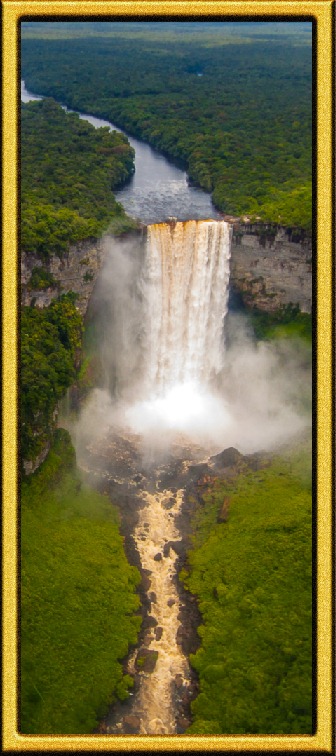
 The problem of choosing three images from all that I had taken in the last 5 years was immense. What would the judges be looking for? What were their ideas concerning photography? Would they approach it as most people do and look for the pretty pictures, did they want more abstract type images, what type of subject matter may most impress them? At the time, it was impossible to decide, so I pretty much played it safe. I submitted the ever beautiful
  Kaieteur, this was the obvious “pretty picture”, the other two were different, one was “Shooting the Breeze”, a semi-silhouette styled image taken on the sea-wall, and the third was a black and white titled “Final Entrance Opening” that was a personal favourite at the time, this eventually went on to be awarded the Bronze medal.
So, what did I learn this time? For one, these judges were not looking at the photographs as photographs, they were looking at them as works of art, and that they were not interested in something that is just a pretty picture; sunsets and sunrises, flowers and bright colours were not as effective because they lacked the compositional elements and execution that would have made them better works of art, and not just a pretty picture.
The first competition to focus solely on Photography was hosted by the government in 2014, it was done as part of the Republic Celebrations, and called “Capture Guyana”; this time the tables had been turned on me, and I was asked to be a part of the judges’ panel; I thought that this time, since it is not my photographs, it should be easier to decide, after all, I can look at them without having had any emotional attachment to any of the images. This was not the case. Being part of the Guyana Photographers’ group exposed me to the works of many talented individuals, and as we all mostly share our best works, when the submissions were in, I found that I had previously seen the majority of entries.

Having another photographer, formally trained in the genre, and an artist who was not a photographer on the panel made the decision easier; discussions ranged from photographic techniques used, to composition, to the effective use of colour or black-and-white, and many other aspects of the images themselves.
How did we, as judges, choose the best? I had learnt some things from the 2012 GVACE, so we approached it as “art”, even taking into consideration the photographic techniques used, the primary consideration was “art”; composition, use of colour, subject matter, lighting, and the other usual suspects.
Whenever there were photographs that I had deeper knowledge of than I thought appropriate, I deferred decision to the other judges, while I think I can be impartial, it was better to be safe and not let my opinions have more weight than they should.
 Also in 2014, there was the next iteration of the GVACE, having gone through the choice process for the 2012 GVACE, as well as being involved in the judging process for Capture Guyana, I felt I had a better handle on choosing my images. Of course, that pesky emotional attachment is almost impossible to over-ride.
I had recently started my first photography project, something I called Oniabo, something that not many people knew I was doing, since I was not sure where I was going with it myself.
I chose one image from the Oniabo core collection titled “Elemental – 5549”, and one from the extended collection titled “Trident’s Wrath”, both monochrome or black and white images as that is part of the Oniabo theme, and the third image was a pretty picture, one that was sure to garner some attention, a diya and pointer broom, a very Guyanese image I think, titled “Diwali”
As you can tell, I also tried to play it safe as this was sure to be a different panel of judges than the one two years prior, and maybe, just maybe, a pretty photo might be what they’re looking for, I was wrong again. Although I thought that Trident’s Wrath was more impacting, I knew deep down that the best of the three was “Elemental”; which earned a spot in the short-list of finalists.
 Here’s the thing, you can’t predict what a panel of judges may like, unless you know beforehand exactly who they are, and their personal preferences when it comes to art. The judges from the GVACE 2012 and the judges from the GVACE 2014 chose distinctly different winners, in content and in the type of image executed by the photographers.
Do I know what I may enter this year? Frankly, no. I think I have one in mind, but three? not yet.
Chose wisely when composing, chose wisely when executing the photo, choose wisely when processing, choose wisely when printing and framing; any photograph that you consider entering is a totality of these things. Personally, once I have the first three covered, I’m happy, but the final product is something that you are presenting, so the printing and framing are important, you do after all want someone to look at it and say “I’d like to hang that on my wall!”

Click on the images to see them in the collection.
I saw this recently, but I didn’t get a great shot…. I have to go back at different times of day and different lighting situations… it has some potential…

Remains | Canon EOS 60D, Sigma 10-20mm
Click on the image to see it in the Gallery
A different scent
in the air,
sounds of birds,
fishermen toil;
Clouds adrift
upon the horizon,
a distant sun
in heaven’s vault.
The moon upon
the oceans pull,
the fish upon
the tide at play;
Meandering shore,
of rocks and
mangroves,
shore of sand,
mud and life,
Oniabo I hear,
the sea, it calls,
Oniabo I fear,
the sea, it calls!
Oniabo is the name I have given to a currently ongoing Black and White Seascape collection of photographs. Oniabo is an Arawak word meaning “water”; the selection that I used for a presentation at Moray House Trust can be seen here.
A video of that presentation can be seen alongside other presentations of The Photography Sessions at Moray House Trust at www.ThePhotographySessions.com

Oniabo 15-0380 | Canon EOS 60D, Sigma 10-20mm
Click on the image to see it in the Gallery along with other images from this year’s Deck Project
A walk on the seawall… or at this point, the dam that has rocks beyond it.
Maybe not appealing on an artistic level to many, but to Guyanese, it has some appeal 😀

Saturday 1 | Instagram | Samsung Galaxy S5 Mini Duos
Click on the image to see it in the Gallery
My Jhandi addiction continues, I just find them visually appealing. Of course, getting a shot of them that doesn’t look like ones I’ve already taken is getting more and more difficult.
This one was a toss up between this coloured portrait oriented version and a landscape oriented BW processed one, but the coloured one appeals to me on a different level, even though I tend towards the BW because I had originally intended the landscape ones as such because of the textures and contrast in the water / foam of the sea.
I hope you like it.

Canon 60D, Sigma 10-20mm | 1/125s @ f/8.0, ISO100 (10mm)
Click on the image to see it in the Gallery
Alone & Waiting
Somewhere on the inter-tidal plains
Sitting, waiting…
For Selene to pull
and mother Earth to roll.

Canon EOS 60D | Sigma 10-20mm
Click on the image to see it in the Gallery
I climbed onto the seawall to see what I could photograph, and a voice coming from near my feet surprised me. This fellow was packing up some items in a bag. He thought I was a foreigner, but the minute I answered him he realised I was local.
According to him, he has lived along the seawall for most of his life, he doesn’t have a regular job, he does odd-jobs, but he says he finds everything he needs to survive right there on the seawalls. Although I’m not sure about him finding “everything”, I saw no reason to doubt he finds most of what he needs 😀
Life on the wall 15-0143 | Georgetown Seawall, Guyana
Canon EOS 60D, Sigma 10-20mm Lens
Click on the image to see it in the Gallery
 The Michael Lam Collection's Blog