Pro – defining and refining

Twice in recent times, I’ve been accused of being a “Pro”, as in a Professional Photographer, and both times I’ve been taken aback by it.  Me? a Pro?  Surely they don’t think so!

The first time was on a public discussion on the Guyana Tourism Authority’s Facebook page where we were discussing their Photography Competition, the unfairness of one of the “rules” and the general direction of the competition, the individual calling me a Pro thought that because I was a known name in Photography in Guyana I should not be questioning the rules of the competition (open only to amateur photographers), and stay out of it.  I humbly submit that I am not a known name… stop ten people on the street and ask them if they know Michael Lam, and they’ll all probably ask “Who?”  In the small, but growing, Photography world locally, yes, my name is known alongside those of Nikhil Ramkarran, Dwayne Hackett, Fidal Bassier, Ryan Dos Santos, Amanda Richards, Roshanna Mahadeo, Compton Sarabo, Vishnu Persaud, Philip Williams, Avinash Richard and countless others (sorry if I missed anyone).

The second time was in a newspaper article that covered the recently concluded Guyana Visual Arts Competition and Exhibition, in which I gained the Bronze Medal in the Photography category, the reporter referred to me as “Pro photographer Michael Lam”, again I felt that it was a distinction I could not accept or live up to.

Who is a Professional?  Generally you need to meet certain criteria to be a Professional:

“Expert and specialized knowledge in field which one is practicing professionally” I don’t possess that knowledge, certainly not to a degree to be teaching it or express an “expert” opinion on it, so that one is out.

“Excellent manual/practical and literary skills in relation to profession”, same as the first, not me!

“High quality work in Photography”, OK, if it’s good enough for the National Art Gallery at Castellani House to exhibit, then I suppose I have to acquiesce to this one

“A professional is an expert who is a master in a specific field”, definitely not me, oh no!

Let’s get specific to a Professional Photographer:  A professional photographer uses photography to earn money; amateur photographers take photographs for pleasure and to record an event, emotion, place, or person.  I have a day job, I’ve always described myself as a Photo-hobbyist, and I still see myself that way.  Photography isn’t my primary income, if it were I’d be starving.  Have I made money off of photography?  No, I spent more than I made.   I’ve been fortunate to have some of my images licensed for use in a few calendars, I’ve also had a few images sold for display, does this make me a Professional?  Simply because I’ve had some income from my hobby?

I have to admit, that this view was the one I had originally taken of Professional Photographers, those who have sold their services or products, so now I fall into that category, but I still can’t see myself as a Professional.

I look at Robert (Bobby) Fernandes, whose years of experience and his natural Photographer’s Eye, can capture a scene with a certain “Je ne sais quoi” that tells you its a great photo, and I think that’s a Professional!

I look at Delano Williams, who has been doing portrait and wedding photography in Guyana for many years, and I think that’s a Professional!

I remember Mark Yhap, who took portrait photos on Camp Street, he used SLR film cameras and light meters, and had everyone wanting their photos looking ethereal because of a “soft lens” that he used, and I think that’s a Professional!

I look at Dwayne Hackett, one of the only trained photographers that I know of, who does spectacular work for everyone from Corporations down to studio portraits, and I think that’s a Professional!  He knows more about lighting, depth of field, and most everything else, than I ever will.

I look at Fidal Bassier, who has taken wedding photography and portrait photography to a level Guyana has not seen before, and I think that’s a Professional!

I look at John Greene, who in a short space of time has carved out for himself a space in the Portrait photography world and is steadily expanding his repertoire, and I think that’s a Professional!  I certainly don’t have that business sense or attitude.

I look at my friend Nikhil Ramkarran, Gold Medal winner in the Photography Category of the Guyana Visual Arts Competition and Exhibition, whom I always thought “never had an artistic bone in his body”, but who read and looked at every single thing he could find about Photography and Photographers, and tutored himself (and me along the way) in the art of photography, and I think to myself that’s a Professional!  You could ask him almost anything on the subject, and you’ll not only get expert knowledge, but an expert opinion.

Do I rank with these people, or with so many others in the field now?  I am not sure, I’m happy to call them my peers, my fellow Photographers, and I am proud to be among the talented people of The Guyana Photographers.  Can you book my time for a portrait shoot? No.  Can you book my time for a wedding shoot? No. Will I ever do that?  I don’t know, it’s just not my thing right now, and I have a day job  🙂

Why do people think I am a professional?  I don’t know and it really does not matter in the long run.  I know a few things about photography, and I’m willing to share what I know, and learn from others in the process, but in the end, I merely shoot what I see, and sometimes people like what I shoot.


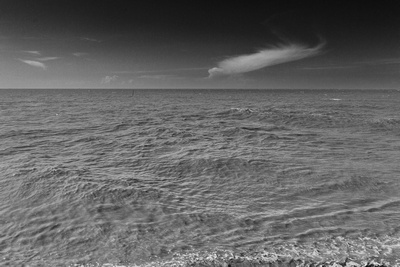
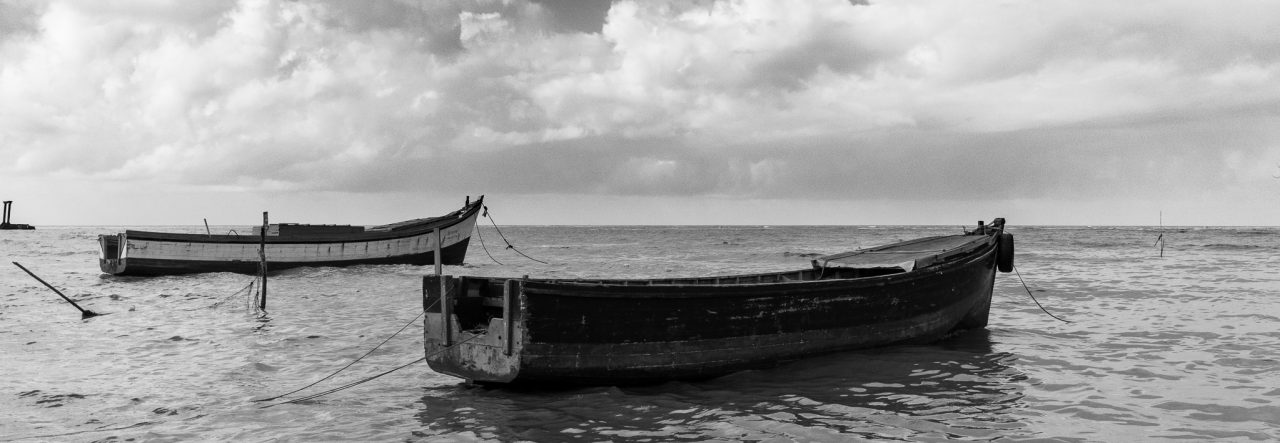
To the Photographs in this post…. both photos were taken during the first week of the year, and both were shortlisted along with two others for the first photo for the Deck Project, but I chose another, just because I felt like it.  The ;little icon of the Newspaper is the article which I mentioned, clicking on it will give you the full PDF version from the Newspaper’s website (Sunday Times Magazine).

Both of the photos are technically composites, that is they are High Dynamic Range (HDR) images each using three exposures.  Of the two, the seascape that I titles “The Lonely Sea” is my favourite.  HDRs are one of my favourite photographic techniques, but as with all techniques it can be misused.  Click on the images for a better view in the Gallery, along with other HDR images in my Scenic Experiments Gallery on my site.


Definitions highlighted in bold taken from Wikipedia.org

2013 Deck – Week 01

As an exercise to keep my photography going, I’m continuing my Deck Project, hopefully in 2013 I will be able to expand more on my photography.

I almost started off with a photo of the inside of a tent, then I changed my mind and began on a seascape, but for some reason neither felt right; although I prefer to start with a coloured image, I think that this image felt better to me, it’s a Black and White processed in Lightroom and Nik Silver Efex, those of you who have followed me know that when I say processed I don’t mean “Edit”, nothing has been added or taken away from this image.


Let the New Year of Photography continue!


A place to rest

As the year draws to a close, I think that while we’re celebrating the end of a year, be it a successful one or just surviving one with our sanity intact, we should reflect on what we have, what we should be thankful for and what we have accomplished, whilst still looking forward to what is to come in the new year.

We should also remember those who are not as fortunate as we are, who have lost loved ones, those who have lost their jobs, those who have lost their homes, those who have lost their sanity (I often joke about coming close to doing that myself, but thankfully, it’s just a joke).  If you want to give to those who are in need, give selflessly, give anonymously, give generously.


A photo from 2010.  Taken on High Street, opposite the Parliament Buildings.


2012 Deck – Week 49

As Christmas draws near, I think it is important to remember the real reason for Christmas, the birth of Jesus Christ, our Lord and Saviour, who came for one reason and one reason only, to save us, unworthy humans, whose faults and failures make life the interesting journey that it is.

Probably the most quoted verse of the Bible is from the Gospel of John, Chapter 3, Verse 16

For God so loved the world, that he gave his only begotten Son, that whosoever believeth in him should not perish, but have everlasting life.

He came to teach us how to love and how to live life through love of our fellow man (and woman), and for his teachings, for his belief, he was crucified and died for us, for our sins.

We celebrate the birth of a man who came not to live for us, but to die for us, that we may live, love and be loved!

Click on the image to see it in the Gallery, along with the other images for the Deck Project to date  🙂

2012 Deck – Week 47

Last night (Friday 14th December 2012) I stood alongside two friends and fellow photographers, on a stage populated by artists, art-lovers and art patrons, among Giants in the Guyanese art-sphere who are masters in Painting, Sculpture, Drawing, Crafts, and I felt exalted and elated.

I am not a painter, nor a sculptor, I cannot draw nor mould, but this year the Guyana Visual Arts Competition and Exhibition committee included Photography as an art form, the first time in Guyana.  I was given the Bronze Medal, for third place in the Photography category, and was excited that my long time friend and photo-buddy, Nikhil, won the Gold, and his wife, Sharon copped the Silver.

I was thrilled to be included as a prize-winner, but even more astounded that I was chosen from what is reportedly a heavily contested segment, especially knowing that many other members of the Guyana Photographer’s Facebook group also entered amazing pieces.

To me, winning the Bronze was a giant step, but being among the first Photographers to be so honoured in Guyana is even more special.  To have our work judged meritorious is always gratifying, to have them judged by “Artists”; sculptors and Painters, Curators and Critics, and not by photographers is validation of Photography as Art in Guyana.

This is but a “drop in the bucket”, I look forward to the works of fellow photographers, fellow artists, as the future Competitions promise to be even better.

This brings me to my photo for the Deck Project for Week 47 of this year, “A Ripple in the Fabric”, I say to other Photogs, to other Artists, to all Guyanese who love art, “Look to the future, for this ripple in the fabric of the Guyanese art-world will not subside, but grow and change the way we Guyanese see Photography”

A Ripple in the Fabric

I don’t normally try Cyanotype processing, but I thought that this image looked better with a tinge of blue  🙂  I could be wrong….  Click on the image above to see it in the Gallery!

2012 Deck – Week 38

Many moons ago, I sometimes took a few minutes to stare up at the stars and the moon, and let my mind wander, I haven’t done that in quite some time.  If you look at a child’s drawing, or an icon that is supposed to represent night, the moon is shaped in the crescent form, probably because the full moon would look like just a circle, and can be interpreted in many ways, but the crescent shape is instantly recognizable as the moon.

In Guyana it is not very common, but I’ve often seen drawings or paintings, and scenes in a movie or show where an old outhouse (the pit latrine) had a Crescent Moon carved on the door.  Many people see it as being decorative, the true significance have been forgotten by many and almost lost to the ages.  Apparently in ancient times the doors of the latrines were marked to identify the gender, the sun or star being for males (after the sun god Helios or similar deity) and the moon for the women (after the goddess of the moon, Celine or Selene, or similar deity).  So far the working theory as to why one with the sun or star symbol has been seen or recorded is that the women took better care of their out-houses 🙂

One night I got a message from Savita asking if I’d seen the moon that night, I hadn’t, and I told her so, she was excited that there was a star right next to the moon in the sky, and she hoped one of us could get a decent photo of it… I tried.

Not sure if you’ll see the star… but it’s there  🙂  Click on the image to see it better in the Gallery, along with a few other images in the Night album

Hermes

Hermes – God in the Greek Pantheon, often associated with speed and cunning, the messenger of the Gods.

I took of photo of an old Hermes typewriter whilst on a short walk down Main Street, I mainly took it because it made me remember how I first learned to type, on a Hermes typewriter, just like that one, but in better condition 🙂

At the time I didn’t like the resulting photo and just left it there in my catalogue, but on looking through some of my older stuff, I came across it again and decided to try processing it, after deciding on using a sepiatone process, I still wasn’t entirely happy, then I realized what was bothering me, it was the buildings in the background that showed in the upper portion of the photo, after judiciously cropping that out I was left with an image that I was more pleased with  🙂

Sometimes speed and efficiency can let images that are good slip away, simply because what needed to be done was to let the pixels age, and your outlook on the image mature.

Click on the Image for a better view in the Gallery, along with other Sepia-toned images in the collection.

2012 Deck – Week 36

Time never stands still.

It only seems like a few moons ago that my daughter was born, yet she’s now nine years old.

For a little while, on the Sunday before school re-opened, I let all else be lost, all worldly matters be forgotten, as I sat among the rocks on the seawall, with family, a snack or two, some drinks and the cool breeze brought by the incoming tide.  I just sat, camera in hand and as my daughter and her cousin played in the water, enjoyed the little slice of time that stood still…

I don’t often do photos of “people”, but I think this year I’ve uploaded more “portrait type shots for the Deck Project than before  🙂

Water

Sometimes using a “rule” works in your favour.  One of the most harped-upon rules of photography is the Rule of Thirds, I think every beginner in the field knows this one.  Divide the viewfinder in three parts, both vertically and horizontally, then use that to help compose the image, whether putting subjects into the portions or onto the dividing lines.

Nikhil always tells me that we should know the rules, so we’ll know when to break them with greater effect on the resulting image, or in this case use it as literally as possible  🙂

I tried my hand at another seascape, and remembered that sometime back I was told that more than two-thirds of the earth’s surface is covered by water, so I covered two-thirds of my image with the sea-water  🙂

Click on the image for a better view in the Gallery.