2013 Deck – Week 15

Every time I see a skeleton or decomposing body of an animal, I think of Avinash Richard who, although known for his Street Photography locally, was also known for his photos of such things, and how he countenances death not with morbidity, but with fascination; fascination not in the death of the creature but in thoughts of the life it lived and what caused it to knock on Hades’ Gates.

Of course, this is how it comes across to me, he would be better equipped to answer for himself 🙂

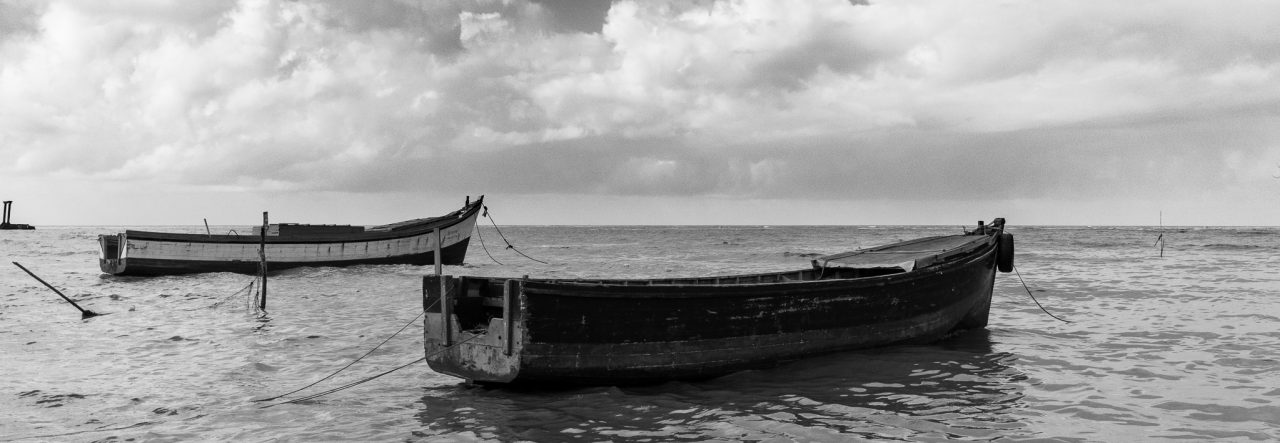
As with most photos that I render in monochrome, I knew the instant that I composed and pressed the shutter button that this image would be rendered in BW, but this one made me think a little, I even compared the coloured version and the processed monochrome for a few days before asking Nikhil’s opinion.  Thankfully, he reinforced my original thought process.

Most of my new images usually become my current favourite, but I believe that this one is truly one of my favourites of recent images.

I really think it can be seen better on the site, so click on the image above to see it in the Gallery, along with the previous images from this year’s Deck Project.


Pakaraima Mountain Safari 2012 Pt. 6

The Journey Back.

On the way back from Orinduik, the journey usually takes a slightly different path, we bypass some places, particularly Monkey Mountain, and this cuts short the return trip significantly.

As we awoke at Kurukubaru, we noticed that since the previous evening we could feel a soft drizzle and this had not changed, it was then that we were told that it wasn’t really a drizzle, we were simply in a cloud  🙂

The view from so high up is so breath-taking, that it is hard to render that on camera, one direction looks very much like the other, but you can’t help but snap a few anyway 🙂


Be caught up with the main convoy at Kato and continued our journey onward, here are some more photos from the trail…


We stayed at Yarong Paru where I got in some more photos to show  🙂


I even got one at a village further on, I think it was Tiperu, when Frank and a few others took a break and sat aside the trail  🙂


At Karasabai the Safari was pretty much over, at this point the option was given to members to either head back to town or proceed to Lethem for the Annual Rodeo.  We opted for town and overnighted at The Oasis at Annai


As we were crossing the Essequibo River at Kurupukari I noticed Jason washing down his tires from all the mud… presumably making room for more mud as we hit the trail on the other side 🙂


On the other side of the crossing we stopped for Lunch and I took a few moments to get in a couple of shots at the shop  🙂


If I ever make the trip again, I hope I get to spend more time at some of these villages.  Click on the images to see them larger in the Gallery along with all the other select images from the Safari!


Pakaraima Mountain Safari 2012 Pt. 5

As we were behind schedule, I thought we would have left Paramakatoi extra early, but we started out close to 8am and headed for Kato.


At Kato we had a brief stop, some vehicles were attended to, and some thirst needs were also attended to 🙂


Our next stop would be at Kurukubaru, although I did not take many photos on the way into the village or even at the village, this one of a family at their home I liked.


From Kurukubaru, our next stop would be the destination of the entire Safari, Orinduik Falls, the route there proved to be unusually treacherous for the vehicles, it was on the way there and back to Kurukubaru that evening that the vehicle suffered the most damage 🙂  Unfortunately, no photos, not a lot of stopping on that leg of the journey 🙂


Just to prove that the Destination was worth it, I’ve selected quite a few photos to show you of Orinduik.

One of my favourites from Orinduik, Jason and Lily take in the grandeur of Orinduik Falls

See the crazy white dude? He just HAD to get a bit of fishing in… no, he didn’t catch anything 🙂


A Panorama of Orinduik Falls to catch the breadth of this stage 🙂

Although we wanted to make it back to Kato that evening, we lost the main convoy in the rains up at Kurukubaru, and were advised by the villagers not to descend the mountain in the rain, so we spent the night at Kurukubaru, the highest village in Guyana.

There may be one more post in this series, but it will be sometime next week, the Easter Weekend is upon us 🙂


Please click on the photos to see them larger in the Gallery.

2013 Deck – Week 10

My priorities in life must most definitely be askew, since I seem to have less time for photography than ever before…  But even if I have to take a photo of the same thing every week, I will finish this project  🙂

As I was driving along the seawall, I noticed the white-capped waves as they rushed to shore and thought to just stop and catch a few.  It was a bright afternoon, but lacking any fancy filters or gadgetry I thought that I’d just bring out the focus of my intent in post-processing.

I used an orange filter in Post-processing to deepen the hue of the sky and emphasize the white caps of the waves.


Click on the image to see it in the Gallery.

2013 Deck – Week 09

I had never been into the Indian Monument Gardens before, and it seems that the one time I did venture in was when they were doing some new construction on a stage to the western end and had not done any recent cleaning near the monument itself, yet I still think I got a few usable photographs (if you ignore the weeds on growing near the monument and the stains on the base itself)

The monument itself commemorates the arrival of the East Indians to Guyana as indentured labourers, the first arrival being on May 5th, 1838, the first ship being the SS Whitby (symbolically represented in the monument).  The monument was erected in 1988 to commemorate the 150th anniversary of their arrival, a portion of the Merriman’s Mall was appropriated for the Monument Gardens.  (the area bordered by Church Street, Camp Street, North Road and Alexander Street.)

I found very little information in my short research, but it appears that a nationwide competition was held for the design, and after choosing the winning entry the design was made real by an “Builder” from India, the Gardens itself was laid out by two architects, one from India and one from Guyana (Albert Rodrigues).

I chose this angle because it shows some of the supporting structure of the Ship itself.


As always, click on the image to see it in the Gallery.


2013 Deck – Week 05

Maybe it’s because I am a coast-lander that I feel the draw of the sea, but I keep going to the seawalls, if not for a photograph then just to feel the breeze, and hear the sounds of the waves.

This photo was taken at Ebb Tide, when the tide was beginning to recede from the shores, and as I stood there I could feel the wind around me, hear the sound of the waves as the crashed upon this rock and smell the salt in the air (which was probably not good for the camera)


As always, click on the image to see it in the Gallery

2013 Deck – Week 03

Although I like to think of myself as a photographer who likes to take Landscape photos, there is not a lot of scope for that living in the city, but I’ve always had an interest in capturing images of buildings, especially old ones that may not survive due to neglect or just continued development (or any number of other reasons)

During the third week of the year, I had an inexplicable desire to take some photos of St Rose’s High School, just before attending a presentation by Hew Locke (an artist with some amazing work), Nikhil and I took a walk around the block, and I got my chance to take a few images.

To emphasize the building more, I used an “orange filter” setting whilst processing, this darkened the sky and made the building more pronounced.  Although I did not intend to combine “street photography” into it these two boys strolled past just as we were there.

As always, click on the image to see it in the Gallery


On the Street

OK, maybe the title isn’t accurate, the photo I will use was taken a little distance from the street, but it’s also about a point I made recently.

On the Guyana Photographers Facebook page, we had a Challenge for “Street Photography”, and one of the points we made was that it did not have to be literally on the street; the genre encompasses images that capture aspects of “Life”, it will always have a human figure in it, because that’s what the genre is about, human’s and their actions .  It can be a shot of a vendor on the street, or a vendor in a market stall; a woman riding a cycle down the road, or hanging out her laundry in the yard; a man on the corner reading the morning newspaper, or at his desk writing a memo.  The best street photographers usually manage to tell quite a story in one image, there is often irony, or action; discourse or solitude and regardless of what story you get from it, it’s a story that you the viewer can understand whether or not its the story being told.

I am NOT a Street Photographer, I fail dismally at my attempts, but mostly because I am not into taking those types of images, except by happenstance.  If you want to see good Street Photography by Guyanese photographers, check out the works of Nikhil Ramkarran and Avinash Richard, while neither do the genre exclusively, they both capture moments of time in the life of Guyanese that can be spellbinding.

This one is one of my better ones to date… but only because of the irony  🙂

Click on the image to see it in the Gallery.


My Tamron 18-275 lens has some dust inside it, by pointing towards the sun two spots showed up in the image which were later emphasized by the BW processing, those were cloned out  🙂


A Good Photo

For my Deck Photo last week I used a black and white image of a bird walking across a wet expanse, one of my friends and fellow photographers told me that she didn’t like the photo, because it made her feel sad and lonely

When she told me that she didn’t like the photo, I was a little disappointed to tell the truth, but when she told me that it was because it made her feel sad and lonely, I was elated.


One of the things that makes a good photograph is the conveyance of some sort of emotion to the viewer.  For most photos, we look at them and move on, it was a photo of a sunset, or a flower, or an insect, or a door, or a building, or a bird, or any other subject you can think of, but when someone can say that a photo of mine made them reminisce or feel happy or sad, of any other emotion, then I feel that the photo was not only good, but better than I’d hoped for.


Each photo has the potential to reach past the optics of the viewer and into their emotions, when it does, then the photo was worth taking, it was worth the pixels that were spent on it, and the time it took to take and process.

None of these photos are new, but each one has had an emotive response from a viewer, it may not do it to everyone, but to me, that is what makes photography a challenge, to reach into as many of the viewer’s hearts as possible, but to even reach one, is usually enough for me.

As usual, click on the images to see them in their respective Galleries in the Collection.

Working With Wides

Well, I wanted to say “Playing with a Wide-angle Lens”, but I couldn’t resist the alliteration. 🙂

The word wide is relative, so I’ll describe how I use the terms, these are probably not industry accepted descriptions, so don’t quote me 🙂   Your basic entry-level DSLR usually comes with a kit lens that has a range of focal lengths from 18mm to 55mm, this I consider to be a wide telephoto lens, at the widest end (18mm) you get a nice wide view and at 55mm you get closer to close up of the subject, I consider somewhere around 33mm (on the crop-sensors) to be somewhere around “normal” (mind you, I’ll be talking from the stand-point of an APS-C sensor or crop sensor, a full frame or micro-four-thirds is an entirely different scenario)

Since this is the standard kit lens that most people get, we don’t often see it as wide, so that’s when we go Ultra-wide.

My favourite wide-angle lens (OK, the only one I have in the Ultra-wide category) is the Sigma 10-20mm, this produces pleasing images for me, and I love working with it.  You get some amount of distortion at the wider end (understandable) but this tends to be good in certain circumstances.

Often, in architectural photography, you can use wides and ultra-wides to capture more of the interior, and convey more of the sense of space and more of what encompasses the room.

At other times, you can use them closer to the subject to give an increased sense of distance, even accentuate the distortion by being close (do this with people’s faces, and you’ll get some weird effects)

I used the ultra-wide to capture the corner of this building (New Building Society), along with parts of the sidewalk and sky (and a pedestrian) 🙂

There are many things you can do with a wide, many of which I don’t do, I don’t normally put it right up to people’s faces and click, but I’ve seen those photos, and it’s a neat effect  🙂

What I did in this next image was to use the ultra-wide to adjust the sense of scale, I used a fire-hydrant in the foreground to dwarf a three-story building in the background.  One thing that I liked about this shot was that I didn’t have to worry about electricity wires!

The best way to see what your wide-angle lens or your ultra-wide angle lens can do is to put it on the camera and go have fun.  Sometimes it makes compositions tricky as it tends to include everything, even things you may not want, but like working with any focal-length, it’s up to the photographer to adjust framing and composition for these things.

I mentioned using wide-angle lenses for interior architecture, well I doubt if a tent falls under the category of architecture, but I suspect the engineers who came up with the idea for this tent would appreciate the use of the wide-angle for impact  🙂  And would you look at the view!  🙂


All images above were shot with the Sigma 10-20mm on a Canon body, Click on the images to see them in the Collection along with others in their respective Galleries.