Soft

In the initial stages of trying my hand at photography, while looking at the images offered online and in books, ones by recognised photographers in their respective fields, I always had it in mind that a good photograph had to be perfect, technically perfect and sharp as a tack.  Of course, the images I was admiring were landscapes, portraits, architectural images and the like.

I later discovered (much much later) that what was more important was capturing the scene, with whatever you have, and however you can; if you can get it perfect, good for you, but it was more important to not lose the moment.

This image I had taken back in 2011, but because of the slight motion blur, I relegated it to the unprocessed pile; and since Street Photography was not my calling, but a way to experiment and even capture moments, it didn’t seem too important at the time.   I was hunting through an old catalog for some images that a friend wanted, and I came across the image and realised I liked it, I can live with the blur caused by a low shutter speed and a hastily snapped image, because that moment is now gone, but I have something to show for it; while it may not be a technically perfect shot, I realise that I don’t really need anyone but me to like it.  🙂


Canon EOS Rebel T1i, Tamron 18-270  |  Georgetown, Guyana, 2011


This was taken during the renovation works to the old Central Garage building on Avenue of the Republic, which is now a series of smaller retail stores.  In Guyana, we call those carbonated beverages “soft drinks”, the ones Americans fondly call Soda.

Click on the image to see it in the Gallery.


Joyride

Growing up in Guyana, a joyride meant what it sounded like, jumping on a bicycle/ motorcycle and going out for a ride with friends and having fun, but it seems that up north it means and meant a completely different thing… I guess we were wrong.


Joyride – 16-1823  |  Canon EOS 60D, Sigm 10-20mm  |  2016, Lusignan, E.C.D, Guyana


Click on the image to see it in the “Out and About” Gallery, a rather quirky collection of images.


Georgetown, Guyana

It’s been 50 years since some forward thinking people declared Independence for this little nation we now call Guyana.  They were looking forward to their futures, some idealistic land of self-rule and happiness for the masses I suppose.

I think by now, most of them have all gone and left many of us wishing we were still under colonial rule, it wouldn’t have been that bad, would it?  We’ll never know, and doing the whole “what if” dance is not going to help anyone.

Sadly, even though many of the idealist have gone, there remains some of the followers who can’t seem to open their eyes and realise that the old way can’t work and that the path the country is on is not the right one, that implementing old ideas, once discarded, will not bring about new changes.

I babble…  I’ve been staring at this photo for weeks and didn’t know what to write and now I write something quite out of character and from way out of left-field.

Here’s a photo  🙂


Wrong-way Rider 16-1092 |  Canon EOS 6D, Canon EF24-105mm f/4L |  Croal St, Georgetown.


Click on the image to see it in the gallery along with other images in the Black and White Gallery

.


Knowledge

As August comes to an end and the new school term begins, and with September being “Education Month” in Guyana, it is fitting that I just processed this photo.

Knowledge is powerful, and while we can be intelligent and knowledgeable without being literate, it is the written word that has the power to cross miles and years to communicate ideas of forward thinking and to reflect on historical events.

Read a book, give a book, encourage our children to read.


Canon EOS 60D  |  Sigma 10-20mm  |   Knowledge – 16-1242  |  January 2016


Click on the image to see it in the Gallery

.


2015 Deck – Week 47

Between trying not to get run over on the busy East Bank Public Road, heeding the warnings from the workmen that I was in their way, and trying to get to my vehicle across the now doubly busy road, I was also trying to get a good photo.  This was one of those occasions when you can see the finished photo in your mind’s eye, and as you click the button you’re just praying that it comes up to scratch.

It’s not as sharp as I’d like, but since I was on the move, I’m happy with what I did get 😀


Men at Work 15-0401  |  East Bank Public Road, Providence.


Click on the image to see it in the Gallery.

2015 Deck – Week 33

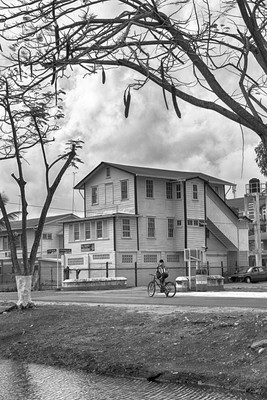
I climbed onto the seawall to see what I could photograph, and a voice coming from near my feet surprised me.  This fellow was packing up some items in a bag.   He thought I was a foreigner, but the minute I answered him he realised I was local.

According to him, he has lived along the seawall for most of his life, he doesn’t have a regular job, he does odd-jobs, but he says he finds everything he needs to survive right there on the seawalls.   Although I’m not sure about him finding “everything”, I saw no reason to doubt he finds most of what he needs 😀


Life on the wall 15-0143  |  Georgetown Seawall, Guyana

Canon EOS 60D, Sigma 10-20mm Lens


Click on the image to see it in the Gallery

2015 Deck – Week 30

One bad thing about Georgetown is that it floods…. as a photographer, I can also say that one good thing about Georgetown is that… it floods!  That sometimes makes for an interesting photo.

I only had my phone on my at this point, so it was a quick snap to get what I was seeing… and even so I had to crop for an interesting photo, which makes it a bit on the low resolution side.


Samsung Galaxy S5 Mini Duos  |  Instagram


Click on the image to see it in the Gallery.

2015 Deck – Week 28

I’m about to mention some things of which I am quite ignorant about, so anyone wishing to clarify, extrapolate, correct or otherwise educate me on it are welcome to do so.

I usually like to say something about the photo I am presenting, so here goes:

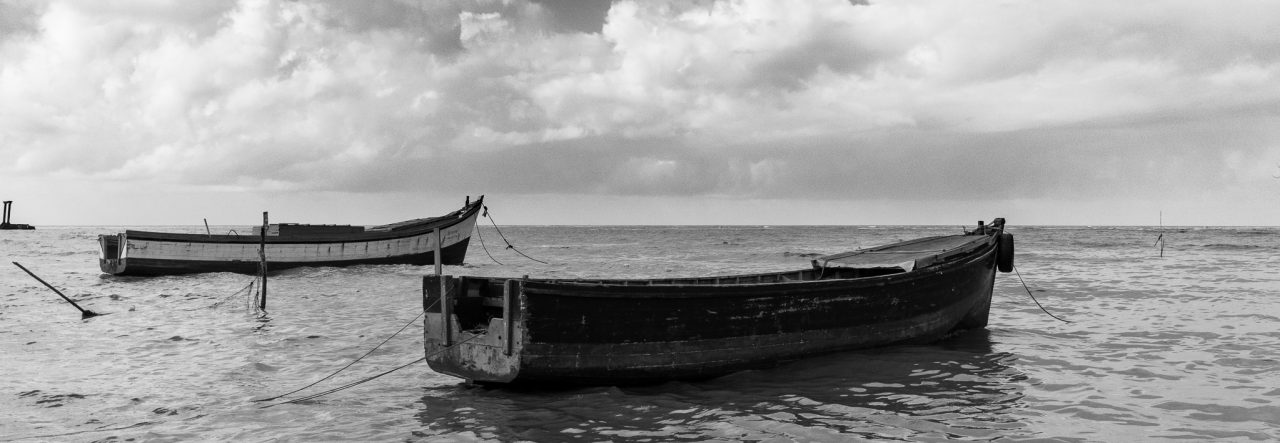
On the coast of Guyana, we see large shipping vessels (trawlers) heading out to sea for fishing, some smaller boats do so closer to shore (but often out of sight us of land), we see men (and women) cast-net fishing, we see some fishermen using rods and lines, and there are likely more methods than I know of, but one type was explained briefly to me because of a photo I took in which I was trying to identify the craft/vessel/device being used by the fisherman, this was the pin seine method.

Pin Seines are usually about 6 feet high and vary in width, the seine or fishing net usually carries a mesh size of three and a half inches or less; the seines are usually pinned to vertical stakes/poles, they are set up at high tide in the intertidal zone (between the tide lines/marks).  When the tide ebbs, fish are trapped in the nets and retrieved by fishermen.

One method of retrieval is by using what is locally called a catamarang, not to be confused with the more stylish catamaran.  The catamaran is a double hulled boat, while the only resemblance to the “double” part that I’ve seen on catamarangs has been the two long boards lashed/secured together forming the base of the vessel.  The catamarang basically consists of the wooden base which is about  14 to 18 inches wide by about 7 to 9 feet long (I haven’t measured one as yet), with a central wooden box the width of the base by about 2 feet long and about 12 to 18 inches deep (high).  It is operated by the fisherman kneeling or standing with one leg upon the base and pushing across the mud with the other leg, the central box is used to store the catch.

Seeing them skim across the top of the water/mud is usually impressive to me, probably because I’d be afraid to try it myself.

All that just to show you a photo of a fisherman returning to shore with his catamarang (and a few fish that are unseen) under a dappled sky.


Canon EOS 60D | Sigma 10-20mm  |  1/160s, f/9, ISO100


Click on the image to see it in the Gallery.