Last night (Friday 14th December 2012) I stood alongside two friends and fellow photographers, on a stage populated by artists, art-lovers and art patrons, among Giants in the Guyanese art-sphere who are masters in Painting, Sculpture, Drawing, Crafts, and I felt exalted and elated.
I am not a painter, nor a sculptor, I cannot draw nor mould, but this year the Guyana Visual Arts Competition and Exhibition committee included Photography as an art form, the first time in Guyana. I was given the Bronze Medal, for third place in the Photography category, and was excited that my long time friend and photo-buddy, Nikhil, won the Gold, and his wife, Sharon copped the Silver.
I was thrilled to be included as a prize-winner, but even more astounded that I was chosen from what is reportedly a heavily contested segment, especially knowing that many other members of the Guyana Photographer’s Facebook group also entered amazing pieces.
To me, winning the Bronze was a giant step, but being among the first Photographers to be so honoured in Guyana is even more special. To have our work judged meritorious is always gratifying, to have them judged by “Artists”; sculptors and Painters, Curators and Critics, and not by photographers is validation of Photography as Art in Guyana.
This is but a “drop in the bucket”, I look forward to the works of fellow photographers, fellow artists, as the future Competitions promise to be even better.
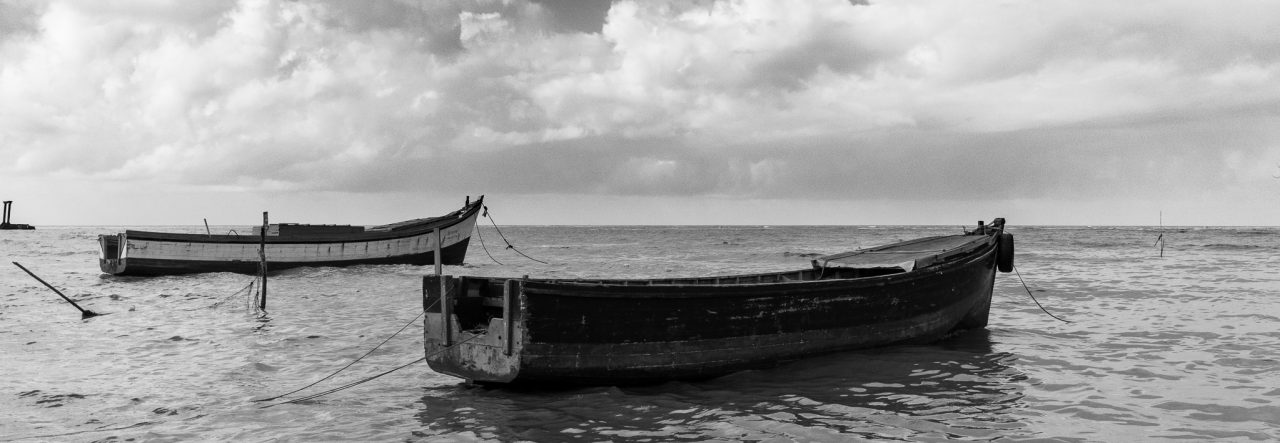
This brings me to my photo for the Deck Project for Week 47 of this year, “A Ripple in the Fabric”, I say to other Photogs, to other Artists, to all Guyanese who love art, “Look to the future, for this ripple in the fabric of the Guyanese art-world will not subside, but grow and change the way we Guyanese see Photography”

I don’t normally try Cyanotype processing, but I thought that this image looked better with a tinge of blue 🙂 I could be wrong…. Click on the image above to see it in the Gallery!


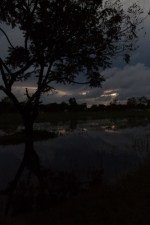 I’d shot multiple exposures for an intended HDR image, as these things turn out, I never got around to it until now. I’ve gone into detail on what an HDR is and even twice detailed how I approach the processing, but since it has been a little while since those posts, I’ll just give a brief description on HDRs here.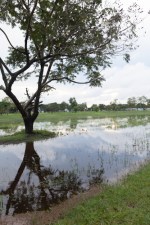
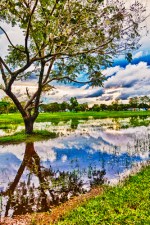 brightness, contrast, light, shadows, and, depending on the HDR software being used, a variety of “specialty” sliders. The resulting image is usually to the photographer’s taste, some with a desire to approach realistic images with a higher dynamic range than a standard exposure, others go for a more surreal result, some can carry this as far as having a very high contrast, high saturated look that is more illustration than photography, but that’s a debate for others. To the left is a small image processed for effect, very vibrant very “artsy”. It is also possible to tone-map a single exposure to achieve some of the same HDR effect, although I do not personally call this an HDR, I refer to them as Tone-Mapped Images, another possibility is to use a single exposure to create the various over and under exposures in software, then combine them, this I refer to as a Pseudo-HDR, but these are only my terms and distinctions.


 The Michael Lam Collection's Blog