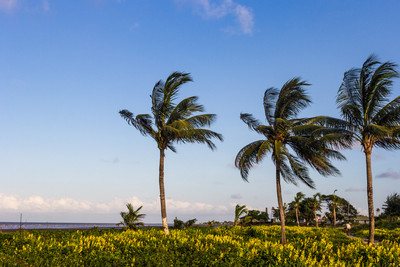
Yellow

I had started processing this photo about two weeks ago, then left it off.  I had cropped, rotated, and dropped the saturation a bit, but wasn’t satisfied.  I pulled it up this morning, tweaked the highlights a bit and decided that it was done… that simple!  Sometimes, all it needs is a little time 🙂

I noticed these at the side of the trench when I parked my vehicle, they were lower than the road, and the side of the trench was slippery, so I couldn’t get a foothold to get down to the level I wanted, so I adjust my settings on the camera and held it down to try to get the composition I wanted… never got the perfect one, and quite  few were unusable, but this one I liked (after rotating to correct my badly angled dangling camera  🙂


Click on the Image to see it in the Flora Gallery in the Collection

2013 Deck – Week 09

I had never been into the Indian Monument Gardens before, and it seems that the one time I did venture in was when they were doing some new construction on a stage to the western end and had not done any recent cleaning near the monument itself, yet I still think I got a few usable photographs (if you ignore the weeds on growing near the monument and the stains on the base itself)

The monument itself commemorates the arrival of the East Indians to Guyana as indentured labourers, the first arrival being on May 5th, 1838, the first ship being the SS Whitby (symbolically represented in the monument).  The monument was erected in 1988 to commemorate the 150th anniversary of their arrival, a portion of the Merriman’s Mall was appropriated for the Monument Gardens.  (the area bordered by Church Street, Camp Street, North Road and Alexander Street.)

I found very little information in my short research, but it appears that a nationwide competition was held for the design, and after choosing the winning entry the design was made real by an “Builder” from India, the Gardens itself was laid out by two architects, one from India and one from Guyana (Albert Rodrigues).

I chose this angle because it shows some of the supporting structure of the Ship itself.


As always, click on the image to see it in the Gallery.


2013 Deck – Week 06

I was taking some photos out by the seawall at Lusignan, and although I think I came away with some nice ones, there was one that I really wished I had taken a different approach to.  I saw a dramatic sky behind a stand of Jhandi flags, and I took a few photos, then moved on, then the thought struck me that I should have tried multiple exposures for an HDR.  By that time it was a little late since the clouds had changed significantly.

When I downloaded my images I was still struck by that scene so I decided to try an Pseudo HDR Technique on it, and this was the result.


Click on the image for a better view in the Gallery

A walk on the beach

A few Fridays back, I joined a few other photographers on a walk down to the large jetty (pier/groin) that marks the end of the Kingston seashore and the beginning of the Demerara River mouth.

As with all walks with photographers you go hoping to come back with a good image, or even a great one, yet when I downloaded my haul I was very disappointed, maybe I was hoping for too much.

Does this mean that the walk was not a success?  No.  It was what it was… a walk on the beach.  To be with friends, people with a similar pursuit, and enjoy the conversation, the breeze… that was enough.

All the photos were not horrible, but not jumped out at me, yet I decided to process at least one to make a show of reaping something from the toil of the harvest.

As I look at the image I processed, I wonder if this scene will get worse or better with the development of the new Hotel on the seashore.


Click on the image to see it in the Gallery along with other Seawall related photos

In Quiet Solitude

As I was processing this photo a poem began to form in my mind, but by the time I had finished processing, I had lost it… that’s how it goes.

The title of the photo is the same as this post “In Quiet Solitude”, yet as I thought about it, I wondered how accurate it was,

it wasn’t that quiet…  there was the sound of birds chirping, the rustle of leaves as the monkeys jumped from branch to branch, the gurgle of the water as it flowed from the creek to the lake, and the subtle but distinct snap of a camera behind him  🙂

By the same argument, he wasn’t alone, remember the birds, the monkeys and the photographer….. (or the monkey behind the camera) 🙂

But I still stick with the title, sometimes you can just stand beneath the trees, with a gentle breeze blowing, and be thankful to be away from the noise of traffic, the voices and machines of city life, the constant ping and ring of mobile phones, and maybe even the conversations that you were listening to but not really hearing.


Click on the image to see it in the Gallery.


On the Street

OK, maybe the title isn’t accurate, the photo I will use was taken a little distance from the street, but it’s also about a point I made recently.

On the Guyana Photographers Facebook page, we had a Challenge for “Street Photography”, and one of the points we made was that it did not have to be literally on the street; the genre encompasses images that capture aspects of “Life”, it will always have a human figure in it, because that’s what the genre is about, human’s and their actions .  It can be a shot of a vendor on the street, or a vendor in a market stall; a woman riding a cycle down the road, or hanging out her laundry in the yard; a man on the corner reading the morning newspaper, or at his desk writing a memo.  The best street photographers usually manage to tell quite a story in one image, there is often irony, or action; discourse or solitude and regardless of what story you get from it, it’s a story that you the viewer can understand whether or not its the story being told.

I am NOT a Street Photographer, I fail dismally at my attempts, but mostly because I am not into taking those types of images, except by happenstance.  If you want to see good Street Photography by Guyanese photographers, check out the works of Nikhil Ramkarran and Avinash Richard, while neither do the genre exclusively, they both capture moments of time in the life of Guyanese that can be spellbinding.

This one is one of my better ones to date… but only because of the irony  🙂

Click on the image to see it in the Gallery.


My Tamron 18-275 lens has some dust inside it, by pointing towards the sun two spots showed up in the image which were later emphasized by the BW processing, those were cloned out  🙂


2013 Deck – Week 02

During week two of this year, I actually used at least three of my lenses, including the ultra-wide Sigma 10-20mm.  On Friday, Fidal had arranged that we meet for a drink near Ogle, but before we went,  he and Rosh suggested we go to the seawall nearby to get in a few shots 🙂 (we were joined by Savita and TJ, if you must know)

As it turned out, that was a pretty good idea, there was a lovely sky above and some unusual streaming clouds (probably from the jets passing), and I got down into the grass to get a low perspective shot.


While processing it I remembered a song that I probably hadn’t heard since I was much younger, I had come across it on an LP my father had, it was called “Grazing in the Grass” by Friends of Distinction; it was one of those 70s songs, and I didn’t understand the lyrics then, and I don’t quite understand them now (yes I went and listened to it again), but then, I probably need to be high on something for those lyrics to make sense to me.  You can check the song out for yourself  🙂

As always, click on the image to see it in the Gallery.

Working With Wides

Well, I wanted to say “Playing with a Wide-angle Lens”, but I couldn’t resist the alliteration. 🙂

The word wide is relative, so I’ll describe how I use the terms, these are probably not industry accepted descriptions, so don’t quote me 🙂   Your basic entry-level DSLR usually comes with a kit lens that has a range of focal lengths from 18mm to 55mm, this I consider to be a wide telephoto lens, at the widest end (18mm) you get a nice wide view and at 55mm you get closer to close up of the subject, I consider somewhere around 33mm (on the crop-sensors) to be somewhere around “normal” (mind you, I’ll be talking from the stand-point of an APS-C sensor or crop sensor, a full frame or micro-four-thirds is an entirely different scenario)

Since this is the standard kit lens that most people get, we don’t often see it as wide, so that’s when we go Ultra-wide.

My favourite wide-angle lens (OK, the only one I have in the Ultra-wide category) is the Sigma 10-20mm, this produces pleasing images for me, and I love working with it.  You get some amount of distortion at the wider end (understandable) but this tends to be good in certain circumstances.

Often, in architectural photography, you can use wides and ultra-wides to capture more of the interior, and convey more of the sense of space and more of what encompasses the room.

At other times, you can use them closer to the subject to give an increased sense of distance, even accentuate the distortion by being close (do this with people’s faces, and you’ll get some weird effects)

I used the ultra-wide to capture the corner of this building (New Building Society), along with parts of the sidewalk and sky (and a pedestrian) 🙂

There are many things you can do with a wide, many of which I don’t do, I don’t normally put it right up to people’s faces and click, but I’ve seen those photos, and it’s a neat effect  🙂

What I did in this next image was to use the ultra-wide to adjust the sense of scale, I used a fire-hydrant in the foreground to dwarf a three-story building in the background.  One thing that I liked about this shot was that I didn’t have to worry about electricity wires!

The best way to see what your wide-angle lens or your ultra-wide angle lens can do is to put it on the camera and go have fun.  Sometimes it makes compositions tricky as it tends to include everything, even things you may not want, but like working with any focal-length, it’s up to the photographer to adjust framing and composition for these things.

I mentioned using wide-angle lenses for interior architecture, well I doubt if a tent falls under the category of architecture, but I suspect the engineers who came up with the idea for this tent would appreciate the use of the wide-angle for impact  🙂  And would you look at the view!  🙂


All images above were shot with the Sigma 10-20mm on a Canon body, Click on the images to see them in the Collection along with others in their respective Galleries.

Pretty and Poisonous

When I was much younger, we watched movies with Cowboys and Indians, and that sort; and we were fascinated by weapons such as arrows (and bows), blow darts and spears.  Something about them made you associate the primitiveness and the simple basic but deadly form with skill, rather than the crude but equally deadly firearms.

Reading stories and watching films that included “poisoned darts” was fascinating and intriguing, and it also made you wonder where the poison came from, was it man-made or natural?

One of Guyana’s major tourist attractions is the Kaieteur Falls, situated in the Kaieteur National Park, in this area, there lives a species of the Poison Dart Frogs, Colostethus beebei, it is commonly referred to as the Kaieteur Golden Frog.  It is a tiny frog, of a brilliant golden yellow, that lives in the watery areas in the giant bromeliad leaves that are popular around the waterfall.

This frog produces a toxin that (dependent on the dosage) can kill small insects up to larger arthropods, I do know that they tell you NOT to touch the frog, it’s skin secretes the poison, only it’s feet have no poison glands.

On my first visit to Kaieteur in 2009, I was fortunate to see a few of them, and to get a fairly decent shot of one… not great, but decent  🙂

Expression

During this season when many people wish for World Peace, Goodwill among Men, we also see many young lovers finding new ways to express their love for each other.

Many novels and movies have lines like “I’ll shout it to the Heavens”, but it seems that in Guyana, we have a new method… “I’ll paint it on the Seawall!”

Some man (or woman, we are living in a new age) seriously meant for the subject of their amorous intent to see the writing on the wall  🙂

Click on the image above to see it in the Gallery along with other images done using the HDR (High Dynamic Range) multiple exposure method.


This image is an HDR composite of three exposures, I stood there waiting for the traffic to clear long enough for the three exposures  🙂