
In the earlier years of my photography, my friend Nikhil and I once discussed the various “styles” of some of the international photographers we looked up to and were also comparing with well known, lesser known and likely some unknown local photographers. At the time I didn’t think I had a “style”, but he insisted that I did even though I couldn’t see it, of course, most of his work I could easily identify.
Fast forward a decade or so, I was chatting with two other friends, Fidal and Taij, and the subject again came up. Taij was listing off names of local photographers and the types of photographs she immediately associated with them, and she was wondering why it was that she did not have an identifiable “style”. All the names and associated photographs she mentioned I understood and could make the same connections, Fidal then listed a few other names, some I could easily associate a “style”, others I could not.
It was in my response to this that spurred me to pen this blog post. I think many of us start off not understanding what it is that makes this “style” we see in the work of others.
In Guyana, all the way up to High School (aged 14-15) we were not taught much about art except for the basics in terms of composition etc., although it is likely more is taught for those taking it as an O-Level subject. We left school knowing nothing about Van Gogh, Rembrandt, Michaelangelo or DaVinci (unless you count the last two as Teenage Mutant Ninja Turtles). So, we knew pretty much nothing about the styles of art. Today I can probably tell a Van Gogh from a Picasso, but only those made in the later years of their lives.
One of the things that was pointed out in the conversation with Fidal and Taij was that one aspect of identifying Photographers through the “style” of their work had to do with familiarity. Because she was familiar with the works of those photographers she mentioned, she could easily identify them; the same could be said for myself and Nikhil a decade ago, although he would probably insist otherwise. Some of the names Fidal mentioned as well as many other local photographers likely have a style but I don’t associate a style with them because I am not as familiar with their work because I have not seen enough of their work, either because I haven’t seen them in the networks I peruse or because they have not shared as many photographs.

I prefer not to call any names, although I am sure that those I’m referring to can easily be listed by members of the photographic community here. For over a decade there has been a movement of sorts, pushing photography among the new generations, this came with easier access to digital photography. The Guyana Photographers Facebook Group has been around almost 14 years now, and in that time, we’ve seen many photographer rise and many have very recognisable “styles”. Some skyrocketed to fame, carving out niches in the social networks of society and had their images spread through existing social media networks, their style of photographs becoming instantly recognisable by many, some becoming household names. I can probably identify three of these myself, there may be others, I respect them, and although most of their work was more portraiture, I also know their work outside of that and admire many of those works.
Other photographers worked at their photography over time, slowly becoming known in various circles. Many of their works are also deserving of praise and admiration. Because of their steady presence, their style of work became just as well known. I consider my work to be among the latter.

At the start of my photographic journey, I started a project called the Deck Project, the title was chosen because of the number of photographs. I couldn’t be like other photographers and call it “A Photo a Week” – I had to call it something different, so since it was 52 weeks in a year, and 52 cards in a Deck of Playing Cards, I called mine The Deck. This type of project is akin to forced photography, you HAVE to keep taking photos to have at least one good one every week, and if you set yourself themes it further forces you to take photos in ways you normally may not. During those years, I learned a lot, it was about exploring, exploring different subjects, different techniques, even different lenses, etc., and in that exploration there are no identifiable styles that I can think of, after doing that project for a while, I found where my interests lay in terms of subject matter, and its only then that I was seen to have a style.
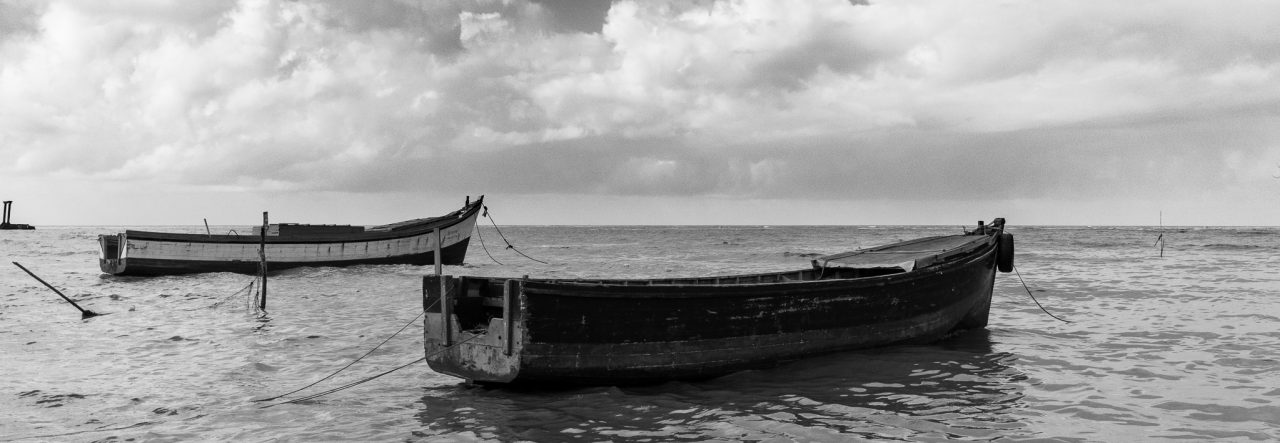
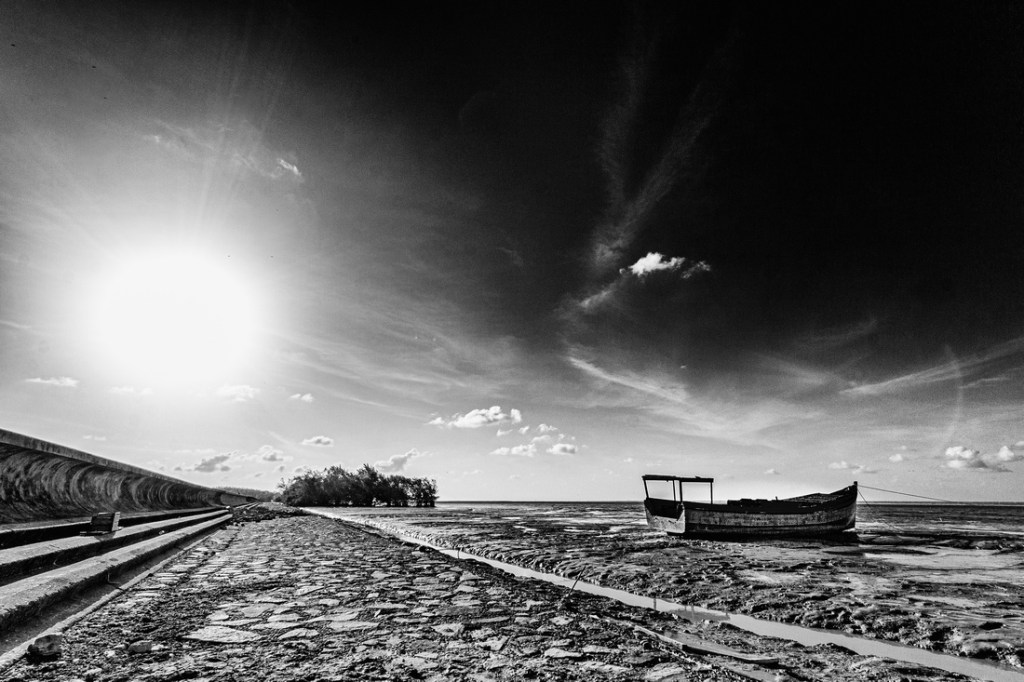
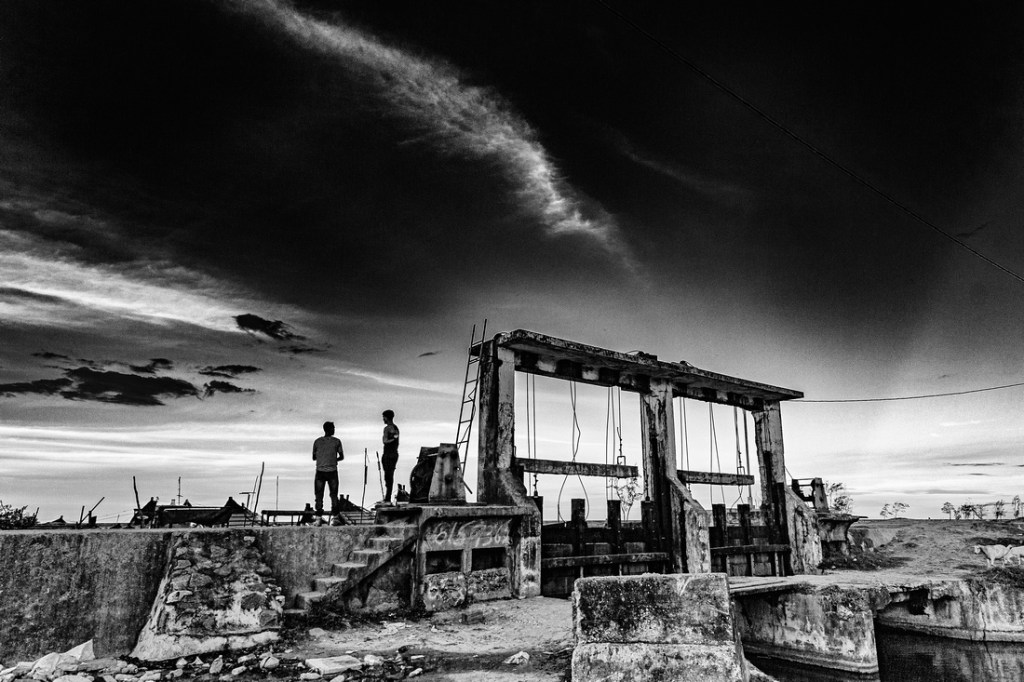
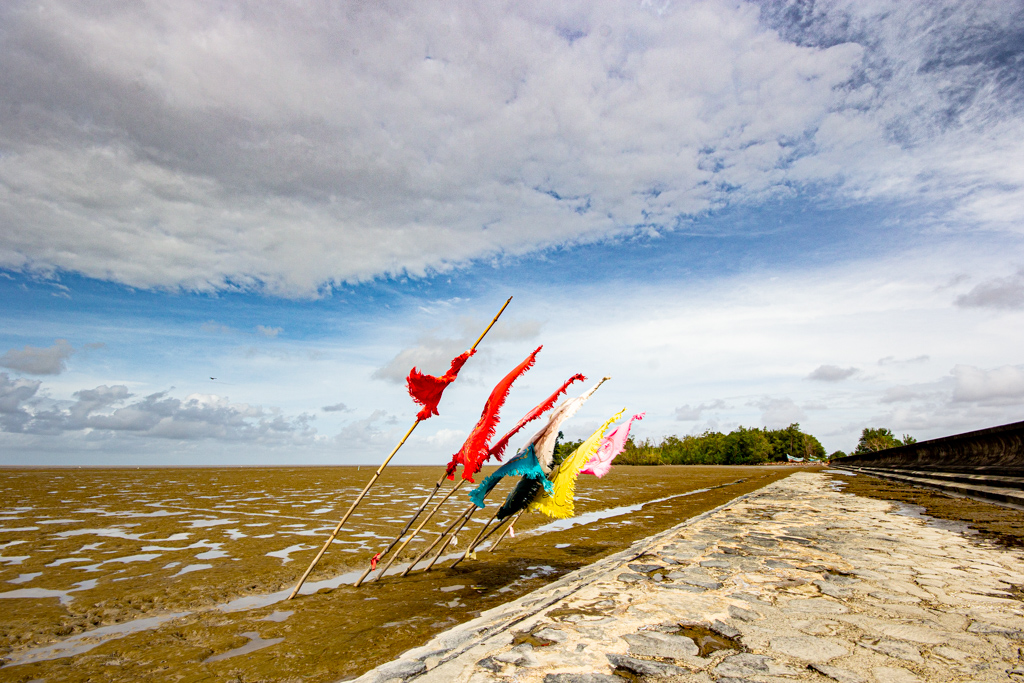
When Grace Aneiza Ali was curating for the Un | Fixed Homeland, she came to Guyana looking for a few photographers to include, I was unprepared, and it showed. Nikhil had always said that photographers should have Projects with themes, groupings of photographs that we spent time on, curating them into small collections; I had never done this specifically. When Grace came looking, I realized that the haphazard hodge-podge sets of images I was showing her were not gong to work, it was at this point that upon careful consideration of my work I started to eke out those that spoke to me on a deeper level, and my Oniabo Collection was born, a set of Black and White photos taken along the seawalls and seashores. (All the images in this post are counted among my extended Oniabo collection.)

All the photos in this collection had a similar style and it was what I had then become known for. These days I take less of those images, for varying reasons. I do a lot more Street Photography, which was something I never saw myself doing, I’ve never been comfortable with a camera around people, nor interacting with people. This is probably why I liked the seascapes and landscapes so much. I think my own style of Street Photography is still evolving but I can already see a particular slant and style to it.
Now for the crux of the matter. What exactly makes the style? I certainly didn’t go looking for a style, and I would probably have failed if I did. Style is not just in the initial taking of the photograph, that’s just part of it. Yes, your composition, your choice of subject, your decisions of perspectives and your use and preference in lighting will contribute to your style, but so will your choice of lenses, maybe even your choice in camera. The last part I think that really has a big impact on your style is your processing. From your choice of processing (editing) software, to how you use it, or them. There’s a certain young lady, Savita, I’m naming you here, although she tried her hand at DSLRs, her use of a cellphone and Snapseed, and her own particular approach to her subjects and how she processes them in Snapseed have given her work a particular style.
Some people develop their particular style through a demand for a certain aspect of their photography, this happens particularly to those doing it commercially, others find their styles eventually, or their style finds them, depends on your perspective I suppose.
Don’t give up, just keep shooting, and pay particular attention to they type of subjects you love and how you wish to showcase them, for many that’s where their style finally emerges.
Click on the images to see them in the collection along with many other images.


 The Michael Lam Collection's Blog