City Watch

For anyone who has read the books by Terry Pratchett, specifically the ones dealing with the twin-city of Ankh-Morpork, you know about the City Watch, for those of you who have not read those books, I encourage you to try them, Terry Pratchett is a master story-teller and a comic genius.

But this is a photography blog, not a book review blog, and the title of this post has nothing to do with Samuel Vimes or the City Watch of Ankh-Morpork, although now that I think of it, maybe I should have titled the photograph “Vimes” 🙂

Most of us get very few opportunities to rise above the humdrum of everyday life, to stand above it all and, with a calm that belies the hustle and bustle below, just take in the view of a city, our own city, noise-filled, garbage-filled, accident-prone, with a mix of colonial buildings and modern square concrete structures.

Imagine this; from one vantage point, you can see the hub of public transportation, the minibuses and taxis, a landmark eatery, hotel and beer-garden, the seat of government, hotels, churches (including one of the tallest wooden buildings in the world), the high court, one of the largest markets in the country, city hall, the busiest business district in the country, the Atlantic Ocean and so much more.

That is the view from the clock tower at Stabroek Market, and you haven’t even turned around to see the wharves and the mighty Demerara River with its speed-boat traffic, the ferry and the aging but impressive harbour bridge.

Click on the photo below, see it larger in the gallery and imagine yourself in that man’s position.

2012 Deck – Week 9

As things got busy, I got fewer photos, but I was still left with a choice for Week 9, in the end I decided on this one.  Nikhil was trying especially hard to get photos of some wall-walkers with the boats in the background, I wasn’t inclined to do the same at the time, but as I walked on the lower section later, this guy passed me and I thought I’d catch a shot of him walking away.  As it happens the boats were in nice positions at this point  🙂  Dumb Luck  🙂


Walk the line

Kaieteur

The mighty Kaieteur, the largest single drop waterfall (by volume) in the world.  Let’s not get confused, it’s NOT the tallest single drop waterfall in the world, but when you’re comparing the sheer volume of water flowing over it, it is the largest single drop waterfall in the world, make note of that distinction.  It has a single drop of 226 meters (741 feet), and averages about 663 cubic meters of water per second (23,400 cubic feet per second).  It is awesome!

For you Canadians and Americans, it’s about five times the height of Niagara,

You can read more about the falls and its history on other sites, I’m not about to go regurgitating all that data here 🙂

For years I’ve always avoided flying into Kaieteur because I could always say that my money would be better spent (in terms of distance and longevity) in going to one of the Caribbean Islands, it was cheaper to go to Trinidad (and stay for a week or two) than to go to Kaieteur and spend two hours.

My first visit to Kaieteur was in 2009, and if I could give up my day-job and become a guide for a tour company just so I could see Kaieteur every week, I’d do it, but then again, I like my job  🙂

This photo was resurrected from my files recently, I had taken three exposures for an HDR, and I decided to re-process those files and see what happens.  It won’t be great (especially to enlarge it), it was taken with the Canon PowerShot S5 IS bridge camera with a Raynox 0.66x wide angle adapter attached,  You can probably see some of the lens distortion at the edges.

This is my favourite view of Kaieteur (other than the views from the airplane, of course)  This is known as Johnson’s View, it’s the furthest view from the falls and gives a beautiful view on the vista.

Definitely, click on the image here to see it better in the gallery.

Inspired

Yesterday I had mentioned the first shot I took with the Canon Rebel T1i (500D) was a photograph of St George’s Cathedral, so I thought that I’s share it here.

Part of the type of photography than many of us practice is trying to establish our images as “art”, and often times I take inspiration from others, I do not COPY from them, although some may look at it that way, that’s their prerogative.

I once blogged about taking Inspiration from others, and you can read that here.

This shot of the St George’s Cathedral will probably never be considered “art”, but it’s a nice shot of the Cathedral, and as I wanted my first image from the T1i to be something special, I had taken inspiration from Dwayne Hackett, whom I consider to be a far better photographer than most locals that I know of.  It was very humbling when I later heard from him that he also admires my own work and that of Nikhil.

This shot I tested a new camera (the T1i back then) and a new lens, the Sigma 10-20 Ultra-wide Lens, and as soon as I got the shot I thought to myself, this is what I’ve been missing all along, I never took photographs on the Canon S5 after that day.

Click on the image to see it better in the Gallery.

First Shot

When I got my hands on the first DSLR that I could say was “mine to use”, you know; not borrowed for a short time, I decided that I wanted the first exposure (or the first frame) to count, to mean something, or at the very least, to be a special photo 🙂

I had just gotten my hands on the Canon Digital Rebel T1i (500D), and I had not too recently been viewing some photos by Dwayne Hackett, and there was one that had inspired me, it was of St. George’s Cathedral, and I decided that I wanted that to be my first shot.  As it turned out, even though I tried to time it right, a vehicle sped into the frame just as I clicked, so the second actuation was my photo instead.

I have now gotten my hands on an upgrade, so I thought I’d do the same thing, try for a special photograph.  Week after week I pass the St Philips’ Green and think about how I would photograph the Church there (under renovation), but I am usually afraid to stop because of the type of desolate area it is.  They had just finished clearing the area close to the road and the Church was quite visible from the road across the cleared land, and the branches from the trees helped to frame it nicely, so that was to be my first actuation on the Canon 60D.

St. Philips' Church

Mashramani 2012 – Children’s Parade

I have to begin by apologising for the amount of photographs in the album on the site… I normally go just for fairly close shots, but I thought that this year I’d try to get some of the whole shots with the costumes, I’m not too good at it, but I’ve been asked many times about why I don’t have the nice big costumes.  Also, the Children’s parade this year was very engaging and the costumes very nice, and I think there were more of them too  🙂

Every year I think that the Children’s Parade is better to attend than the Adult’s Parade, it is shorter, even though the amount of entrants might be on par, even though they don’t speed down the road, they seem to be more organised and better managed, and this results in a very good flow of groups and floats down the street.

The sides of the street is also less crowded so as a spectator, I can enjoy it more and as a Photographer, I can get the photographs easier  🙂  without being elbowed and shoved, and possibly trampled.

I know it may be a lot of photographs, but I think you may find at least a few that appeal to you  🙂  Click on the image below to see the entire collection in the Gallery.  Or just click this TOP 25 link for a select 25 images.

2012 Deck – Week 6

I am a Photographer.

After years of trying to avoid the label, I have to accept what I am, and I can say I am proud of the journey and what I have achieved so far with the help of everyone I know, not a single person has ever tried to tell me that my photographs are bad, many said they were good (and worth improving many times), mostly these were family and friends, so they are expected to say that 🙂

Today, 16th February 2012, I will stand beside one of my best friends and fellow Photographer, Nikhil,  as our work goes on display at the National Gallery, Castellani House.  It will be a month-long show, ending on March 17th, 2012.  The Gallery will feature at least 20 pieces from each of us, and we are proud of our work.  (he exhibition is open to the public from tomorrow through the 17th March)

Although in the beginnings of my photographic journey I seldom saw the call of monochrome photos, I seem to have changed quite a bit in that respect, the majority of my photographs on display are monochromatic.  Many years ago I was well known by my friends for detesting heavy cloud coverage in the skies as I loved blue skies in my photographs, that has also changed, most of the landscape images on display show dramatic clouds and tumultuous skies.

I encourage anyone with a few minutes to spare to stop in at Castellani House and take a look, I’d hate to be known as the exhibition that no one bothered to go see  🙂

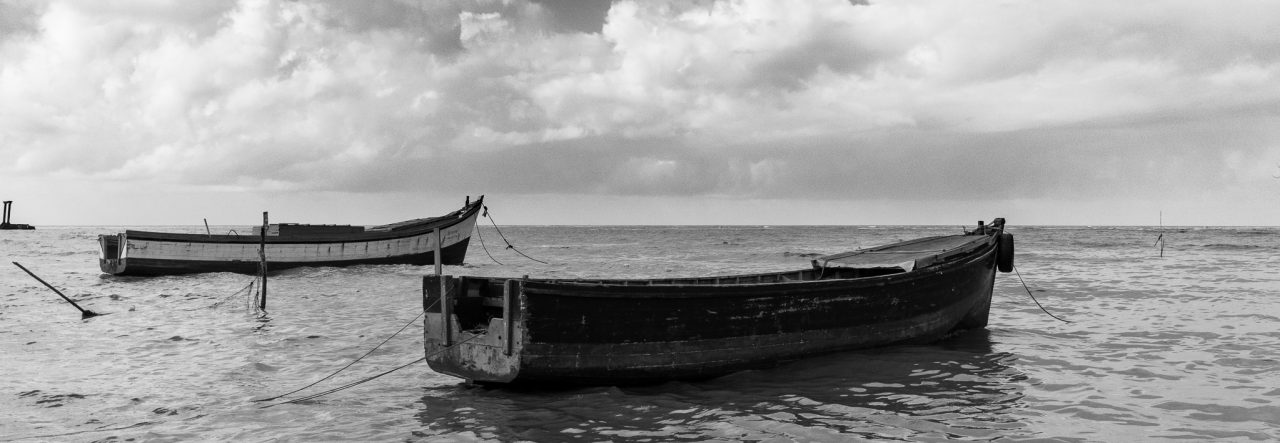
This week, I give you an image taken on a PhotoWalk with the Guyana Photographer’s Group, my more spectacular images were posted to the group (I hope to share them here later), this one I saved for use here, I was planning a post on the effective use of vignettes, but I don’t have that much to say on the subject yet, so here’s how I used  a vignette in post-processing an image, and it’s a sepia (monochrome) image, and there are clouds in the sky, no true blue skies for me that day either 🙂

Yonder Isle

2012 Deck – Week 3

Often enough, I happen to see a beautiful sunset when I’m in the middle of a housing area or similar, with lots of utility posts and wires mangling the view, or a very plain area with nothing of interest other than the sky itself.

Last week, it happened again, and as I was driving out I decided to stop at the closest thing approximating to a “nice” scene, and get a shot including part of the sunset that day.  🙂

Suburban Sunset
Suburban Sunset

2012 Deck – Week 1

After two years of doing this, I think that this is what keeps me intrigued in photography, the weekly search for a photograph.  While Nikhil has embarked upon his Daily Photography project this year (I hope he goes the full 366) I know my limitations, I won’t be trying that anytime soon.

I think that this image is somewhat appropriate to the year, the crazy Armageddon stories and to my photography.  If you believe the Mayan Calendar theorists and many of the other Doomsday predictions regarding the year 2012, then you’re probably hoping, like myself, that I get some really good photographs this year! 🙂

This was taken on New Year’s Day, because of my interests in HDR, I thought that I would try another Black and White HDR, this one was taken at midday, I think the originals were 2ev apart.

It was a breezy day (forgot my tripod again, so this was hand-held for all three exposures), and very overcast, lots of clouds as you can see.

2012

Working with Monochrome

Just a little ramble from me, this is not instructional in the literal sense.  A fellow blogger and photographer, Nigel (or greysqrl) always asked me to write a tutorial on my monochromes and specifically my black and white photographs, but I’ve never felt that I had an “art” to it or a specific sequence of steps in the methodology to really do a tutorial type of blog, so I thought that at least I can do some rambling or musing on the subject.

Back when I shot with the Canon S5 Super-Zoom bridge camera (basically a hyped-up point-and-shoot) there were several colour modes including black and white and sepia, so I had disciplined myself to taking the scenes that appealed to me in these aspects in those modes, so I never had a full-coloured version of the photograph for any sort of comparison.  So for me, the idea of a scene being in monochrome always started out before I pressed the shutter-button.

After I started using a DSLR (for now the Canon T1i or 500D) I learnt about post-processing further, using RAW images, etc.  Now, I still consider many scenes in monochrome and earmark them for that specific type of processing later, but I also change my mind about some scenes that were not considered for monochrome initially.

What makes a good monochrome image?  I really never thought about it, I just “feel” that some scenes make better monochromes than others.  I am sure that as I continue my photographic journey I will learn more about what actually makes a good monochrome, to me it’s a “old” looking scene, or a scene with high contrasts, or in many of Nikhil’s cases one with lots of texture 🙂

How do I process a monochrome image?  Since all my current images start out as full coloured, it is usually that “feel” that helps me select the ones for monochrome, either that or the new method of processing as colour and then it doesn’t quite come out the way I want and I send it over to monochrome just to see what would happen 🙂

I use Lightroom as my primary image processing and workflow application, but the majority of my monochromes are done in Nik Silver Efex (after some processing in Lightroom).  I take each photo on its own merit, some need to be treated softly while others need to be more contrasty and structured.  Nik Silver Efex has a range of presets that you can view easily and then do your own fine-tuning.

With scenes that have clouds (I seem to have many of those now) I always go for bringing out or enhancing the detail in the clouds.  The dynamic range captured using a single exposure is not (always) a true representation of what the human eyes saw or can see.  Often I would look at the scene and see the nice detail in the foreground, then look up and see the layering in the clouds, but when the photograph is taken I lose some detail, and In post=processing I try to retain that detail that I saw.

Dry Docked?

This particular photo was not intended as a monochrome image, the upper portion of the boat (or lower portion in the image, since the boat is upside down) was yellow and I had initially intended to emphasize that, but it didn’t work out as planned.