Get them out!

If you are serious about making the art of photography a pillar in your life, if you want the work that you do to be seen and recognised as being worthy of use or even just of praise then you have to get your work out there.

I came to this realisation late, but it is true, whether you use Facebook to just upload some images to albums and share with your family and friends, or the Flickr community to have a wider reach, or you are feeling more demanding for larger space and go for your own website, just get your images out there, it is doing you no good sitting on your hard drive (or worse yet, on your memory card in the camera)

I started with Webshots, which, before it was bought over, had a good community and lovely photo Challenges to inspire you… then that went south… and recently it went out, I think it’s called Smile now.  I had also begun uploading to Flickr since I already had a Yahoo account, I figured what was the harm, I might as well use the service, but when I wanted somewhere online to store high-resolution images (as well as make them available for friends to see) Nikhil suggested Zenfolio.  That was a great decision!

What is great about having people see your photos?  For one thing, you open yourself up to not only praise, but also criticism, which helps you grow, it makes you see the work as other’s see it, through their eyes and not just your own.  For another thing, it gives a wider group of people a chance to see what you are doing, not just your friends and family, but other photographers, other artists and even the business community.

I like to think that my more “artistic” types of photos are the ones that are important to me and the ones I hope others like and appreciate, but the others that I take seem to demand equal or greater attention, the ones from events, such as Mashramani, Diwali Motorcade, Easter and others.  Were I to confine myself to just making available for viewing those that I want to “promote”, then these others would never be seen not appreciated for what they are.

This year my images made it into three calendars in local firms; Maggie’s Snackette and Catering Service, and NT Computeac both used images which were more to the artistic side, but the company that surprised me was Banks DIH Limited, and this is the one I am drawing reference to.   While both Maggie’s and NT Computeac chose what I thought were aesthetically pleasing images, Banks DIH chose images that were more representative of the events that they wished to highlight, even though those I would not put as my best images, it appealed to them and probably to those viewing it too, those images are worth something to someone, and had I not uploaded them for others to see, then they would never have made it into the Calendar.

They did a twelve page Calendar, and of those monthly pages, Dwayne Hackett and I got half, with images that represent our culture and our life as Guyanese.

Don’t let your photos sit idly on your Hard Drive, Get them Out!

2013 Deck – Week 03

Although I like to think of myself as a photographer who likes to take Landscape photos, there is not a lot of scope for that living in the city, but I’ve always had an interest in capturing images of buildings, especially old ones that may not survive due to neglect or just continued development (or any number of other reasons)

During the third week of the year, I had an inexplicable desire to take some photos of St Rose’s High School, just before attending a presentation by Hew Locke (an artist with some amazing work), Nikhil and I took a walk around the block, and I got my chance to take a few images.

To emphasize the building more, I used an “orange filter” setting whilst processing, this darkened the sky and made the building more pronounced.  Although I did not intend to combine “street photography” into it these two boys strolled past just as we were there.

As always, click on the image to see it in the Gallery


On the Street

OK, maybe the title isn’t accurate, the photo I will use was taken a little distance from the street, but it’s also about a point I made recently.

On the Guyana Photographers Facebook page, we had a Challenge for “Street Photography”, and one of the points we made was that it did not have to be literally on the street; the genre encompasses images that capture aspects of “Life”, it will always have a human figure in it, because that’s what the genre is about, human’s and their actions .  It can be a shot of a vendor on the street, or a vendor in a market stall; a woman riding a cycle down the road, or hanging out her laundry in the yard; a man on the corner reading the morning newspaper, or at his desk writing a memo.  The best street photographers usually manage to tell quite a story in one image, there is often irony, or action; discourse or solitude and regardless of what story you get from it, it’s a story that you the viewer can understand whether or not its the story being told.

I am NOT a Street Photographer, I fail dismally at my attempts, but mostly because I am not into taking those types of images, except by happenstance.  If you want to see good Street Photography by Guyanese photographers, check out the works of Nikhil Ramkarran and Avinash Richard, while neither do the genre exclusively, they both capture moments of time in the life of Guyanese that can be spellbinding.

This one is one of my better ones to date… but only because of the irony  🙂

Click on the image to see it in the Gallery.


My Tamron 18-275 lens has some dust inside it, by pointing towards the sun two spots showed up in the image which were later emphasized by the BW processing, those were cloned out  🙂


2013 Deck – Week 02

During week two of this year, I actually used at least three of my lenses, including the ultra-wide Sigma 10-20mm.  On Friday, Fidal had arranged that we meet for a drink near Ogle, but before we went,  he and Rosh suggested we go to the seawall nearby to get in a few shots 🙂 (we were joined by Savita and TJ, if you must know)

As it turned out, that was a pretty good idea, there was a lovely sky above and some unusual streaming clouds (probably from the jets passing), and I got down into the grass to get a low perspective shot.


While processing it I remembered a song that I probably hadn’t heard since I was much younger, I had come across it on an LP my father had, it was called “Grazing in the Grass” by Friends of Distinction; it was one of those 70s songs, and I didn’t understand the lyrics then, and I don’t quite understand them now (yes I went and listened to it again), but then, I probably need to be high on something for those lyrics to make sense to me.  You can check the song out for yourself  🙂

As always, click on the image to see it in the Gallery.

A Good Photo

For my Deck Photo last week I used a black and white image of a bird walking across a wet expanse, one of my friends and fellow photographers told me that she didn’t like the photo, because it made her feel sad and lonely

When she told me that she didn’t like the photo, I was a little disappointed to tell the truth, but when she told me that it was because it made her feel sad and lonely, I was elated.


One of the things that makes a good photograph is the conveyance of some sort of emotion to the viewer.  For most photos, we look at them and move on, it was a photo of a sunset, or a flower, or an insect, or a door, or a building, or a bird, or any other subject you can think of, but when someone can say that a photo of mine made them reminisce or feel happy or sad, of any other emotion, then I feel that the photo was not only good, but better than I’d hoped for.


Each photo has the potential to reach past the optics of the viewer and into their emotions, when it does, then the photo was worth taking, it was worth the pixels that were spent on it, and the time it took to take and process.

None of these photos are new, but each one has had an emotive response from a viewer, it may not do it to everyone, but to me, that is what makes photography a challenge, to reach into as many of the viewer’s hearts as possible, but to even reach one, is usually enough for me.

As usual, click on the images to see them in their respective Galleries in the Collection.

Working With Wides

Well, I wanted to say “Playing with a Wide-angle Lens”, but I couldn’t resist the alliteration. 🙂

The word wide is relative, so I’ll describe how I use the terms, these are probably not industry accepted descriptions, so don’t quote me 🙂   Your basic entry-level DSLR usually comes with a kit lens that has a range of focal lengths from 18mm to 55mm, this I consider to be a wide telephoto lens, at the widest end (18mm) you get a nice wide view and at 55mm you get closer to close up of the subject, I consider somewhere around 33mm (on the crop-sensors) to be somewhere around “normal” (mind you, I’ll be talking from the stand-point of an APS-C sensor or crop sensor, a full frame or micro-four-thirds is an entirely different scenario)

Since this is the standard kit lens that most people get, we don’t often see it as wide, so that’s when we go Ultra-wide.

My favourite wide-angle lens (OK, the only one I have in the Ultra-wide category) is the Sigma 10-20mm, this produces pleasing images for me, and I love working with it.  You get some amount of distortion at the wider end (understandable) but this tends to be good in certain circumstances.

Often, in architectural photography, you can use wides and ultra-wides to capture more of the interior, and convey more of the sense of space and more of what encompasses the room.

At other times, you can use them closer to the subject to give an increased sense of distance, even accentuate the distortion by being close (do this with people’s faces, and you’ll get some weird effects)

I used the ultra-wide to capture the corner of this building (New Building Society), along with parts of the sidewalk and sky (and a pedestrian) 🙂

There are many things you can do with a wide, many of which I don’t do, I don’t normally put it right up to people’s faces and click, but I’ve seen those photos, and it’s a neat effect  🙂

What I did in this next image was to use the ultra-wide to adjust the sense of scale, I used a fire-hydrant in the foreground to dwarf a three-story building in the background.  One thing that I liked about this shot was that I didn’t have to worry about electricity wires!

The best way to see what your wide-angle lens or your ultra-wide angle lens can do is to put it on the camera and go have fun.  Sometimes it makes compositions tricky as it tends to include everything, even things you may not want, but like working with any focal-length, it’s up to the photographer to adjust framing and composition for these things.

I mentioned using wide-angle lenses for interior architecture, well I doubt if a tent falls under the category of architecture, but I suspect the engineers who came up with the idea for this tent would appreciate the use of the wide-angle for impact  🙂  And would you look at the view!  🙂


All images above were shot with the Sigma 10-20mm on a Canon body, Click on the images to see them in the Collection along with others in their respective Galleries.


Pro – defining and refining

Twice in recent times, I’ve been accused of being a “Pro”, as in a Professional Photographer, and both times I’ve been taken aback by it.  Me? a Pro?  Surely they don’t think so!

The first time was on a public discussion on the Guyana Tourism Authority’s Facebook page where we were discussing their Photography Competition, the unfairness of one of the “rules” and the general direction of the competition, the individual calling me a Pro thought that because I was a known name in Photography in Guyana I should not be questioning the rules of the competition (open only to amateur photographers), and stay out of it.  I humbly submit that I am not a known name… stop ten people on the street and ask them if they know Michael Lam, and they’ll all probably ask “Who?”  In the small, but growing, Photography world locally, yes, my name is known alongside those of Nikhil Ramkarran, Dwayne Hackett, Fidal Bassier, Ryan Dos Santos, Amanda Richards, Roshanna Mahadeo, Compton Sarabo, Vishnu Persaud, Philip Williams, Avinash Richard and countless others (sorry if I missed anyone).

The second time was in a newspaper article that covered the recently concluded Guyana Visual Arts Competition and Exhibition, in which I gained the Bronze Medal in the Photography category, the reporter referred to me as “Pro photographer Michael Lam”, again I felt that it was a distinction I could not accept or live up to.

Who is a Professional?  Generally you need to meet certain criteria to be a Professional:

“Expert and specialized knowledge in field which one is practicing professionally” I don’t possess that knowledge, certainly not to a degree to be teaching it or express an “expert” opinion on it, so that one is out.

“Excellent manual/practical and literary skills in relation to profession”, same as the first, not me!

“High quality work in Photography”, OK, if it’s good enough for the National Art Gallery at Castellani House to exhibit, then I suppose I have to acquiesce to this one

“A professional is an expert who is a master in a specific field”, definitely not me, oh no!

Let’s get specific to a Professional Photographer:  A professional photographer uses photography to earn money; amateur photographers take photographs for pleasure and to record an event, emotion, place, or person.  I have a day job, I’ve always described myself as a Photo-hobbyist, and I still see myself that way.  Photography isn’t my primary income, if it were I’d be starving.  Have I made money off of photography?  No, I spent more than I made.   I’ve been fortunate to have some of my images licensed for use in a few calendars, I’ve also had a few images sold for display, does this make me a Professional?  Simply because I’ve had some income from my hobby?

I have to admit, that this view was the one I had originally taken of Professional Photographers, those who have sold their services or products, so now I fall into that category, but I still can’t see myself as a Professional.

I look at Robert (Bobby) Fernandes, whose years of experience and his natural Photographer’s Eye, can capture a scene with a certain “Je ne sais quoi” that tells you its a great photo, and I think that’s a Professional!

I look at Delano Williams, who has been doing portrait and wedding photography in Guyana for many years, and I think that’s a Professional!

I remember Mark Yhap, who took portrait photos on Camp Street, he used SLR film cameras and light meters, and had everyone wanting their photos looking ethereal because of a “soft lens” that he used, and I think that’s a Professional!

I look at Dwayne Hackett, one of the only trained photographers that I know of, who does spectacular work for everyone from Corporations down to studio portraits, and I think that’s a Professional!  He knows more about lighting, depth of field, and most everything else, than I ever will.

I look at Fidal Bassier, who has taken wedding photography and portrait photography to a level Guyana has not seen before, and I think that’s a Professional!

I look at John Greene, who in a short space of time has carved out for himself a space in the Portrait photography world and is steadily expanding his repertoire, and I think that’s a Professional!  I certainly don’t have that business sense or attitude.

I look at my friend Nikhil Ramkarran, Gold Medal winner in the Photography Category of the Guyana Visual Arts Competition and Exhibition, whom I always thought “never had an artistic bone in his body”, but who read and looked at every single thing he could find about Photography and Photographers, and tutored himself (and me along the way) in the art of photography, and I think to myself that’s a Professional!  You could ask him almost anything on the subject, and you’ll not only get expert knowledge, but an expert opinion.

Do I rank with these people, or with so many others in the field now?  I am not sure, I’m happy to call them my peers, my fellow Photographers, and I am proud to be among the talented people of The Guyana Photographers.  Can you book my time for a portrait shoot? No.  Can you book my time for a wedding shoot? No. Will I ever do that?  I don’t know, it’s just not my thing right now, and I have a day job  🙂

Why do people think I am a professional?  I don’t know and it really does not matter in the long run.  I know a few things about photography, and I’m willing to share what I know, and learn from others in the process, but in the end, I merely shoot what I see, and sometimes people like what I shoot.


To the Photographs in this post…. both photos were taken during the first week of the year, and both were shortlisted along with two others for the first photo for the Deck Project, but I chose another, just because I felt like it.  The ;little icon of the Newspaper is the article which I mentioned, clicking on it will give you the full PDF version from the Newspaper’s website (Sunday Times Magazine).

Both of the photos are technically composites, that is they are High Dynamic Range (HDR) images each using three exposures.  Of the two, the seascape that I titles “The Lonely Sea” is my favourite.  HDRs are one of my favourite photographic techniques, but as with all techniques it can be misused.  Click on the images for a better view in the Gallery, along with other HDR images in my Scenic Experiments Gallery on my site.


Definitions highlighted in bold taken from Wikipedia.org
2013 Deck – Week 01

As an exercise to keep my photography going, I’m continuing my Deck Project, hopefully in 2013 I will be able to expand more on my photography.

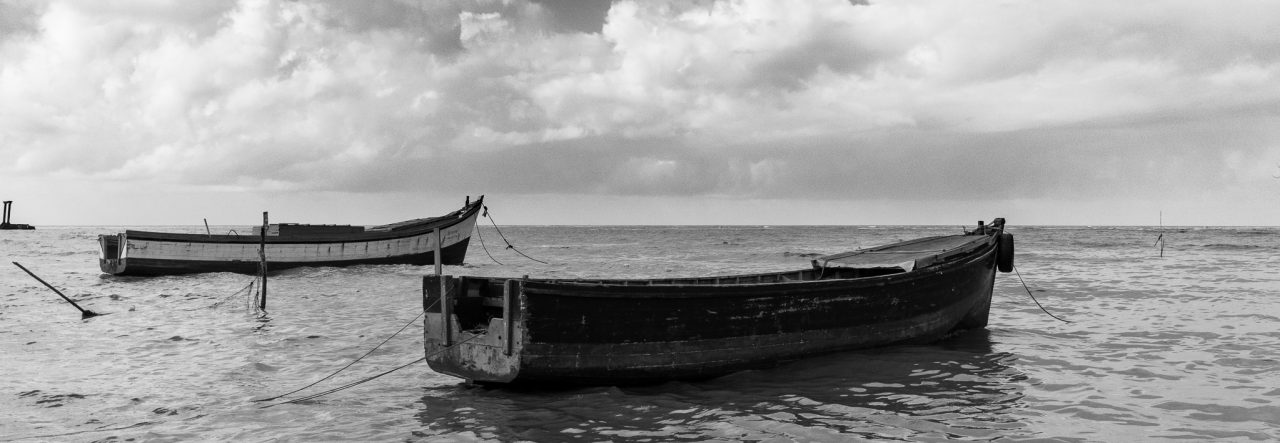
I almost started off with a photo of the inside of a tent, then I changed my mind and began on a seascape, but for some reason neither felt right; although I prefer to start with a coloured image, I think that this image felt better to me, it’s a Black and White processed in Lightroom and Nik Silver Efex, those of you who have followed me know that when I say processed I don’t mean “Edit”, nothing has been added or taken away from this image.


Let the New Year of Photography continue!