For the past few weeks (more than a month) we’ve been getting a lot of rainfall along the coast, I think it’s probably fitting that at least one photo reflect the stormy skies (although this particular day was mild) 🙂

Photography; I shoot what I like, and sometimes people like what I shoot. All photos are copyright to Michael C. Lam unless explicitly stated otherwise.
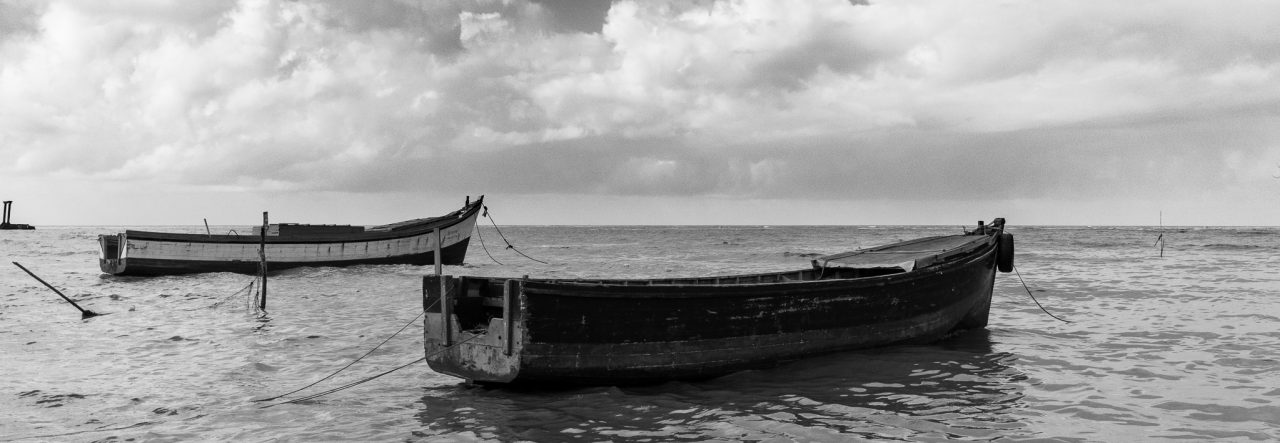
For the past few weeks (more than a month) we’ve been getting a lot of rainfall along the coast, I think it’s probably fitting that at least one photo reflect the stormy skies (although this particular day was mild) 🙂
Last night (Friday 14th December 2012) I stood alongside two friends and fellow photographers, on a stage populated by artists, art-lovers and art patrons, among Giants in the Guyanese art-sphere who are masters in Painting, Sculpture, Drawing, Crafts, and I felt exalted and elated.
I am not a painter, nor a sculptor, I cannot draw nor mould, but this year the Guyana Visual Arts Competition and Exhibition committee included Photography as an art form, the first time in Guyana. I was given the Bronze Medal, for third place in the Photography category, and was excited that my long time friend and photo-buddy, Nikhil, won the Gold, and his wife, Sharon copped the Silver.
I was thrilled to be included as a prize-winner, but even more astounded that I was chosen from what is reportedly a heavily contested segment, especially knowing that many other members of the Guyana Photographer’s Facebook group also entered amazing pieces.
To me, winning the Bronze was a giant step, but being among the first Photographers to be so honoured in Guyana is even more special. To have our work judged meritorious is always gratifying, to have them judged by “Artists”; sculptors and Painters, Curators and Critics, and not by photographers is validation of Photography as Art in Guyana.
This is but a “drop in the bucket”, I look forward to the works of fellow photographers, fellow artists, as the future Competitions promise to be even better.
This brings me to my photo for the Deck Project for Week 47 of this year, “A Ripple in the Fabric”, I say to other Photogs, to other Artists, to all Guyanese who love art, “Look to the future, for this ripple in the fabric of the Guyanese art-world will not subside, but grow and change the way we Guyanese see Photography”

I don’t normally try Cyanotype processing, but I thought that this image looked better with a tinge of blue 🙂 I could be wrong…. Click on the image above to see it in the Gallery!
Sometimes, in any art form, you have to break away from the norm, step away from the straight and narrow line that you’ve followed all along, and try something different.
I’ve broken the rule about shooting into the sun before, so this is not new…. but trying to get the palm tree and horse as the focus while doing so was different for me, and even then I was not ecstatic about it, when processing, I went for a duotone processing that I don’t do, and I though that the result was pleasing.
Although the original duotone processing had much more colour to it, I toned it down a bit to bring the focus back to the photo rather than the duotone, and the result; “sunset Liliendaal” 🙂

Click on the image for a better view in the Gallery!
On a recent photo-walk with Nikhil and Sharon on the seawalls up the East Coast of Demerara, I found myself looking at the scenes around me and shooting without really thinking too much about it, almost on automatic. I saw things to photograph, they caught my eye and I took a few snaps.
I wasn’t inspired, and I thought to myself that I’d be coming away with something “normal”, something that I would be happy with but not overjoyed.
On the walk back to the vehicle, I happened to walk under a fisherman’s shed, and the scene that caught my eye was different in a few ways from all that I had seen, nothing spectacular, but just different enough for me, and I stopped, took the time to set up the camera for a few bracketed exposures, and took two sets of exposures for later HDR-processing.
This was the result: At Rest.

Click on the image above to see it better in the Gallery.

A song in the wind,
a whisper in the leaves,
force of an ocean
carry me please,
On a thermal current
to soar far and wide,
On a wave of the sea
to drift with the tide,
on a wave of emotion
tossed this way and that
on ideals thought true
to someday fall flat
A rock on the shore
steadfast and firm,
The sands of time
In an hourglass overturned.
As coastal dwellers we are always mindful of the flooding of our properties, growing up it never seemed that much of a problem, but now it seems more frequent.
Six feet Under – A phrased usually reserved for the dead and buried, is also the correct description of Georgetown, the capital of Guyana. The city is six feet below sea level, and all that protects us from the might of Neptune’s oceans is the famous Seawall, which was built by the Dutch when they colonized the area, back in the nineteenth century. It’s a good thing the Dutch know how to build these things!
When rain falls heavily (sometimes it just has to drizzle) and the tides are high, areas within the city, and even along the coast, become flooded to various degrees, most times it may just be an over-topping of the drainage canals and trenches. One good side effect of this is the lovely reflections of scenic places in the calm, still waters.
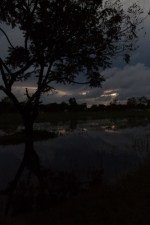 I’d shot multiple exposures for an intended HDR image, as these things turn out, I never got around to it until now. I’ve gone into detail on what an HDR is and even twice detailed how I approach the processing, but since it has been a little while since those posts, I’ll just give a brief description on HDRs here.
HDR stands for High Dynamic Range, it is a technique used in imaging and photography to produce in the resulting image a wide (or high) range in the luminance of an image. Simply put, it attempts to retain as much detail as possible in the lighter (brighter) areas as well as in the darker (shadow) areas.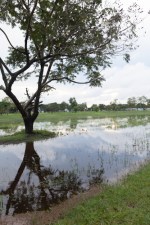
These two images show (a) the underexposed image that is used to capture the detail in the lighter areas, notice that the rest of the image is very dark, and (b) the overexposed image that is used to capture the detail in the darker areas, notice that the sky and water in this are very bright and show little detail.
When these are combined with the neutral or “normal” exposure image, the dynamic range of the final image is increased.
After combining or layering the images in an HDR software, the process by which the photographer renders the final image is called tone-mapping. In this process, various sliders are employed to adjust things like 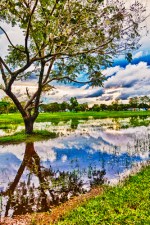 brightness, contrast, light, shadows, and, depending on the HDR software being used, a variety of “specialty” sliders. The resulting image is usually to the photographer’s taste, some with a desire to approach realistic images with a higher dynamic range than a standard exposure, others go for a more surreal result, some can carry this as far as having a very high contrast, high saturated look that is more illustration than photography, but that’s a debate for others. To the left is a small image processed for effect, very vibrant very “artsy”. It is also possible to tone-map a single exposure to achieve some of the same HDR effect, although I do not personally call this an HDR, I refer to them as Tone-Mapped Images, another possibility is to use a single exposure to create the various over and under exposures in software, then combine them, this I refer to as a Pseudo-HDR, but these are only my terms and distinctions.
My preference lies in trying to produce an image that resembles the scene that I saw, but could not reproduce in a single exposure, for some scene this will result in a photo that may have people wondering whether or not it is an HDR, and in other cases it will leave no question that it’s not a standard exposure, but definitely and HDR, especially when I try to reproduce the great detail that is there in a cloudy sky (such as my “Doomed” from the Coastal Wanderings exhibition at the National Art Gallery). The results of this particular HDR processing? I’ll let you decide.

Time never stands still.
It only seems like a few moons ago that my daughter was born, yet she’s now nine years old.
For a little while, on the Sunday before school re-opened, I let all else be lost, all worldly matters be forgotten, as I sat among the rocks on the seawall, with family, a snack or two, some drinks and the cool breeze brought by the incoming tide. I just sat, camera in hand and as my daughter and her cousin played in the water, enjoyed the little slice of time that stood still…

I don’t often do photos of “people”, but I think this year I’ve uploaded more “portrait type shots for the Deck Project than before 🙂
Recently, Dwayne Hackett posted a question on Facebook, looking to garner from others what they thought, “What is a picture worth?”, and of course at least one person used the old adage of “a thousand words”. I am sot certain of Dwayne was trying to get at philosophical or monetary answers 🙂
For more than a century we’ve heard that a picture is worth a thousand words, usually meaning that a complex idea can be expressed in a single image, but what is a photo actually worth? My answer was “A photo’s worth is weighed differently by each viewer, it depends on how the photo affects them.” For me this answer works for both the philosophical and monetary.
The most expensive Photograph on record (as of today) is the Rhein II by Andreas Gursky, which sold at auction last year for $4.3 Million, the cheapest may be that passport sized one you recently got for your American Visa Application 🙂 Which one is worth more? To the Visa applicant, it is certainly the passport sized one, without which they can’t submit the forms, to an artist, the Rhein II certainly surpasses the “mug-shot” 🙂
While the simplicity and boldness of the Rhein II appeals to my artistic senses, a photo that sold for one-seventh of its value appealed to me much more, that would be Ansel Adams’ “Moonrise”, but that is because of how that photo affects me, and so I find more “worth” in that image.
Last year I dealt with this similarly in my post for the 23rd Week of the Deck Project, you can check it there for reference 🙂
I had taken this photo while on a walk with Nikhil and Sharon, hen I had downloaded the images, I had decided that this one was not going to make the cut, and left it aside, but after Dwayne’s question, something sparked an interest in the image. I had used ISO500, I had shot into the sun, and I had done this dangling the camera downward simply because I was too lazy to get down in the rocks to properly compose the image, so I wasn’t enthusiastic about it 🙂
I didn’t think the resulting image was worth my time and effort to process, but I went back and while it is grainy from the high ISO and from the subsequent processing, I like it. It may not have the same impact on a Christian as it would on a Hindu, it would not have the same effect on a North American as it would on someone from the Caribbean, each would decide it’s worth, it’s value as a photograph differently. For many this may be worthless, for me, it was worth saving, worth the time and effort in processing, and if anyone reading this blog-post realizes the worth in their own photos, then this blog-post was worth writing.

Sometimes using a “rule” works in your favour. One of the most harped-upon rules of photography is the Rule of Thirds, I think every beginner in the field knows this one. Divide the viewfinder in three parts, both vertically and horizontally, then use that to help compose the image, whether putting subjects into the portions or onto the dividing lines.
Nikhil always tells me that we should know the rules, so we’ll know when to break them with greater effect on the resulting image, or in this case use it as literally as possible 🙂
I tried my hand at another seascape, and remembered that sometime back I was told that more than two-thirds of the earth’s surface is covered by water, so I covered two-thirds of my image with the sea-water 🙂
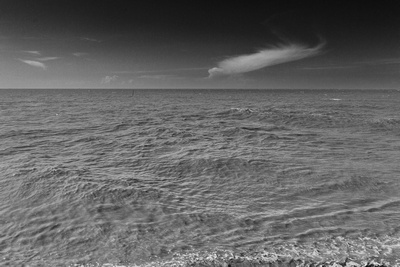 Click on the image for a better view in the Gallery.
This was one of those weeks where I had not taken a photo at all until I was forced to take something on the last day or abandon the Deck Project. To be on the safe side, I stopped on the seawall to take a few photos for another “Seascape”, this would have been around the Bel Air / Sophia area.
As things turned out, I took the family out to the seawall near Lusignan, as it was nearing sunset, I took some photos in general, then settled down amidst some rocks and waited for the sun to drop to just the right height. This was one of the few times that I had “planned” a shot (or rather the general concept of what I was looking for). I took several at different times in different orientations, but this one was the one that appealed to me the most.

As always, click on the image for a better view in the Gallery.
 The Michael Lam Collection's Blog