2013 Deck – Week 25

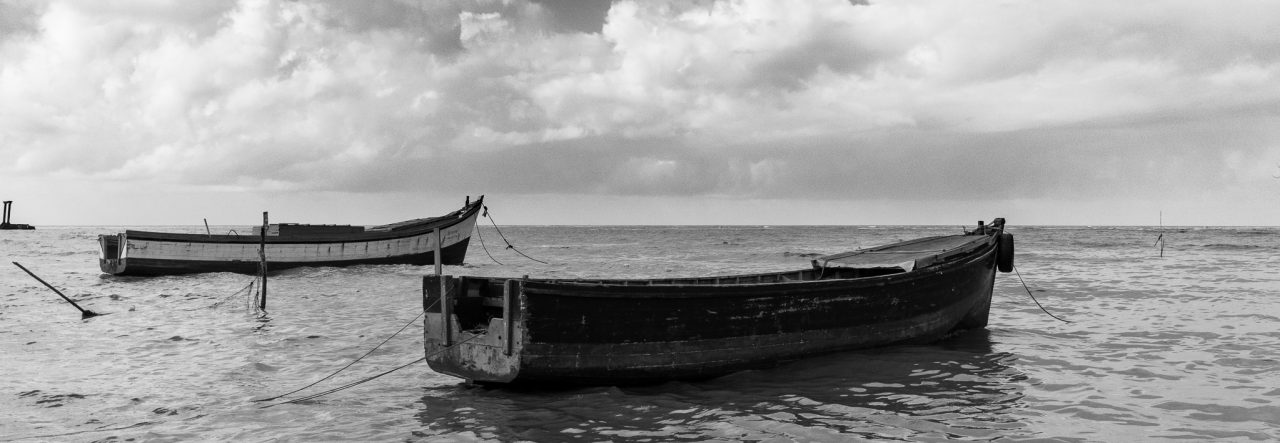
This week, I’m adding a new image not only to the Deck Project but to my slowly growing (as yet untitled) Seascape project.

It may be more a combination of landscape and seascape, you can see the road and the seawall, but I still consider it part of the Seascape set 🙂


Canon EOS 60D  |  Sigma 10-20mm  |  10mm, ISO100 | Red filter in Post-process


Click on the image above to see it in the Gallery.


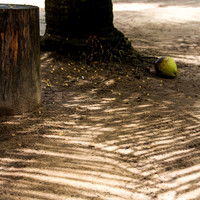
The Driftwood.

Have you seen the driftwood that climbs the rocks,
and basks in the midday sun?
The one that crossed two oceans and a sea,
Yes, that’s the one.

It was cast adrift by a little boy
who threw it from the shore
To see if it would then return
back to him once more

He watched it bob among the waves
until it was lost from sight,
Then away he ran to play among
the children of the night

Upon many beaches it took a rest,
then washed to sea again
until it touched upon our shore
and bathed in sun and rain

I doubt that you will find it now
for I passed a hobo this morning
And I thought I smelled some fish broth
and the scent of driftwood burning.


Every Tool

I’m not a purist; I don’t hold the belief that whatever JPG comes out of the camera is the reality that existed in front of the lens.  I do, however, believe that there is a certain amount of “truth” in my photographic work.  Friends and colleagues, other photographers and budding photographers in the Guyana Photographers’ Facebook group have heard me make the distinction between Processing and Editing many times.  And I will briefly make it here again…

Since I shoot in RAW format, the camera does no processing to the file (whenever you shoot JPEG the camera applies certain adjustments to the image, contrast, brightness, etc.) so I have to Process it in software, often referred to as Post-processing.  This usually involves adjusting sliders in a software like Aperture, AfterShot, Lightroom, LightZone, etc., things that are adjusted range from brightness and contrast, to hue and saturation, cropping, temperature, white balance, noise levels and more.  Although this is usually applied over the entire image, some software allows you to do it to parts as well.

Where I draw the distinction between Processing and Editing, is when the image is altered so as to become a new image, distinct from the original in content.  Simply put, if I add something or remove something from the original photograph, then it is no longer the same, it is now a work of graphic design, not only photography.

Do I Process my images? Always.  Do I Edit my images? Sometimes.  I’ve cloned out trash that otherwise marred the scene (the lone plastic bottle on a grassy stretch), but have often left in loads of trash because it was part and parcel of the scene.  I don’t have anything against editing, but I don’t think its fair to call it a photograph after you’ve added in entire clumps of trees, removed several utility posts and added muscles to an individual… that is definitely in the realm of photo-illustration or Graphic Design.

I am also a big proponent of using every tool that you need to get the image that you saw with your eyes, and in your mind across to the viewer.  Whether its special filters on the lens to get a mood or effect, an angled lens in the developer of a dark room to create a distorted view, using Black and White (Film or processing) for an aged or structured look, using long and super-long exposures for light trails or flowing water, external flashes and reflectors for extra lighting on a subject, gels and filters for colour enhancements, or even doing some of this on the software end, I am for it, but I believe in being true to the original vision as much as possible.

Fancy processing and editing is no substitute for a good original image.  I am no expert or professional, many of my images come out of the camera looking very disappointing, and I often discard or simply not process them.  Yes, you can “save” them, I have even done so on some occasions, simply because I believe that they were worth saving, but they had to have something good in them to begin with; a good composition, a relatively good exposure, and maybe even compelling elements to the composition.

I’ve rambled enough… time for a photo.  This is one of those photos that I “saved”…  The original was good, maybe better than good, but it was not what I wanted….  I wanted more detail in the sky, more of a structured appearance than the original coloured version, and (because of an architectural quirk) more symmetry.


Canon EOS 60D  |  Tamron 18-270mm  |  21mm, 1/160s, f/7.1


I used Lightroom to create five different exposures from the original, each 2 stops apart in exposure, then I used Nik HDR Efex Pro to merge my new exposures and coax the detail I wanted from the overall scene, then I used Photoshop (I know, I’m a horrible person) to skew the perspective ever so slightly to gain some symmetry.

Although I did not add or remove anything, I normally would consider this edited since I used Photoshop to change the original proportions of the image, but in this case I’d let that slide 🙂

Click on the image to see it in the Gallery along with others in the Black and White series.
2013 Deck – Week 23

Keeping a photo project going is not easy, I found that many times I “force” the images by going out looking for things to shoot… and often times I’m not entirely satisfied with the results.  Most of the images that I like are the ones that I just happen to see, being in the right place at the right time  🙂

I was on the pavement near the intersection of Regent Street and Avenue of the Republic when I noticed the reflection of City Hall in the flooded pavement and road near to me, I actually had my camera in hand and tried to compose a few shots between people walking by me, and vehicles splashing the waters occasionally.

Some people can go out and “make” the photos, others are just the instrument that is manoeuvred into the right place at the right moment to see and capture what is shown to them  🙂


Canon Rebel T1i  |  Sigma 17-50mm  |  17mm, f/8, ISO400


Click on the image to see it in the Gallery along with the other images in the 2013 Deck Project.


2013 Deck – Week 21

I was perusing my takings for the week and I had pre-selected 16 photos that I was thinking of using for the Deck Project, some street photos, some seawall photos a few bird photos… you get the idea…  Maybe it’s the mood I was in or just that most of them seemed “normal” to me, but I ended up choosing one that I knew was not necessarily a great composition, and then in processing I also did some unusual work with the sliders 🙂

All that being said, I don’t expect many to appreciate or like the final result, but to me the entire thing was so off-kilter that I ended up titling the image just that… “Off-Kilter”, and it grew on me.  🙂


Canon Rebel T1i  |  18-55 Kit Lens  |  1/200s, f/11, 30mm, ISO400

Processing notes: Selective desaturation and hue adjustment.


Click on the image to see it in the Gallery.

In the countryside

The headline might be misleading….

In Guyana, this photo could have been in the capital city of Georgetown, but it’s actually in the village of Good Hope on the East Coast of Demerara.  In this era of washing machines and dryers, it’s neat to see clothes drying in the afternoon sun on a clothes line near coconut trees  🙂

Something about fresh sun-dried clothes has a crisp clean “feel” to it that transcends the sense of touch, it goes to the sense of smell, straight to your brain and tells you this is fresh, outdoor fresh… it puts a smile on your face and a bounce in your step.  🙂


Click on the image to see it in the Gallery along with other images from my Out and About Collection

The Red House

Many years ago I missed the photo-walk that Nikhil, Naseem and André took around Georgetown.  They had termed it the Georgetown Safari, and they covered much of Georgetown over two days.  I have always meant to try to cover as much of historical Georgetown as I could, but never seem to get a good start on it.

I was on my way to work, and driving past the Red House when I noticed the sky beyond it and thought this was as good an opportunity as any to take the photo I wanted of this building, the point of view is not unusual, there are dozens from this vantage point, but I like to think I did the scene some justice.

It is a single exposure, but I did some tone-mapping to draw out some detail from the scene, and I cloned out a short piece of electrical wire that sneaked into the frame in the upper corner.


Canon 60D  |  Sigma 10-20mm  |  14mm, 1/125s, f/5  |  Nik HDR Efex Pro

Click on the image to see it in the Gallery along with other images from around Georgetown, Guyana.


I always figured that the building got it’s name because it was red, but never knew that it was because it was covered with Red Wallaba Shingles.  It dates back to the days of Colonial Rule, and records indicate that the “Colony of British Guiana” acquired it in 1925, from then until 1953 it served as the place of residence for many Colonial Secretaries.

During his stint as Premier of British Guiana, from 1961 to 1964, Dr. Cheddi Jagan also used it as his Official Residence.  Under subsequent leaders, it was utilized for various government offices.  In 1999, two years after Dr. Cheddi Jagan’s death, while serving as the fourth President of Guyana, the Cheddi Jagan Research Centre was established in the building (a purpose it still serves to this day)

It is apparently also referred to as Kamana Court, a name I had not heard until today, and for which I can find no more information


2013 Deck – Week 18

One of the techniques I like to experiment with is HDR, or High Dynamic Range, especially on landscapes.  I don’t mean taking a single exposure and tweaking it or running it through HDR software for the effect, I mean actually taking multiple exposures for recombination in post-processing.

Since the Canon allows me three sequential shots automatically, that’s the amount of frames I usually use, although I would get a better handle on the dynamic range if I used seven or nine exposures.  But since most times I do these things without hunting for my tripod, Is tick to hand-holding 3 exposures in those circumstances.

I took the exposures for this photo one morning on the way to work (I think it was a Saturday… had to be), I was driving and noticed the Lotus Flower first, then noticed the sky, and quickly decided that I wanted a photo of the scene rather than the Lotus Flower alone 🙂

Each exposure was taken one stop apart and recombined using Nik HDR Efex Pro (as a plugin for Lightroom)…my hand may have been a touch heavy on the saturation 🙂


Dayclean  |  Canon EOS 60D  |  Sigma 10-20mm  |  10mm, max aperture f/4


Click on the image to see it in the Gallery.

Pegasus on the Shore

Turn back the clock 5 years and 4 months…  I was doing one of those things that the manual says not to… shooting towards the sun… but in this case I didn’t point directly at the sun.  Since I was pointing towards the late afternoon sun, all the colours in the image became washed out leaving an almost sepia-toned image, so I carried it that extra step further in post-processing and made it a Sepia-toned image.

What had caught my eye was the light glaring off of the water that remained after the tide had receded, it made for a nice high-contrast image.


March 2nd, 2008  |  Canon PowerShot S5 IS

Shot on the lonest end of the camera’s 12x Optical zoom.

Click on the image to see it larger in the Sepia Gallery, along with many of my other Sepia-toned photos


2013 Deck – Week 13

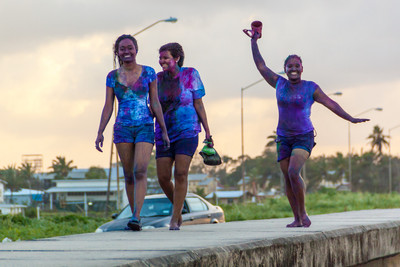
Lucky number 13?  I don’t know, but the thirteenth week of this year was filled with activity… it was Holy Week in the Christian Calendar, and in the Hindu calendar it also held the festival of Phagwah (or Holi).

I got many photos, mostly from the Church activities for my own satisfaction, but I’ll definitely share some.

On Phagwah day I usually don’t get many photos of people playing  / celebrating Phagwah, as I tend to keep my camera safely away from the waters and powders that abound.  Nearing the end of the day, I was sitting with my family on the seawall, and along came these young ladies fresh from playing, and I couldn’t resist snapping a shot, one even posed 🙂


Click on the image above to see it better in the Gallery!


Pakaraima Mountain Safari 2012 Pt. 6

The Journey Back.

On the way back from Orinduik, the journey usually takes a slightly different path, we bypass some places, particularly Monkey Mountain, and this cuts short the return trip significantly.

As we awoke at Kurukubaru, we noticed that since the previous evening we could feel a soft drizzle and this had not changed, it was then that we were told that it wasn’t really a drizzle, we were simply in a cloud  🙂

The view from so high up is so breath-taking, that it is hard to render that on camera, one direction looks very much like the other, but you can’t help but snap a few anyway 🙂


Be caught up with the main convoy at Kato and continued our journey onward, here are some more photos from the trail…


We stayed at Yarong Paru where I got in some more photos to show  🙂


I even got one at a village further on, I think it was Tiperu, when Frank and a few others took a break and sat aside the trail  🙂


At Karasabai the Safari was pretty much over, at this point the option was given to members to either head back to town or proceed to Lethem for the Annual Rodeo.  We opted for town and overnighted at The Oasis at Annai


As we were crossing the Essequibo River at Kurupukari I noticed Jason washing down his tires from all the mud… presumably making room for more mud as we hit the trail on the other side 🙂


On the other side of the crossing we stopped for Lunch and I took a few moments to get in a couple of shots at the shop  🙂


If I ever make the trip again, I hope I get to spend more time at some of these villages.  Click on the images to see them larger in the Gallery along with all the other select images from the Safari!