Style

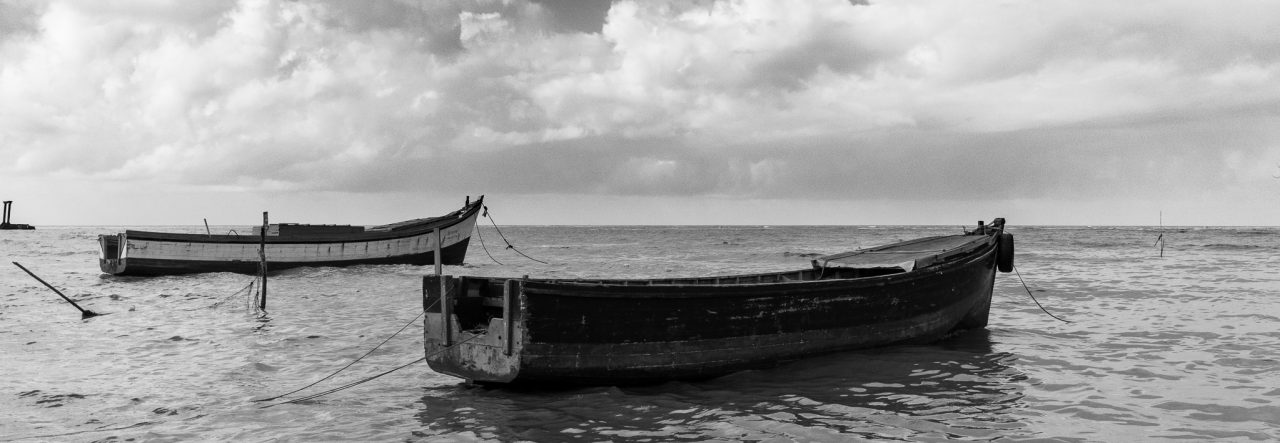
Peaceful at Plaisance – 10-5749

In the earlier years of my photography, my friend Nikhil and I once discussed the various “styles” of some of the international photographers we looked up to and were also comparing with well known, lesser known and likely some unknown local photographers. At the time I didn’t think I had a “style”, but he insisted that I did even though I couldn’t see it, of course, most of his work I could easily identify. 

Fast forward a decade or so, I was chatting with two other friends, Fidal and Taij, and the subject again came up. Taij was listing off names of local photographers and the types of photographs she immediately associated with them, and she was wondering why it was that she did not have an identifiable “style”. All the names and associated photographs she mentioned I understood and could make the same connections, Fidal then listed a few other names, some I could easily associate a “style”, others I could not.

It was in my response to this that spurred me to pen this blog post. I think many of us start off not understanding what it is that makes this “style” we see in the work of others. 
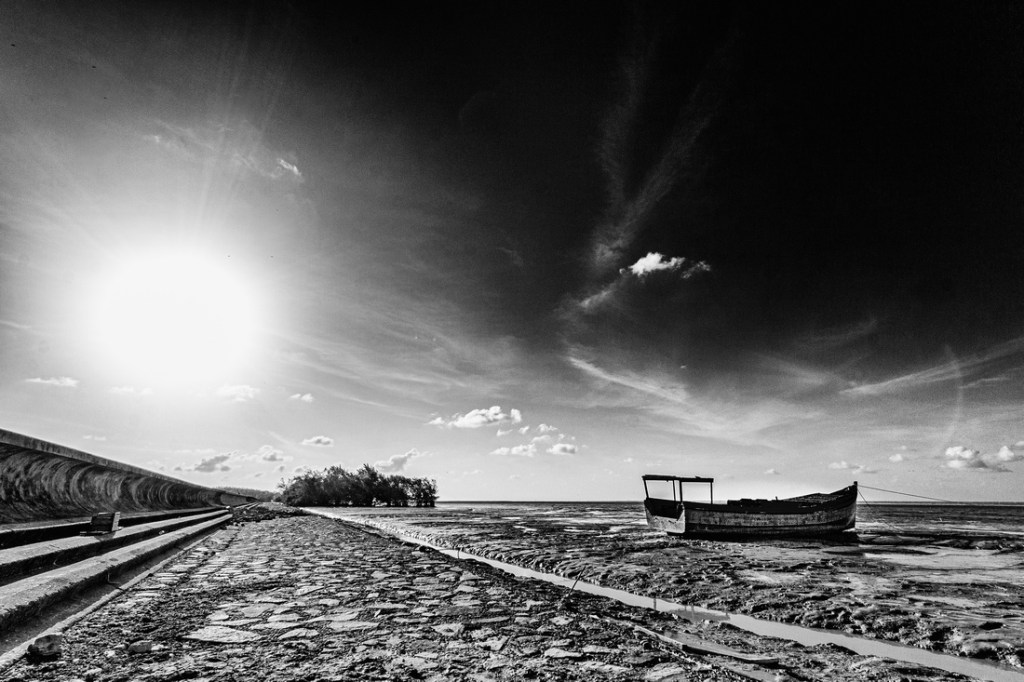
Untitled – 20-7073

In Guyana, all the way up to High School (aged 14-15) we were not taught much about art except for the basics in terms of composition etc., although it is likely more is taught for those taking it as an O-Level subject. We left school knowing nothing about Van Gogh, Rembrandt, Michaelangelo or DaVinci (unless you count the last two as Teenage Mutant Ninja Turtles). So, we knew pretty much nothing about the styles of art. Today I can probably tell a Van Gogh from a Picasso, but only those made in the later years of their lives.

One of the things that was pointed out in the conversation with Fidal and Taij was that one aspect of identifying Photographers through the “style” of their work had to do with familiarity. Because she was familiar with the works of those photographers she mentioned, she could easily identify them; the same could be said for myself and Nikhil a decade ago, although he would probably insist otherwise. Some of the names Fidal mentioned as well as many other local photographers likely have a style but I don’t associate a style with them because I am not as familiar with their work because I have not seen enough of their work, either because I haven’t seen them in the networks I peruse or because they have not shared as many photographs.

Last Rays at Lusignan – 12-5003

I prefer not to call any names, although I am sure that those I’m referring to can easily be listed by members of the photographic community here. For over a decade there has been a movement of sorts, pushing photography among the new generations, this came with easier access to digital photography. The Guyana Photographers Facebook Group has been around almost 14 years now, and in that time, we’ve seen many photographer rise and many have very recognisable “styles”. Some skyrocketed to fame, carving out niches in the social networks of society and had their images spread through existing social media networks, their style of photographs becoming instantly recognisable by many, some becoming household names. I can probably identify three of these myself, there may be others, I respect them, and although most of their work was more portraiture, I also know their work outside of that and admire many of those works.

Other photographers worked at their photography over time, slowly becoming known in various circles. Many of their works are also deserving of praise and admiration. Because of their steady presence, their style of work became just as well known. I consider my work to be among the latter.

Elemental – 13-5549

At the start of my photographic journey, I started a project called the Deck Project, the title was chosen because of the number of photographs. I couldn’t be like other photographers and call it “A Photo a Week” – I had to call it something different, so since it was 52 weeks in a year, and 52 cards in a Deck of Playing Cards, I called mine The Deck. This type of project is akin to forced photography, you HAVE to keep taking photos to have at least one good one every week, and if you set yourself themes it further forces you to take photos in ways you normally may not. During those years, I learned a lot, it was about exploring, exploring different subjects, different techniques, even different lenses, etc., and in that exploration there are no identifiable styles that I can think of, after doing that project for a while, I found where my interests lay in terms of subject matter, and its only then that I was seen to have a style.

When Grace Aneiza Ali was curating for the Un | Fixed Homeland, she came to Guyana looking for a few photographers to include, I was unprepared, and it showed. Nikhil had always said that photographers should have Projects with themes, groupings of photographs that we spent time on, curating them into small collections; I had never done this specifically. When Grace came looking, I realized that the haphazard hodge-podge sets of images I was showing her were not gong to work, it was at this point that upon careful consideration of my work I started to eke out those that spoke to me on a deeper level, and my Oniabo Collection was born, a set of Black and White photos taken along the seawalls and seashores. (All the images in this post are counted among my extended Oniabo collection.)

Koker – 19-6377

All the photos in this collection had a similar style and it was what I had then become known for. These days I take less of those images, for varying reasons. I do a lot more Street Photography, which was something I never saw myself doing, I’ve never been comfortable with a camera around people, nor interacting with people. This is probably why I liked the seascapes and landscapes so much. I think my own style of Street Photography is still evolving but I can already see a particular slant and style to it.

Now for the crux of the matter. What exactly makes the style? I certainly didn’t go looking for a style, and I would probably have failed if I did. Style is not just in the initial taking of the photograph, that’s just part of it. Yes, your composition, your choice of subject, your decisions of perspectives and your use and preference in lighting will contribute to your style, but so will your choice of lenses, maybe even your choice in camera. The last part I think that really has a big impact on your style is your processing. From your choice of processing (editing) software, to how you use it, or them. There’s a certain young lady, Savita, I’m naming you here, although she tried her hand at DSLRs, her use of a cellphone and Snapseed, and her own particular approach to her subjects and how she processes them in Snapseed have given her work a particular style.
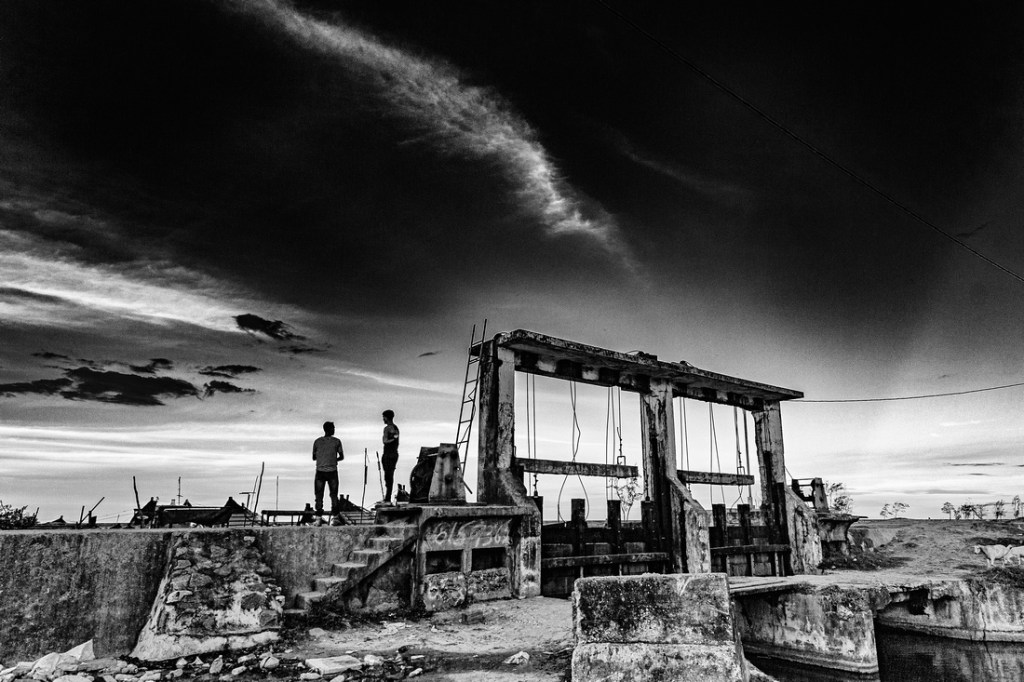
Koker at Lowlands – 21-8136

Some people develop their particular style through a demand for a certain aspect of their photography, this happens particularly to those doing it commercially, others find their styles eventually, or their style finds them, depends on your perspective I suppose.

Don’t give up, just keep shooting, and pay particular attention to they type of subjects you love and how you wish to showcase them, for many that’s where their style finally emerges.

Click on the images to see them in the collection along with many other images.
Reflecting on Riverside

If I remember correctly, this is probably my very first blog post that does not feature a photograph of mine.

This post is about a photograph, a photographer, a poet, a son of Guyana’s soil  –  but since it’s my blog, there has to be something of mine here…

Guyana has not had many famous photographers, and when I say famous, I mean one whose name is practically a household name locally.  On the international scene, we struggle, because we struggle locally to be recognized.

One local name that has always been associated with beautiful photography of Guyana’s natural beauty is Robert J. Fernandes (or as he is better known, Bobby Fernandes), his works have appeared in numerous publications, including his own books, and he has had more than a few exhibitions of his photography at the National Art Gallery at Castellani House..

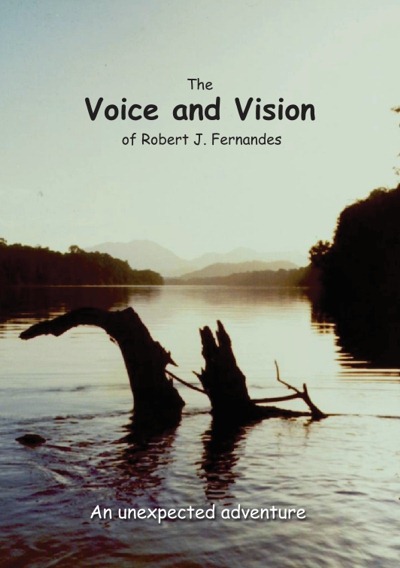
I was doing some prepress work for him for his most recent book, and the photograph he used for the cover took me back to my childhood.  It was a photo that I had seen in print at various stages of my life; I cannot remember the first time, but it was likely on a calendar when I was probably in primary school.  I attended Saint Stanislaus’ College as my secondary school (Bobby Fernandes’ Alma Mater), and at the school’s office there hung a large print of it.

After leaving that institution I don’t recall seeing it for many years, until I attended an event at Moray House and saw a small print on the wall, I instantly recognized it, and pointed it out to Nikhil.

His most recent book is a book of poetry titled “The Voice and Vision of Robert J. Fernandes”, the first section uses many of his photographs that have also inspired poems, among these is the image I refer to with a poem titled “Riverside”.

Below is an image of the cover:

Voice_and_Vision


The book is available at Austin’s Book Store, it is a collection of poems that are truly Guyanese, beautifully written by one of our very own.


This is my poem that was inspired by his photo and the book:

REFLECTIONS ON RIVERSIDE

The day wanes on the river,
the waters gurgle,
and the crickets signal
the end of another day.
Kissed by the sun,
the sky glows in the west
giving shape
to the distant mountains.
The trees cast shadowed reflections
on the rippled waters
as the boat glides,
softly paddled.
In the cooling waters
the cayman prowl
and the arapaima roll
each seeking night’s shade.
An obstruction appears
some distance ahead,
remnants of a tree
from the waters,
From the photographer’s seat
a click you hear,
the trace of a smile
beneath the hat’s brim.
in later years,
iconic,
that single click;
that light on film…
And then one day
as Sunset comes
it would be the face
of his Voice and Vision.


While I dabble in some poetry, I never think that my pieces are worthy of anything but a casual read, before presenting this piece, I asked the opinion and assistance of the famous singer-songwriter Dave Martins (of the Tradewinds), and he willingly gave me advice, I am very thankful for men like Bobby Fernandes and Dave Martins, who, icons and artists in their own fields, would listen to and willingly give advice to myself and others who ask…

I recently was expressive of my gratitude to my former English teacher Ms Hazel Moses, for her hard work, allowing me to be expressive without too many mistakes in my writing 🙂

She also just released a book of Poetry, for young children, which I encourage you to buy for your children, or young relatives and friends.  It is titled “Playing with Words”; it is available at Austin’s Book Store as well as on Amazon.com

playing_with_words


Today is International Literacy Day; read a book, give a book, and support our local authors.

Pakaraima Mountain Safari 2012

This year, as the teams are already on their first day into the 2013 Mountain Safari, I’ve decided to share some images from last year’s trip.

It begins at night, so there’s not much to see 🙂  Our fist stop is at Peter and Ruth, 58 Mile, Lethem Trail; that’s 58 miles from Linden.  There’s a GuyOil Service Station there now, as well as cellular service from Digicel.


Nikhil was our primary driver (but seeing as he didn’t trust any of us behind the wheel, he ended up being the sole driver; I don’t blame him, I wouldn’t trust me behind the wheel on a Safari either)

A view from the back seat, note the can to the right 🙂


The trail crosses the might Essequibo at Kurupukari, where the Mekdeci Mining Company operates the pontoon crossing.


After the crossing, we pass through the Iwokrama Rainforest Preserve, and as soon as you leave the forest, we are hit by the vastness of the Rupununi Savannas, and the lovely undulations of the foothills of the Pakaraima Mountains.  Our next stop is The Oasis, at Annai, run by Mr Colin Edwards and the native Amerindians from the village.  Colin has carved out a piece of paradise at The Oasis and the Rock View Lodge just behind it.


After leaving Annai, we continue on the trail until the turnoff to the first village on the main Safari, Karasabai, where we spend our first night.  Along the trail, the view of both the Pakaraima Mountain range and the Kanuku Mountain range is breath-taking


At Karasabia, we arrive with just enough light left in the day to set up camp… and enjoy the sunset 🙂

I think the first day was probably the most diverse for the photography  🙂  I may not post tomorrow (it being Palm Sunday, but look out for my next post from the Safari.  Best wishes to those on this year’s Safari, come back safely.


Click on the images to see them larger in the Safari 2012 Gallery in the collection.

Pro – defining and refining

Twice in recent times, I’ve been accused of being a “Pro”, as in a Professional Photographer, and both times I’ve been taken aback by it.  Me? a Pro?  Surely they don’t think so!

The first time was on a public discussion on the Guyana Tourism Authority’s Facebook page where we were discussing their Photography Competition, the unfairness of one of the “rules” and the general direction of the competition, the individual calling me a Pro thought that because I was a known name in Photography in Guyana I should not be questioning the rules of the competition (open only to amateur photographers), and stay out of it.  I humbly submit that I am not a known name… stop ten people on the street and ask them if they know Michael Lam, and they’ll all probably ask “Who?”  In the small, but growing, Photography world locally, yes, my name is known alongside those of Nikhil Ramkarran, Dwayne Hackett, Fidal Bassier, Ryan Dos Santos, Amanda Richards, Roshanna Mahadeo, Compton Sarabo, Vishnu Persaud, Philip Williams, Avinash Richard and countless others (sorry if I missed anyone).

The second time was in a newspaper article that covered the recently concluded Guyana Visual Arts Competition and Exhibition, in which I gained the Bronze Medal in the Photography category, the reporter referred to me as “Pro photographer Michael Lam”, again I felt that it was a distinction I could not accept or live up to.

Who is a Professional?  Generally you need to meet certain criteria to be a Professional:

“Expert and specialized knowledge in field which one is practicing professionally” I don’t possess that knowledge, certainly not to a degree to be teaching it or express an “expert” opinion on it, so that one is out.

“Excellent manual/practical and literary skills in relation to profession”, same as the first, not me!

“High quality work in Photography”, OK, if it’s good enough for the National Art Gallery at Castellani House to exhibit, then I suppose I have to acquiesce to this one

“A professional is an expert who is a master in a specific field”, definitely not me, oh no!

Let’s get specific to a Professional Photographer:  A professional photographer uses photography to earn money; amateur photographers take photographs for pleasure and to record an event, emotion, place, or person.  I have a day job, I’ve always described myself as a Photo-hobbyist, and I still see myself that way.  Photography isn’t my primary income, if it were I’d be starving.  Have I made money off of photography?  No, I spent more than I made.   I’ve been fortunate to have some of my images licensed for use in a few calendars, I’ve also had a few images sold for display, does this make me a Professional?  Simply because I’ve had some income from my hobby?

I have to admit, that this view was the one I had originally taken of Professional Photographers, those who have sold their services or products, so now I fall into that category, but I still can’t see myself as a Professional.

I look at Robert (Bobby) Fernandes, whose years of experience and his natural Photographer’s Eye, can capture a scene with a certain “Je ne sais quoi” that tells you its a great photo, and I think that’s a Professional!

I look at Delano Williams, who has been doing portrait and wedding photography in Guyana for many years, and I think that’s a Professional!

I remember Mark Yhap, who took portrait photos on Camp Street, he used SLR film cameras and light meters, and had everyone wanting their photos looking ethereal because of a “soft lens” that he used, and I think that’s a Professional!

I look at Dwayne Hackett, one of the only trained photographers that I know of, who does spectacular work for everyone from Corporations down to studio portraits, and I think that’s a Professional!  He knows more about lighting, depth of field, and most everything else, than I ever will.

I look at Fidal Bassier, who has taken wedding photography and portrait photography to a level Guyana has not seen before, and I think that’s a Professional!

I look at John Greene, who in a short space of time has carved out for himself a space in the Portrait photography world and is steadily expanding his repertoire, and I think that’s a Professional!  I certainly don’t have that business sense or attitude.

I look at my friend Nikhil Ramkarran, Gold Medal winner in the Photography Category of the Guyana Visual Arts Competition and Exhibition, whom I always thought “never had an artistic bone in his body”, but who read and looked at every single thing he could find about Photography and Photographers, and tutored himself (and me along the way) in the art of photography, and I think to myself that’s a Professional!  You could ask him almost anything on the subject, and you’ll not only get expert knowledge, but an expert opinion.

Do I rank with these people, or with so many others in the field now?  I am not sure, I’m happy to call them my peers, my fellow Photographers, and I am proud to be among the talented people of The Guyana Photographers.  Can you book my time for a portrait shoot? No.  Can you book my time for a wedding shoot? No. Will I ever do that?  I don’t know, it’s just not my thing right now, and I have a day job  🙂

Why do people think I am a professional?  I don’t know and it really does not matter in the long run.  I know a few things about photography, and I’m willing to share what I know, and learn from others in the process, but in the end, I merely shoot what I see, and sometimes people like what I shoot.


To the Photographs in this post…. both photos were taken during the first week of the year, and both were shortlisted along with two others for the first photo for the Deck Project, but I chose another, just because I felt like it.  The ;little icon of the Newspaper is the article which I mentioned, clicking on it will give you the full PDF version from the Newspaper’s website (Sunday Times Magazine).

Both of the photos are technically composites, that is they are High Dynamic Range (HDR) images each using three exposures.  Of the two, the seascape that I titles “The Lonely Sea” is my favourite.  HDRs are one of my favourite photographic techniques, but as with all techniques it can be misused.  Click on the images for a better view in the Gallery, along with other HDR images in my Scenic Experiments Gallery on my site.


Definitions highlighted in bold taken from Wikipedia.org

2012 Deck – Week 19

This week almost passed without me having taken any photos.  I had some slim pickings, but I think I got a nice one.

Nikhil has often used the word “Grok” especially as relating to “grokking the scene”.  It has become more important to grok the scene if you want to capture and express through the photograph what it is the scene says to you.

Even though I thought I had heard the word before, no one lese I know has ever used it as often as he does.

I check it up on Wikipedia and then thought to myself, “that’s where it came from!”, apparently coined by the author Robert Heinlein in his novel “Stranger in a Strange Land”.  I love the definition given for it in the novel (keep inmind that it is a Science Fiction novel set on Mars)

Grok means to understand so thoroughly that the observer becomes a part of the observed—to merge, blend, intermarry, lose identity in group experience. It means almost everything that we mean by religion, philosophy, and science—and it means as little to us (because of our Earthling assumptions) as color means to a blind man.

Can we understand a scene so completely that we become as one with it?  That is probably something to aim for, to achieve it would be great,

Here’s a photo of Nikhil, Grokking the scene  🙂

Click on the image for a better view in the Gallery, and if you haven’t seen the other entries for the Deck project they’re all over there in the Gallery.