A Good Photographer

It was only yesterday (August 21, 2024) that my friend Nikhil shared a post from Quora in which the answer in response to a query about whether a certain artiste was a good singer was “A good singer is one that people enjoy listening to and want to hear more of. That is the only definition that actually matters”. Simple, and accurate. The same applies to every artform.

So, when identifying “good photographers” we apply the same reasoning, it will be those whose photographs are appreciated by others and more photographs from the photographer are usually anticipated or sought out.

Guyana has many good photographers, their appeal varying depending on the appeal of their style etc. When it comes to Street Photography, I would say that the field is quite smaller, but still with diverse enough styles on offer.

Today (August 22nd, 2024) is Street Photography Day in honour of the man considered to be the father of Street Photography as we know it, Henri Cartier-Bresson. I’ll share two of my more recent Street Photography images, one taken almost three weeks ago at Mon Repos Market, and the other, taken yesterday with the idea of posting it today for Street Photography Day. In both the aspect to be looking at are the actions, postures, or the impression you get, from the people in the frame.
Mon Repos – 24-1303 | Mon Repos Market, Mon Repos, East Coast Demerara, Guyana.

While Henri Cartier-Bresson is considered the father of modern Street Photography, many others have contributed to the development of the genre over the decades, including but certainly not limited to Dorothea Lange, Lee Freidlander, Vivian Maier, Gordon Parks, Jamel Shabazz, Brandon Stanton, Saul Leiter and Bruce Gilden.

From the late 1800s/early 1900s to today, the approach to Street Photography has changed, influenced not only by artistic endeavours, but also by the changing times, changing attitudes, and of course, the camera itself. The bulkiness of the early cameras would have put many limitations on the approach to Street photography, while the development of portable cameras in the early 1900s, photographers were more mobile, with the ability to take the equipment out in the streets without the need to lug large equipment around and setup for the shot.

As cameras got smaller, more affordable and more easily accessible, and with the development of coloured film, the approach to Street Photography changed with the times.. Today, we not only have the left-over DSLR Cameras, but also newer mirrorless cameras, standard compact cameras, and the modern mobile phone with built-in cameras that can often rival many compact cameras.

Most of my Street Photography is done using a camera that is smaller than a standard Business Card, and about an inch thick. It allows me to stay somewhat unobtrusive, and be more likely to catch the candid moments I’m on the lookout for. Although being unobtrusive for me is hard, since I look oriental (that being a very small portion of Guyana’s population), and I inevitably wear some sort of Hat, for which I am relatively well known.
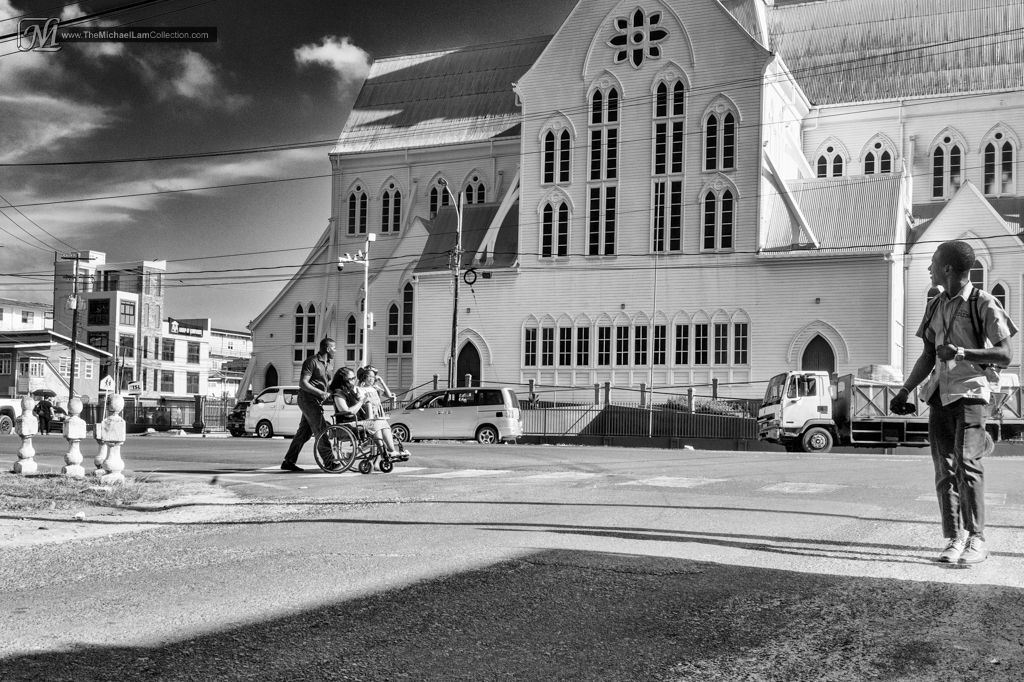
Traversing the Transept – 24-1321 | Church and Carmichael Streets, Cummingsburg, Georgetown, Guyana.

If you’re a Street Photographer, or even have some inclination in that direction, are are a fan of the genre, have a Happy Street Photography Day, and enjoy taking those Street Photos.

I think I shall go home after work and browse through that Vivian Maier book that I’ve neglected for a little while.

There were (and sometimes even “are”) times in my photographic journey when I’ve wondered whether I was a Good Photographer, at this point, my friend Nikhil would thump me upside the head just for thinking it, since there are people who like my photography, and many have remarked about my absence from the local scene recently. I acknowledge, based on the opening premise of this post, that I am a Good Photographer. Cheers to all you Good Photographers out there!
Balance

In a post-pandemic world, just surviving feels like a balancing act that is doomed to failure, with cost of many goods more than double what they were in 2019, but salaries and income maybe a percentage point or two more than back then. But, that has little to do with photography, unless you do photography for a living, which, thankfully, I don’t.

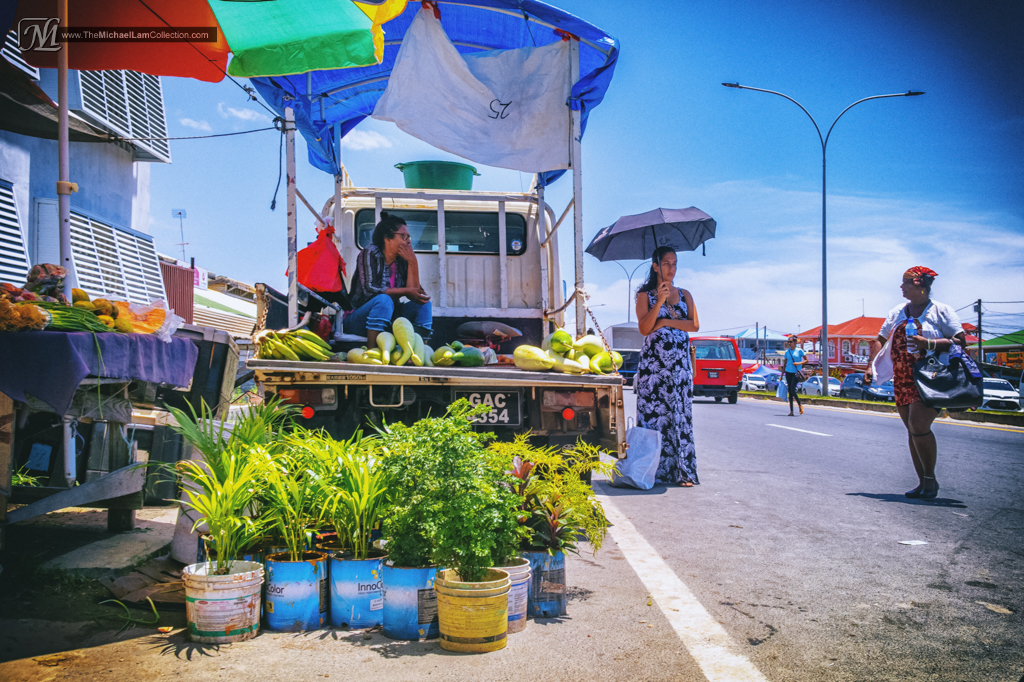
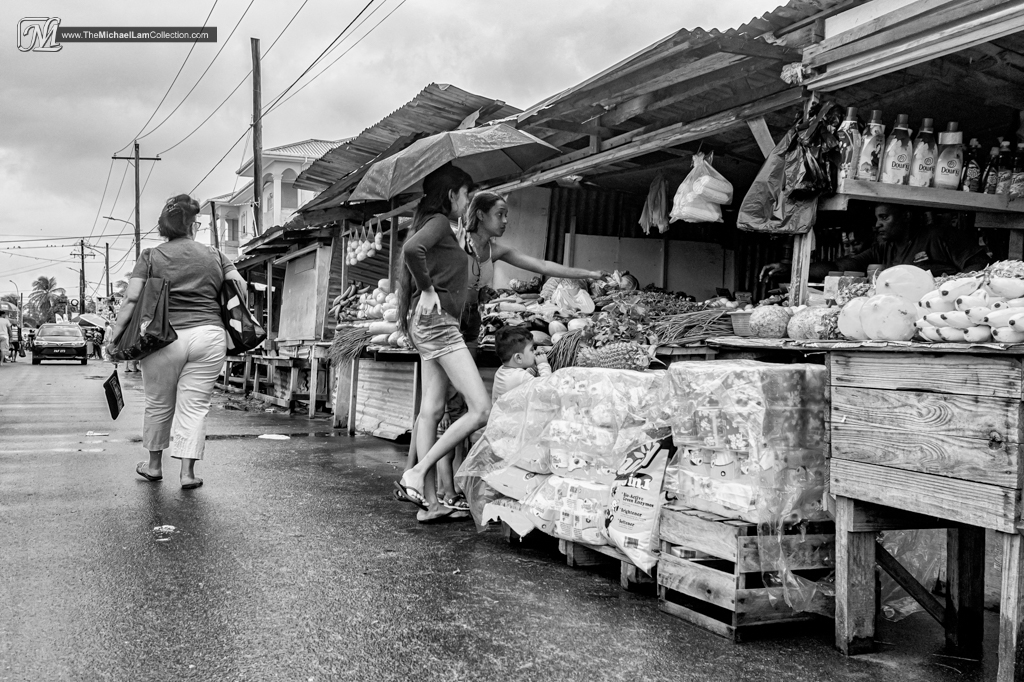
Supermarkets are nice to shop in, if you can afford the added cost that usually accompanies many of the goods there, especially fresh produce, so many still visit the various public Market places, and if you’ve followed my Street Photography, you probably know I frequent Mon Repos market, and it usually makes for some good Street Photography. Fresh produce abounds along with many other stalls, and the variety in people and activity makes for a good walk with a camera almost any Saturday.

Market – 24-1170 | Mon Repos Market, East Coast Demerara

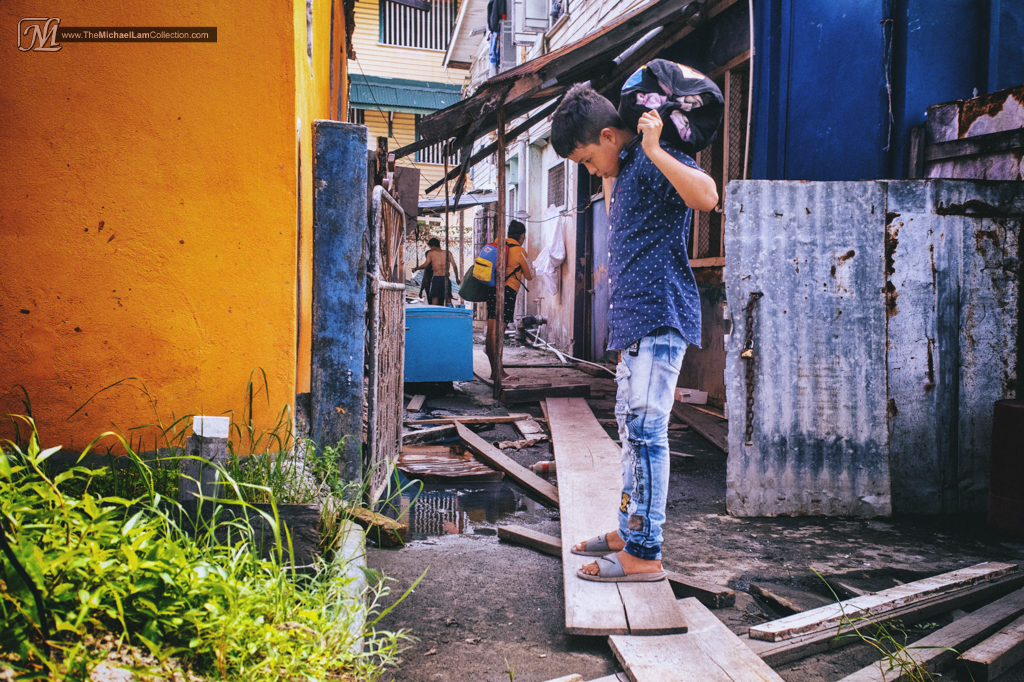
There are times when I come upon a scene, and while I can draw my own conclusions about what’s going on, its much more fun to elicit the views of others from the same image. While much of my Street Photography tends to be in black and white, some scenes demand to be left in colour, and I think this was one of them, this next photo was taken on a walk down Quamina Street (formerly Murray Street) in the Cummingsburg ward of Georgetown.

Quamina – 24-1177 | Quamina Street, Cummingsburg, Georgetown, Guyana

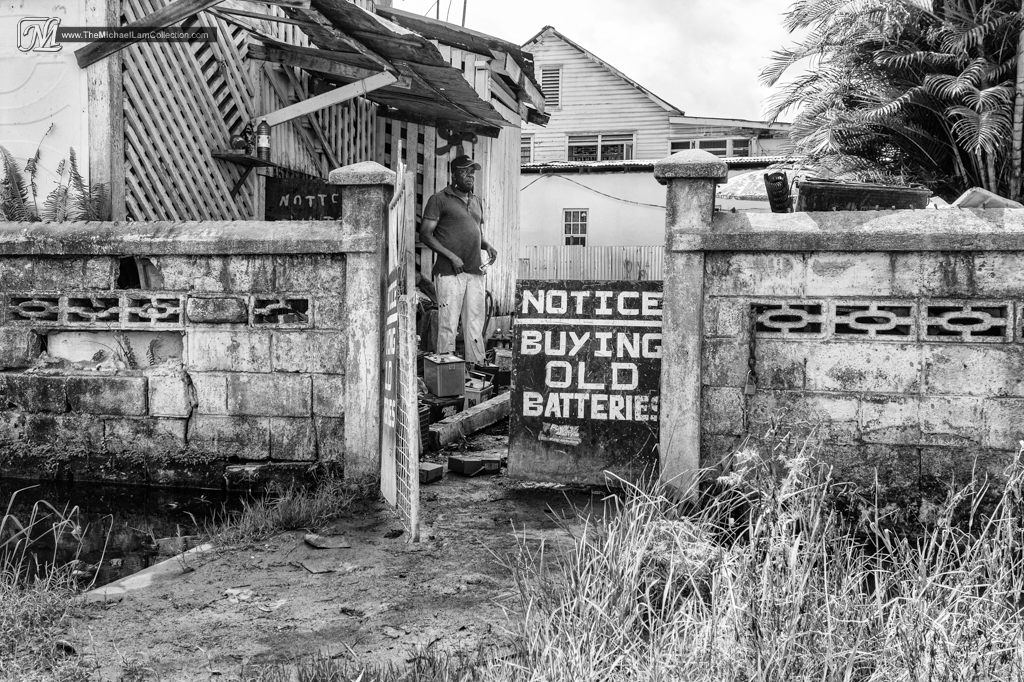
On the corner of Quamina Street and Waterloo Street, there’s an old house, right downstairs at that house is “Battery Man”, who purchases old, used batteries for their “lead” content. I got quite a suspicious look out of him when I walked by casing the place for a good photo. After taking the photo, I smiled and said “Good Day” and went on my merry way.

Battery Man – 24-1178 | Waterloo Street, Cummingsburg, Georgetown, Guyana.

I think its just this type of variety of subjects that draws me to Street Photography when I’m not indulging in Landscape / Seascape photography. There’s life in the images, as well as stories that seem obvious, but also stories that others can infer for us.

As usual, click on the images to see them in the Gallery along with other images in the collection.

Never Meet Your Heroes

They say that you should never meet your heroes, because they’re sure to disappoint you. I’ve had this experience a few times, because, the person you see or hear on screen or radio, upon that pedestal that their fans have put them upon, or that you imagine them to be, is rarely who they are.

But telling people to never meet their Heroes, that could be bad advice, because instead of deifying the individual, by putting them upon that pedestal, we humanise them by meeting them, seeing the side of them that is often not visible to us. Yes, this can result in seeing them as different, and yes, you can be disappointed, but viewed from a wider point of view, it can illuminate aspects of their artistry that were not as obvious before.

There are many artistes I admire, few I’d call Heroes, and most of those have long passed from this world, so meeting them in this lifetime is not a possibility. Yes, many are photographers, kinda goes with the territory.

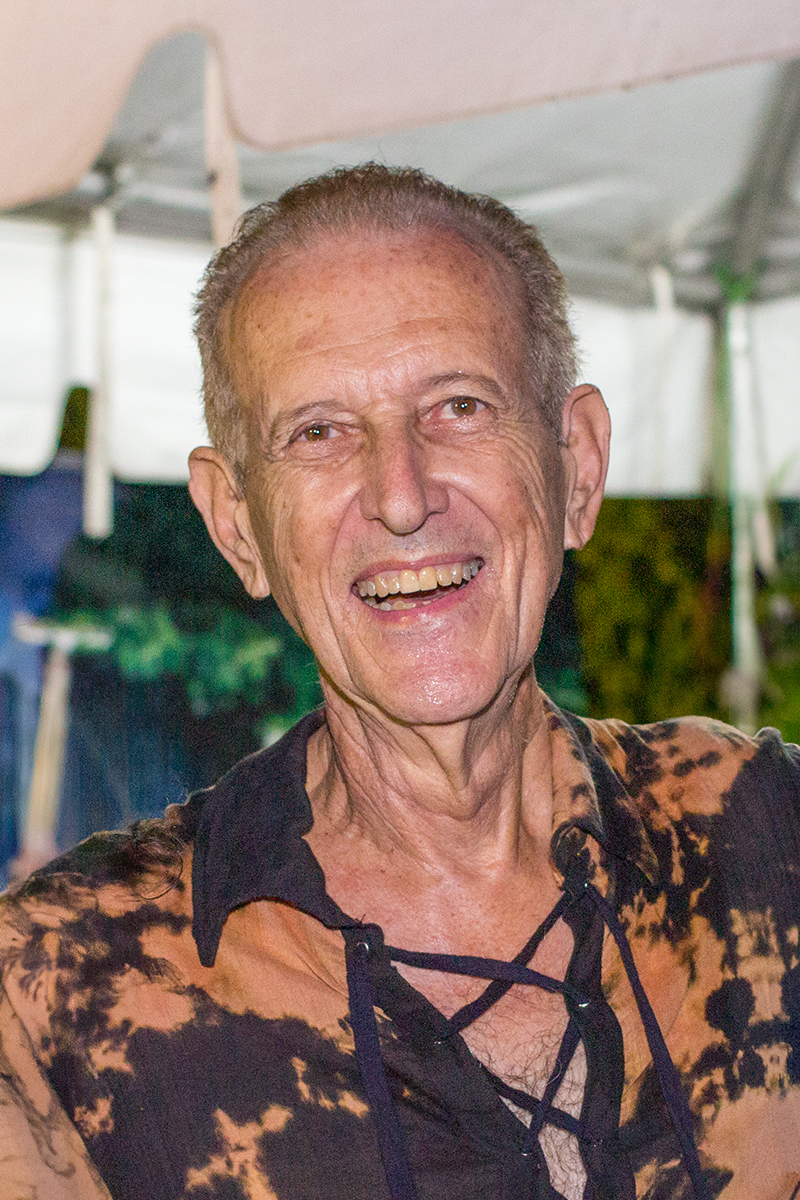
There are Heroes of mine whom I have met and never regretted it, and one of them died last night (August 18, 2024), causing my entire household to shed tears. He returned to our shores with his band to perform at Thirst Park to raise funds for his Alma Mater (and mine), Saint Stanislaus College, I refer to Dave Martins. I met him for the first time after his first set on stage, he was down in the grounds getting a drink of water, and I gathered up the courage to say Hello. The evening was unforgettable, even to him singing through the pouring rain to a crowd that would not leave the dance floor (including then Prime Minister Samuel Hinds).

Upon his repatriation to Guyana some years later I again made his acquaintance, just in passing and saying Hello several times. Then in 2012 when I was fortunate to exhibit alongside my friend Nikhil Ramkarran at the National Art Gallery (Castellani House), I was surprised and thrilled to read Dave’s review of the exhibition in his column “So it go” (Stabroek News, March 4, 2012). His kind words then and his support to us in the subsequent years has only made me think higher of him than I ever had. I grew up listening to his music, my father had many of his LPs, and my fascination never waned. Over the years I’ve attended many of his performances here, and my children were also fortunate to see and hear him in person as well as to meet him.

On stage, he was never just a singer, he was a performer, stopping the music many times to tell stories and anecdotes, keeping the crowd entertained and educated. In person he was Dave (never David), he always had a kind word for you, always a smile, always encouraging, he didn’t only write “Not a Blade of Grass”, through his column “So it go” he wrote to us about how we should live, how we should remember ourselves as Guyanese, and how we should treat each other.

You will be missed Dave. And you were a Hero to me, I am glad to have met you, to have been considered as someone you could call “padna”

Dave Martins: 1934 – 2024
( Photograph © Michael C. Lam )

The Ubiquitous Boat

I haven’t done any extensive research, but from personal knowledge and experience most photography in Guyana was once of a commercial nature or personal nature, and not very much as an Art. The Guyana Photographers Facebook Group was started in 2010, with an aim to gather photographers of all walks together and to share knowledge and information, get to know other photographers, whether of a professional nature, amateur or just a casual type.

In 2012, Photography was included in the Guyana Visual Arts Competition for the first time, and this recognition of photography as an Art spurred on a new generation of Photographers in Guyana. From this initial competition and exhibition and into subsequent ones of its nature and smaller exhibitions, it was notable that there were always submissions that included Boats in the composition.

If you live along Guyana’s coast, then its understandable, boats are almost like Kiskadees, they’re everywhere (along the coast). I recall discussing the propensity of photographers to include boats in their compositions with one of the judges of the GVACE, and it was mentioned that the sheer number of boat photographs overwhelmed the judges, but it also made it easier for them to narrow the field of shortlisters.

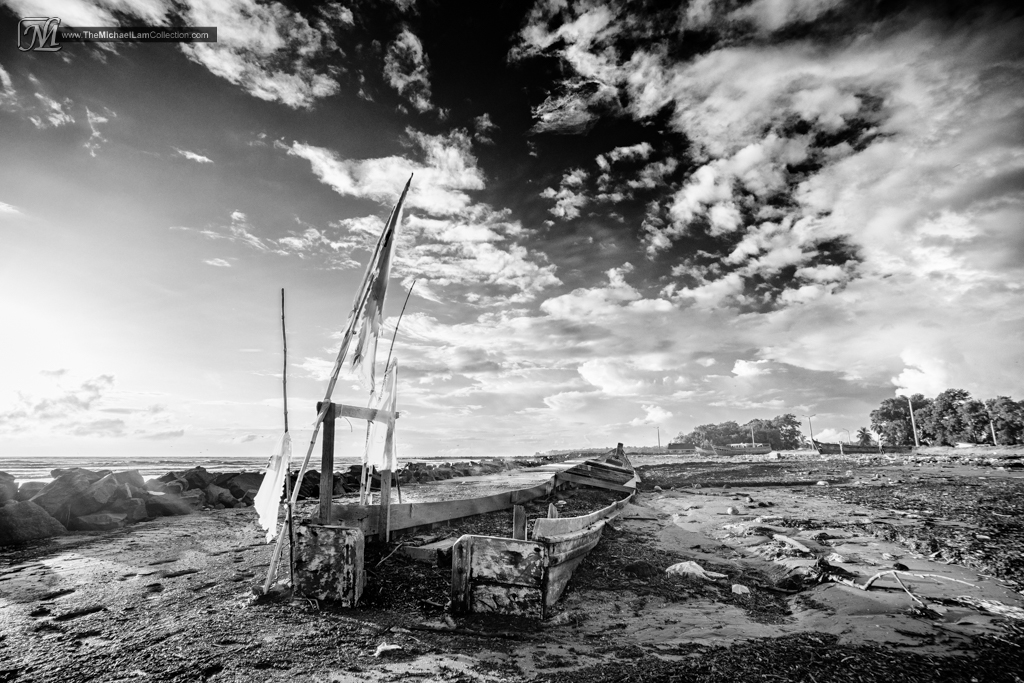
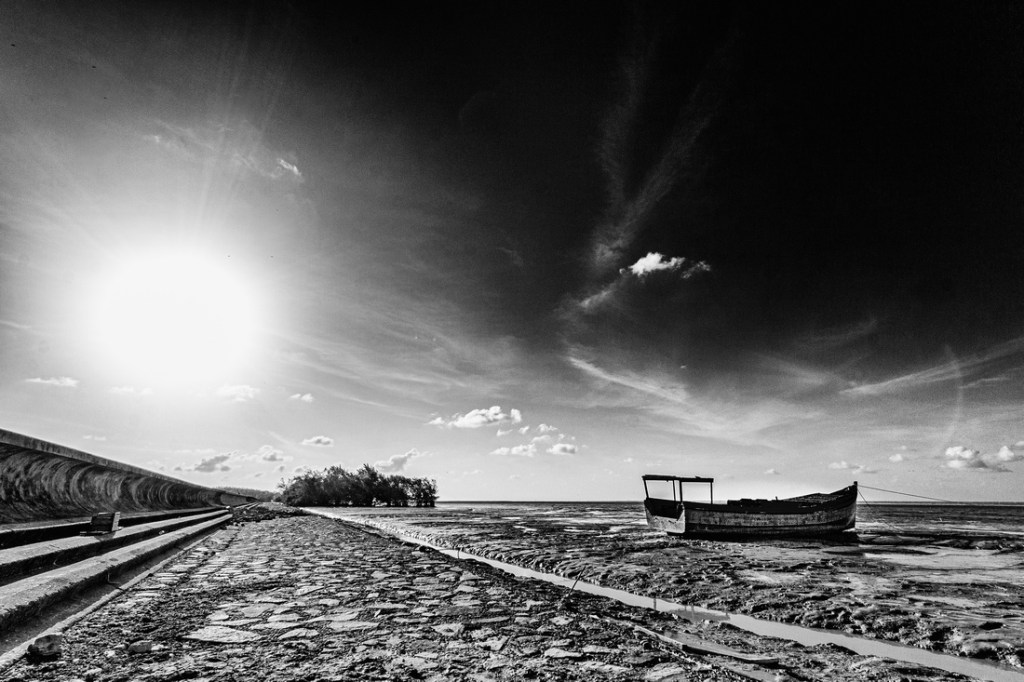
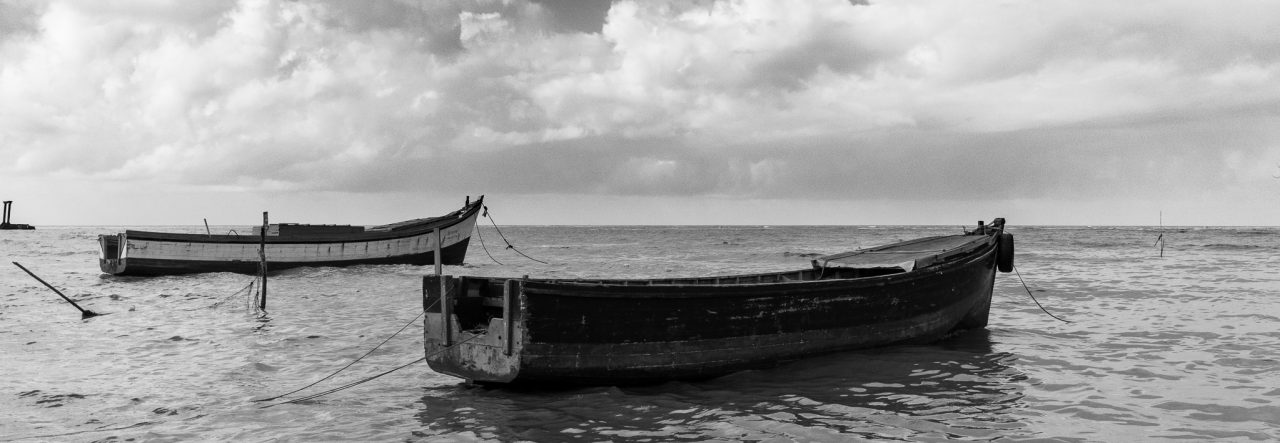
Unity, Mahaica, East Coast Demerara, Guyana

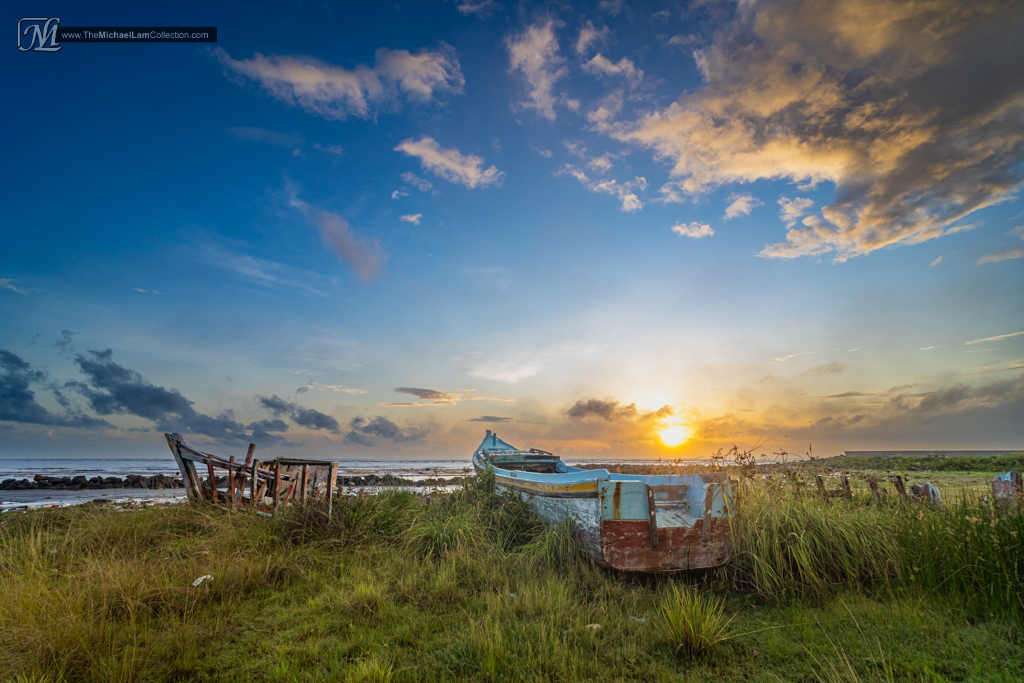
I think that the form, structure and texture that boats offer photographers is understandable, and on a relatively empty beach, the inclusion of a boat as a secondary subject can add to a composition. I am fairly well known for my black and white renditions, so today I’ve share one recent capture in Black and White, but I’ll also share a capture from the same time in Colour.

I have found that because I have not been shooting as frequently in recent years (you can read that as “since the Pandemic” ), I sometimes walk around with the camera in hand and almost have to force myself to take photos, I am not sure if its because I am not seeing the shots I want or if its something else. Also (for more than a year now) since my camera bag was stolen, I have been using a new mirrorless camera and a manual wide-angle lens for images like these, and the feel is not as with the old combination, I think I just miss my old gear.

Sunrise at Unity, Mahaica, East Coast Demerara, Guyana.

I think the next time I go out to a beach such as this I need to walk with a Tripod and do some experimenting.

Whatever the reason, I can see photographers now and in the future continuing to include boats in their composition of photos along our coasts and river banks. Making such images stand out next to others of its ilk by other gifted photographers will be the challenge for us.

As always, click on the images to see then in the Gallery, along with other Photographs.

Style

Peaceful at Plaisance – 10-5749

In the earlier years of my photography, my friend Nikhil and I once discussed the various “styles” of some of the international photographers we looked up to and were also comparing with well known, lesser known and likely some unknown local photographers. At the time I didn’t think I had a “style”, but he insisted that I did even though I couldn’t see it, of course, most of his work I could easily identify. 

Fast forward a decade or so, I was chatting with two other friends, Fidal and Taij, and the subject again came up. Taij was listing off names of local photographers and the types of photographs she immediately associated with them, and she was wondering why it was that she did not have an identifiable “style”. All the names and associated photographs she mentioned I understood and could make the same connections, Fidal then listed a few other names, some I could easily associate a “style”, others I could not.

It was in my response to this that spurred me to pen this blog post. I think many of us start off not understanding what it is that makes this “style” we see in the work of others. 

Untitled – 20-7073

In Guyana, all the way up to High School (aged 14-15) we were not taught much about art except for the basics in terms of composition etc., although it is likely more is taught for those taking it as an O-Level subject. We left school knowing nothing about Van Gogh, Rembrandt, Michaelangelo or DaVinci (unless you count the last two as Teenage Mutant Ninja Turtles). So, we knew pretty much nothing about the styles of art. Today I can probably tell a Van Gogh from a Picasso, but only those made in the later years of their lives.

One of the things that was pointed out in the conversation with Fidal and Taij was that one aspect of identifying Photographers through the “style” of their work had to do with familiarity. Because she was familiar with the works of those photographers she mentioned, she could easily identify them; the same could be said for myself and Nikhil a decade ago, although he would probably insist otherwise. Some of the names Fidal mentioned as well as many other local photographers likely have a style but I don’t associate a style with them because I am not as familiar with their work because I have not seen enough of their work, either because I haven’t seen them in the networks I peruse or because they have not shared as many photographs.

Last Rays at Lusignan – 12-5003

I prefer not to call any names, although I am sure that those I’m referring to can easily be listed by members of the photographic community here. For over a decade there has been a movement of sorts, pushing photography among the new generations, this came with easier access to digital photography. The Guyana Photographers Facebook Group has been around almost 14 years now, and in that time, we’ve seen many photographer rise and many have very recognisable “styles”. Some skyrocketed to fame, carving out niches in the social networks of society and had their images spread through existing social media networks, their style of photographs becoming instantly recognisable by many, some becoming household names. I can probably identify three of these myself, there may be others, I respect them, and although most of their work was more portraiture, I also know their work outside of that and admire many of those works.

Other photographers worked at their photography over time, slowly becoming known in various circles. Many of their works are also deserving of praise and admiration. Because of their steady presence, their style of work became just as well known. I consider my work to be among the latter.

Elemental – 13-5549

At the start of my photographic journey, I started a project called the Deck Project, the title was chosen because of the number of photographs. I couldn’t be like other photographers and call it “A Photo a Week” – I had to call it something different, so since it was 52 weeks in a year, and 52 cards in a Deck of Playing Cards, I called mine The Deck. This type of project is akin to forced photography, you HAVE to keep taking photos to have at least one good one every week, and if you set yourself themes it further forces you to take photos in ways you normally may not. During those years, I learned a lot, it was about exploring, exploring different subjects, different techniques, even different lenses, etc., and in that exploration there are no identifiable styles that I can think of, after doing that project for a while, I found where my interests lay in terms of subject matter, and its only then that I was seen to have a style.

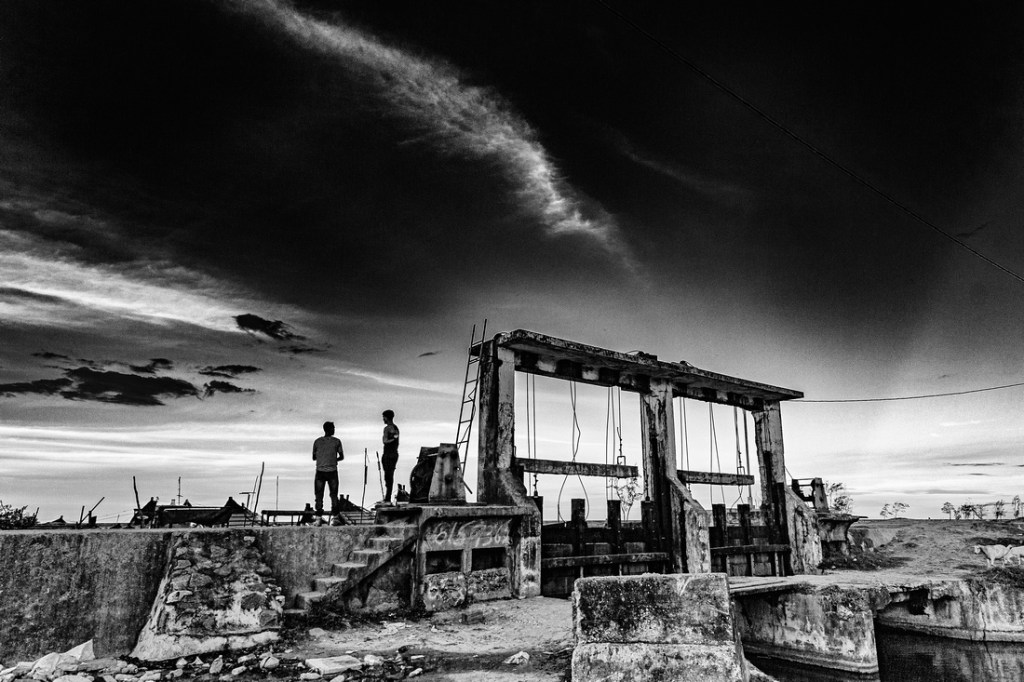
When Grace Aneiza Ali was curating for the Un | Fixed Homeland, she came to Guyana looking for a few photographers to include, I was unprepared, and it showed. Nikhil had always said that photographers should have Projects with themes, groupings of photographs that we spent time on, curating them into small collections; I had never done this specifically. When Grace came looking, I realized that the haphazard hodge-podge sets of images I was showing her were not gong to work, it was at this point that upon careful consideration of my work I started to eke out those that spoke to me on a deeper level, and my Oniabo Collection was born, a set of Black and White photos taken along the seawalls and seashores. (All the images in this post are counted among my extended Oniabo collection.)

Koker – 19-6377

All the photos in this collection had a similar style and it was what I had then become known for. These days I take less of those images, for varying reasons. I do a lot more Street Photography, which was something I never saw myself doing, I’ve never been comfortable with a camera around people, nor interacting with people. This is probably why I liked the seascapes and landscapes so much. I think my own style of Street Photography is still evolving but I can already see a particular slant and style to it.

Now for the crux of the matter. What exactly makes the style? I certainly didn’t go looking for a style, and I would probably have failed if I did. Style is not just in the initial taking of the photograph, that’s just part of it. Yes, your composition, your choice of subject, your decisions of perspectives and your use and preference in lighting will contribute to your style, but so will your choice of lenses, maybe even your choice in camera. The last part I think that really has a big impact on your style is your processing. From your choice of processing (editing) software, to how you use it, or them. There’s a certain young lady, Savita, I’m naming you here, although she tried her hand at DSLRs, her use of a cellphone and Snapseed, and her own particular approach to her subjects and how she processes them in Snapseed have given her work a particular style.

Koker at Lowlands – 21-8136

Some people develop their particular style through a demand for a certain aspect of their photography, this happens particularly to those doing it commercially, others find their styles eventually, or their style finds them, depends on your perspective I suppose.

Don’t give up, just keep shooting, and pay particular attention to they type of subjects you love and how you wish to showcase them, for many that’s where their style finally emerges.

Click on the images to see them in the collection along with many other images.

Mash 2023

Its unlikely that I’d be going out to the main Mashramani float and band parade this year, but I do enjoy seeing the Children’s Mashramani Parade (that would more accurately be the schools parade)

I’ve processed images taken last Saturday at that parade, if you click on the graphic below it will take you to the Gallery with the images (at time of publication all images had not uploaded, it was taking inordinately long to do it)

For all those heading out on the road for Mashramani, be safe, enjoy, and keep shooting!

Wide

At an early stage in my photographic journey I was fascinated by Macrophotography, the ultra-close photographs of everyday things, it seemed a completely different world seeing things that close. This would have been mostly before I started using an SLR Camera, I had a Canon SuperZoom, and I used clip-on lenses for the macro photography, quite fun at the time.

Most of my favourite photography using DSLRs have been on the opposite end of the spectrum, wider shots. I was quite attached to the combination of the Canon 60D camera body (and the 50D prior to that) and the Sigma 10-20mm wide angle Lens. Its probably no surprise that I wanted a wide lens to accompany the Canon R7, I decided to go for the (Venus Optics) Laowa 10mm, although its fully manual, it seemed the step I should take at this point.

Here’s my first photo taken using it, not meant to be anything spectacular, just tried to get a decent first shot, but I like how it turned out, a bit unsettling and intriguing to me.

Untitled – 23-0018 | Kingston Seawall, Georgetown, Guyana | Canon R7, Laowa 10mm

Click on the image to see it in the Gallery along with other Black and White images in the collection.

Keep Shooting folks!

Market Scenes

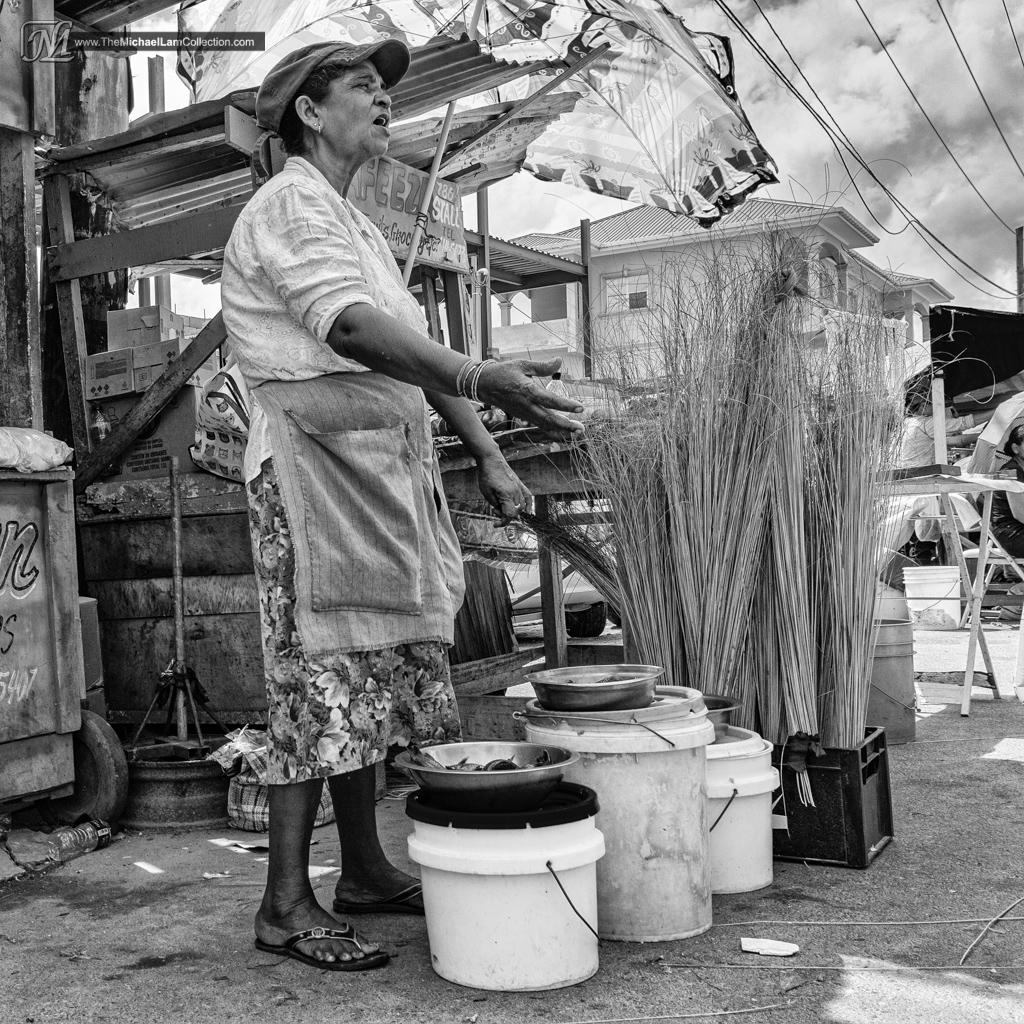
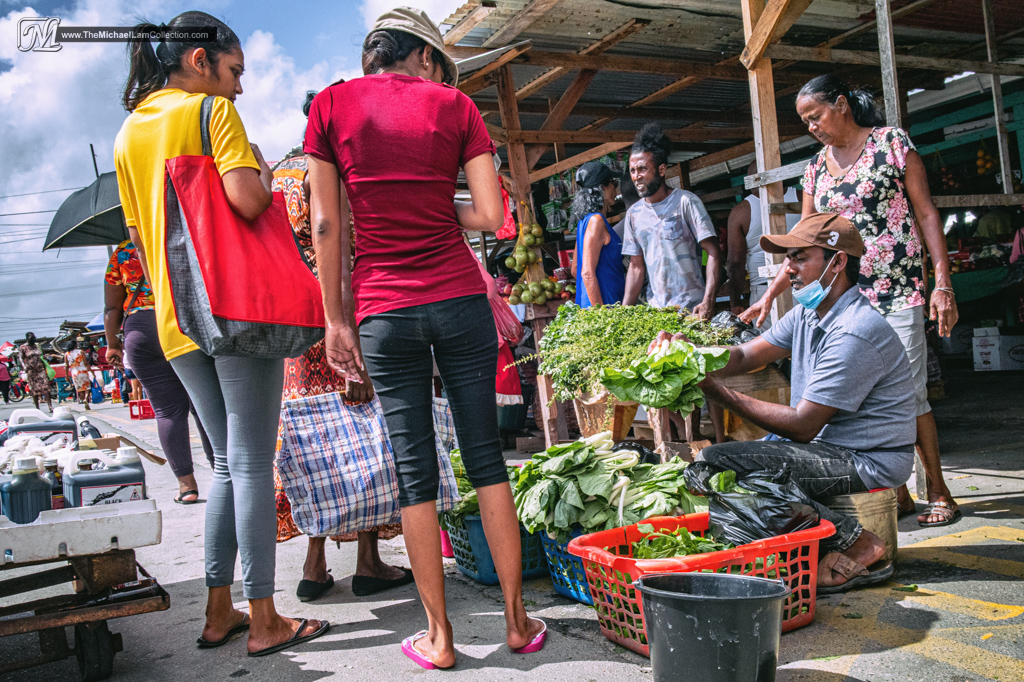
Following on the previous post, I just wanted to share a few more images from that day. The market is a place rich in colour, activity, people, culture, and so much more.

Some times I feel that I get too many similar shots, so many go unshared, often unprocessed, but here’s a few that made it past the processing and into the sharing category 🙂

All kinds of Everything – 23-0004 | Mon Repos Market – Shot with DXO ONE Camera
Hassa, Broom ‘ere! – 23-0011 | Mon Repos Market, ECD | Shot with DXO ONE Camera
Greens – 23-0013 | Mon Repos Market, ECD | Shot with DXO ONE Camera

Click on the images to see them in the Gallery “In the Streets” along with other images. Keep Shooting.

Bootleg

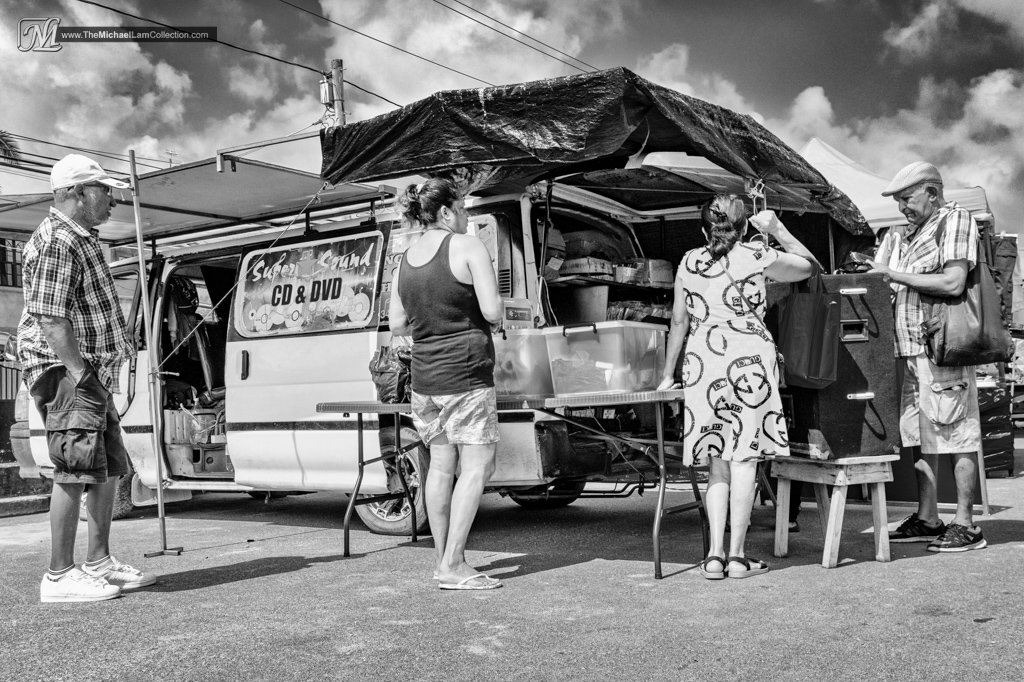
Guyana, as well as the wider Caribbean, has long had problems with pirated or bootlegged music, software, and movies; I know its a worldwide problem, but I can only speak to a localized perspective.

I like to think that its lessened in recent years, with the advent of streaming and subscription services, etc., although I suspect I’m wrong. Dave Martins, leader of the famed Tradewinds band, wrote a song called Copycats, and although it dealt more with the West Indian habit of adopting foreign habits, accents and mannerisms, it nevertheless pointed out our habit of copying. Dave himself is very disillusioned since copies of Tradewinds music can be found all over, and this, of course, means little income to him in terms of sales and royalties.

In Guyana, the idea of robust Intellectual Property (IP) legislation has been floated, toyed with, promised, and neglected by several administrations, and this not only lends to the piracy but somewhat emboldens it. Without IP legislation it is extremely difficult to enforce copyright, and the government knows this, and the artists feel it, every day.

Despite a good and productive music sector, a dynamic visual arts sector, and a growing performance arts sector, IP Legislation seems but a spectre on the horizon, as seen at midnight, in a mist shrouded rainforest. As photographers we see a regular “appropriation” of our images in the local media, some photographers are lucky enough to get back from those agencies who did so, but others do not. I’ve been asked many times, and have often allowed the use of an image for no monetary recompense, but with attribution, I’ve sometimes gotten a small fee, its that kind of world.

As time has gone by, many agencies seek out the photographers, and ask permission, and offer to license the image, a positive sign in a dismal marketplace. One instance that still rankles with me is when one of my images was used for a local publication, and when the publisher was approached, I was told that it was not my image, and that I had nothing to get; I was eventually urged by a lawyer to not pursue it, as it was unlikely to net me anything in the long run.

The Bootleg Scene – 23-0001 | Shot with DXO ONE Camera

In the meantime, we can still stop and get the newest or oldest, favourite songs and movies from an assortment of vendors; and in my favour, this particular one made for a decent street photo.

Keep Shooting folks! Click the image to see it in the Gallery along with other Street Photography Images.

0001

For photographers, or I should say digital photographers, that 0001 number usually means you’ve cycled through the 9,999 actuations on your camera and you’re starting over, or some photographers actually do a reset to 0001 when they start a new year, or whatever period they decide to set for themselves. More commonly, it usually means a new camera, fresh out of the box.

Late last year, someone (or maybe a few someones) broke into the office where I work (photography is not my day-job, or night-job for that matter) and they stole my camera bag with all the gear in it, to date we have not recovered anything from that. So, after several years, I’ve had to acquire a new camera, at least one for now, I can’t quite replace what’s gone, but I’ve started somewhere. Thanks to a little saving and a lot of help from friends I don’t deserve, I got what’s essentially a mid-range mirrorless camera.

So here’s the first image from the new Camera:

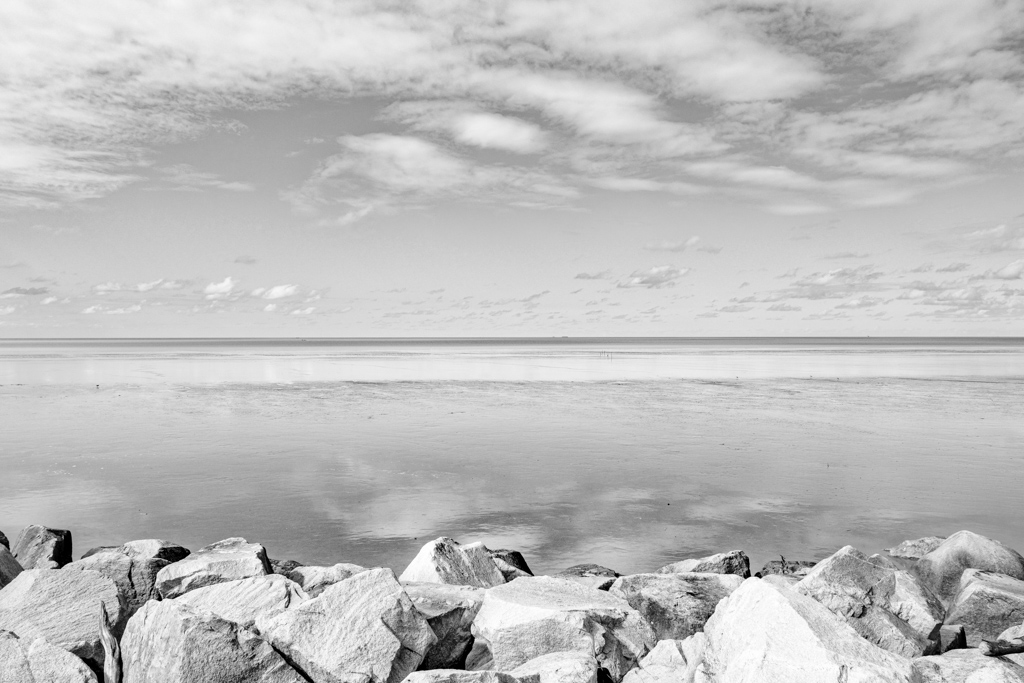
23-0001 | Seascape – Thomaslands Seawall, Georgetown, Guyana – 2023

For those interested in the gear, don’t wait to be impressed…. its a Canon EOS R7, the lens I used for this image is the Canon RF 16mm F2.8 STM.

Click on the image to see it in the Gallery along with other Seawall images. Keep Shooting!