A Good Photographer

It was only yesterday (August 21, 2024) that my friend Nikhil shared a post from Quora in which the answer in response to a query about whether a certain artiste was a good singer was “A good singer is one that people enjoy listening to and want to hear more of. That is the only definition that actually matters”. Simple, and accurate. The same applies to every artform.

So, when identifying “good photographers” we apply the same reasoning, it will be those whose photographs are appreciated by others and more photographs from the photographer are usually anticipated or sought out.

Guyana has many good photographers, their appeal varying depending on the appeal of their style etc. When it comes to Street Photography, I would say that the field is quite smaller, but still with diverse enough styles on offer.

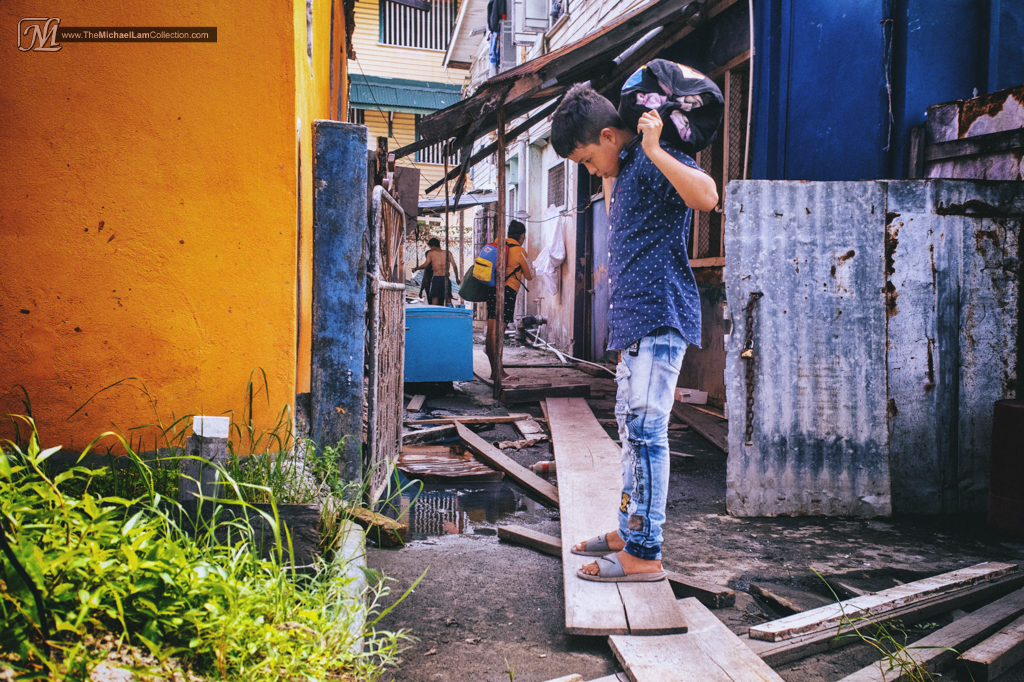
Today (August 22nd, 2024) is Street Photography Day in honour of the man considered to be the father of Street Photography as we know it, Henri Cartier-Bresson. I’ll share two of my more recent Street Photography images, one taken almost three weeks ago at Mon Repos Market, and the other, taken yesterday with the idea of posting it today for Street Photography Day. In both the aspect to be looking at are the actions, postures, or the impression you get, from the people in the frame.
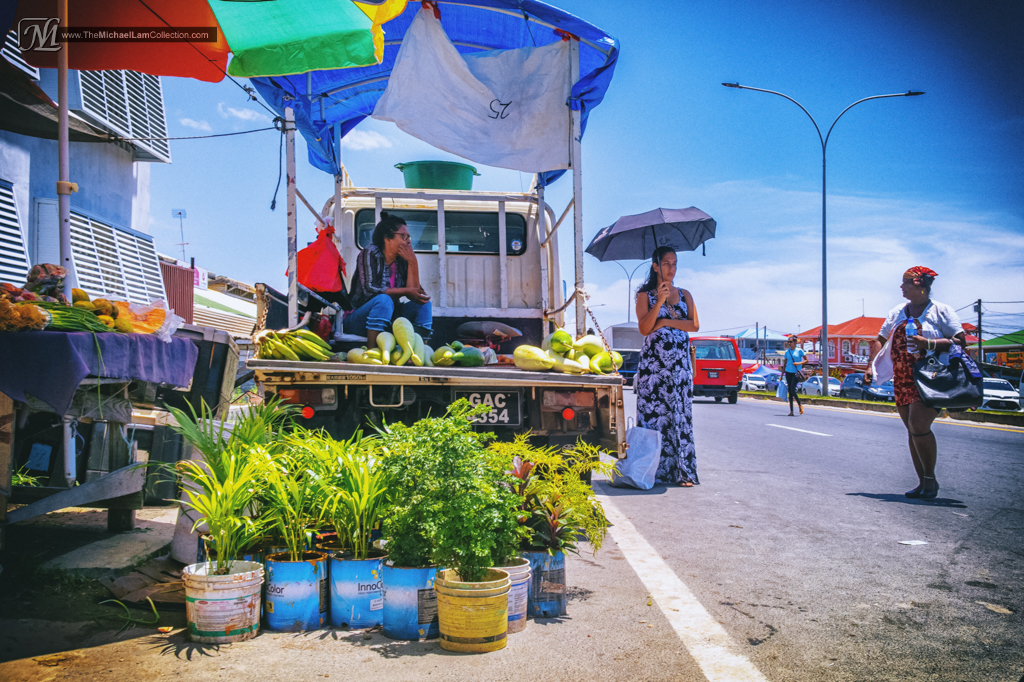
Mon Repos – 24-1303 | Mon Repos Market, Mon Repos, East Coast Demerara, Guyana.

While Henri Cartier-Bresson is considered the father of modern Street Photography, many others have contributed to the development of the genre over the decades, including but certainly not limited to Dorothea Lange, Lee Freidlander, Vivian Maier, Gordon Parks, Jamel Shabazz, Brandon Stanton, Saul Leiter and Bruce Gilden.

From the late 1800s/early 1900s to today, the approach to Street Photography has changed, influenced not only by artistic endeavours, but also by the changing times, changing attitudes, and of course, the camera itself. The bulkiness of the early cameras would have put many limitations on the approach to Street photography, while the development of portable cameras in the early 1900s, photographers were more mobile, with the ability to take the equipment out in the streets without the need to lug large equipment around and setup for the shot.

As cameras got smaller, more affordable and more easily accessible, and with the development of coloured film, the approach to Street Photography changed with the times.. Today, we not only have the left-over DSLR Cameras, but also newer mirrorless cameras, standard compact cameras, and the modern mobile phone with built-in cameras that can often rival many compact cameras.

Most of my Street Photography is done using a camera that is smaller than a standard Business Card, and about an inch thick. It allows me to stay somewhat unobtrusive, and be more likely to catch the candid moments I’m on the lookout for. Although being unobtrusive for me is hard, since I look oriental (that being a very small portion of Guyana’s population), and I inevitably wear some sort of Hat, for which I am relatively well known.
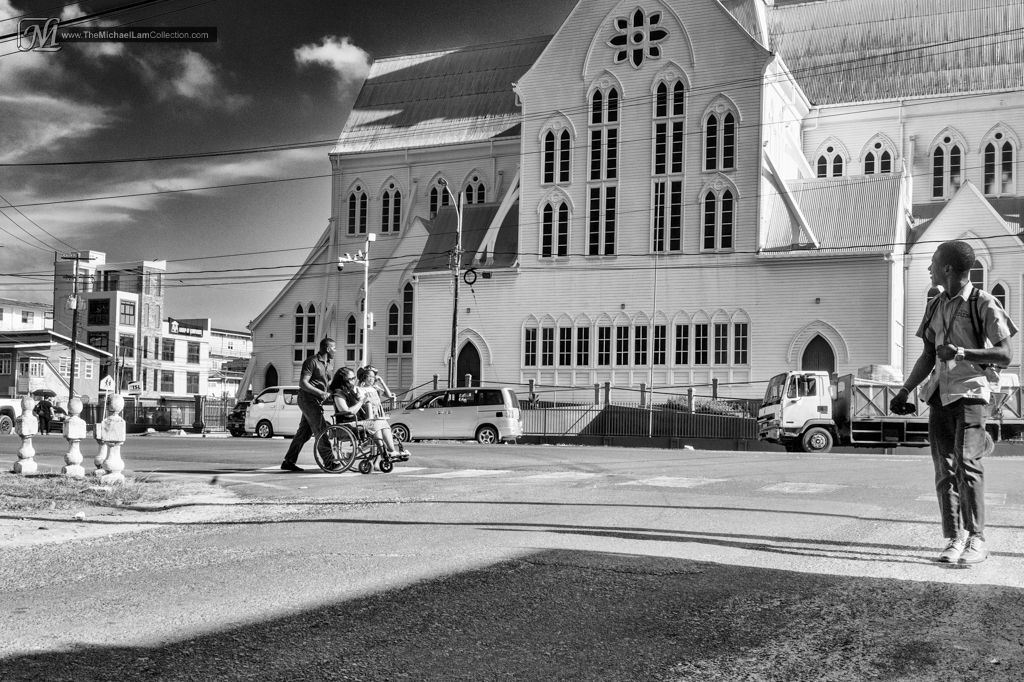
Traversing the Transept – 24-1321 | Church and Carmichael Streets, Cummingsburg, Georgetown, Guyana.

If you’re a Street Photographer, or even have some inclination in that direction, are are a fan of the genre, have a Happy Street Photography Day, and enjoy taking those Street Photos.

I think I shall go home after work and browse through that Vivian Maier book that I’ve neglected for a little while.

There were (and sometimes even “are”) times in my photographic journey when I’ve wondered whether I was a Good Photographer, at this point, my friend Nikhil would thump me upside the head just for thinking it, since there are people who like my photography, and many have remarked about my absence from the local scene recently. I acknowledge, based on the opening premise of this post, that I am a Good Photographer. Cheers to all you Good Photographers out there!
Balance

In a post-pandemic world, just surviving feels like a balancing act that is doomed to failure, with cost of many goods more than double what they were in 2019, but salaries and income maybe a percentage point or two more than back then. But, that has little to do with photography, unless you do photography for a living, which, thankfully, I don’t.

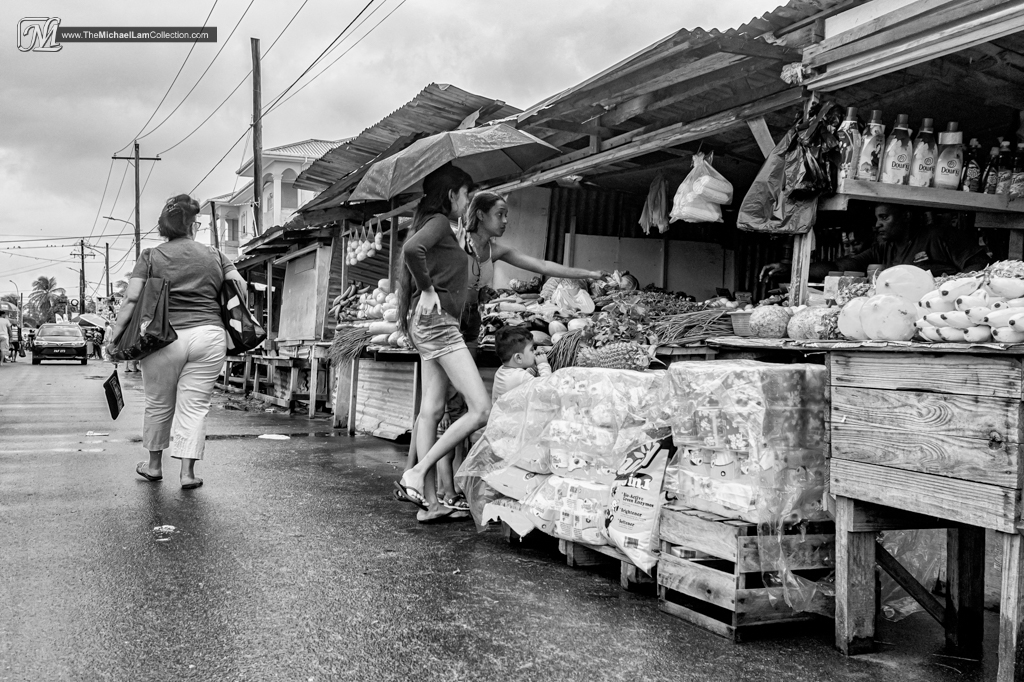
Supermarkets are nice to shop in, if you can afford the added cost that usually accompanies many of the goods there, especially fresh produce, so many still visit the various public Market places, and if you’ve followed my Street Photography, you probably know I frequent Mon Repos market, and it usually makes for some good Street Photography. Fresh produce abounds along with many other stalls, and the variety in people and activity makes for a good walk with a camera almost any Saturday.

Market – 24-1170 | Mon Repos Market, East Coast Demerara

There are times when I come upon a scene, and while I can draw my own conclusions about what’s going on, its much more fun to elicit the views of others from the same image. While much of my Street Photography tends to be in black and white, some scenes demand to be left in colour, and I think this was one of them, this next photo was taken on a walk down Quamina Street (formerly Murray Street) in the Cummingsburg ward of Georgetown.

Quamina – 24-1177 | Quamina Street, Cummingsburg, Georgetown, Guyana

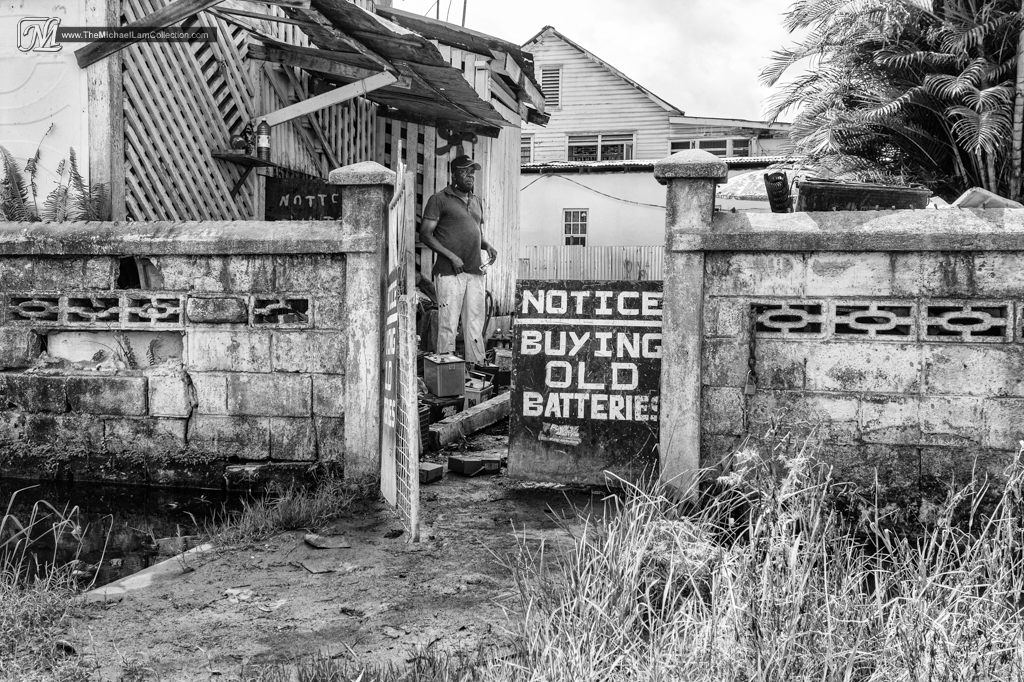
On the corner of Quamina Street and Waterloo Street, there’s an old house, right downstairs at that house is “Battery Man”, who purchases old, used batteries for their “lead” content. I got quite a suspicious look out of him when I walked by casing the place for a good photo. After taking the photo, I smiled and said “Good Day” and went on my merry way.

Battery Man – 24-1178 | Waterloo Street, Cummingsburg, Georgetown, Guyana.

I think its just this type of variety of subjects that draws me to Street Photography when I’m not indulging in Landscape / Seascape photography. There’s life in the images, as well as stories that seem obvious, but also stories that others can infer for us.

As usual, click on the images to see them in the Gallery along with other images in the collection.

Never Meet Your Heroes

They say that you should never meet your heroes, because they’re sure to disappoint you. I’ve had this experience a few times, because, the person you see or hear on screen or radio, upon that pedestal that their fans have put them upon, or that you imagine them to be, is rarely who they are.

But telling people to never meet their Heroes, that could be bad advice, because instead of deifying the individual, by putting them upon that pedestal, we humanise them by meeting them, seeing the side of them that is often not visible to us. Yes, this can result in seeing them as different, and yes, you can be disappointed, but viewed from a wider point of view, it can illuminate aspects of their artistry that were not as obvious before.

There are many artistes I admire, few I’d call Heroes, and most of those have long passed from this world, so meeting them in this lifetime is not a possibility. Yes, many are photographers, kinda goes with the territory.

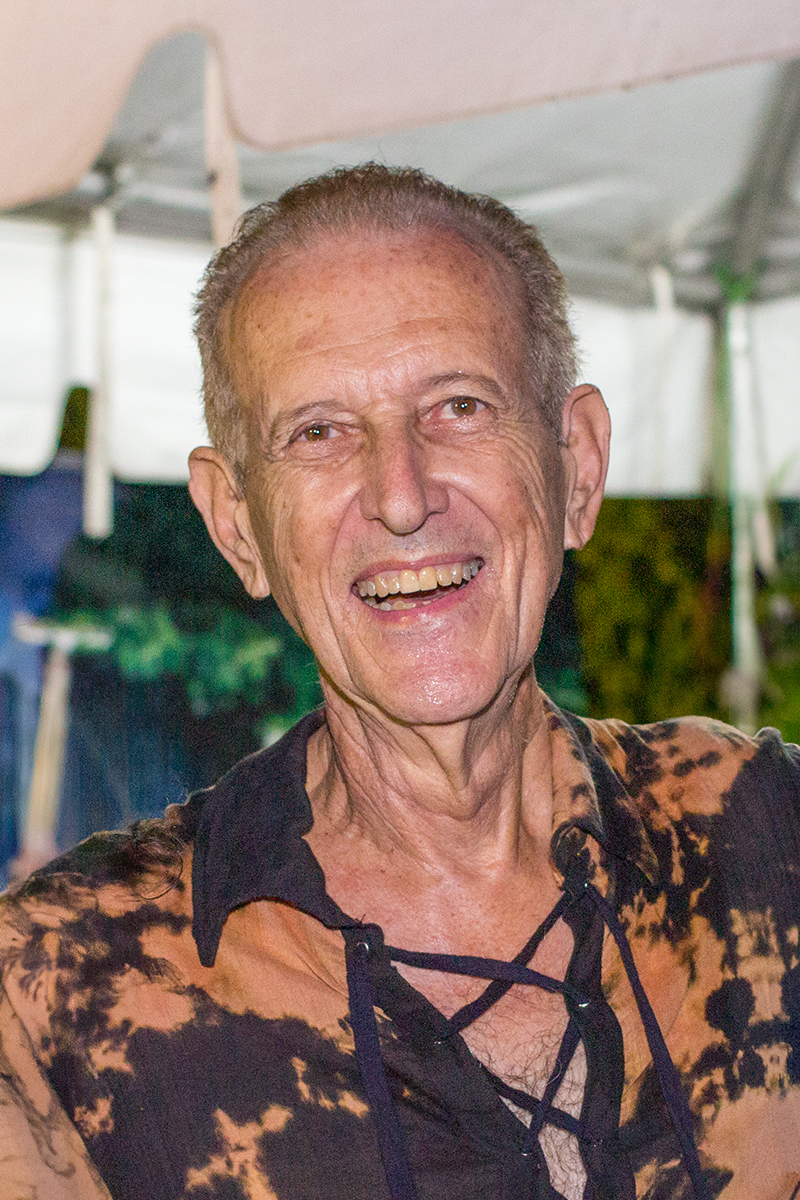
There are Heroes of mine whom I have met and never regretted it, and one of them died last night (August 18, 2024), causing my entire household to shed tears. He returned to our shores with his band to perform at Thirst Park to raise funds for his Alma Mater (and mine), Saint Stanislaus College, I refer to Dave Martins. I met him for the first time after his first set on stage, he was down in the grounds getting a drink of water, and I gathered up the courage to say Hello. The evening was unforgettable, even to him singing through the pouring rain to a crowd that would not leave the dance floor (including then Prime Minister Samuel Hinds).

Upon his repatriation to Guyana some years later I again made his acquaintance, just in passing and saying Hello several times. Then in 2012 when I was fortunate to exhibit alongside my friend Nikhil Ramkarran at the National Art Gallery (Castellani House), I was surprised and thrilled to read Dave’s review of the exhibition in his column “So it go” (Stabroek News, March 4, 2012). His kind words then and his support to us in the subsequent years has only made me think higher of him than I ever had. I grew up listening to his music, my father had many of his LPs, and my fascination never waned. Over the years I’ve attended many of his performances here, and my children were also fortunate to see and hear him in person as well as to meet him.

On stage, he was never just a singer, he was a performer, stopping the music many times to tell stories and anecdotes, keeping the crowd entertained and educated. In person he was Dave (never David), he always had a kind word for you, always a smile, always encouraging, he didn’t only write “Not a Blade of Grass”, through his column “So it go” he wrote to us about how we should live, how we should remember ourselves as Guyanese, and how we should treat each other.

You will be missed Dave. And you were a Hero to me, I am glad to have met you, to have been considered as someone you could call “padna”

Dave Martins: 1934 – 2024
( Photograph © Michael C. Lam )

The Ubiquitous Boat

I haven’t done any extensive research, but from personal knowledge and experience most photography in Guyana was once of a commercial nature or personal nature, and not very much as an Art. The Guyana Photographers Facebook Group was started in 2010, with an aim to gather photographers of all walks together and to share knowledge and information, get to know other photographers, whether of a professional nature, amateur or just a casual type.

In 2012, Photography was included in the Guyana Visual Arts Competition for the first time, and this recognition of photography as an Art spurred on a new generation of Photographers in Guyana. From this initial competition and exhibition and into subsequent ones of its nature and smaller exhibitions, it was notable that there were always submissions that included Boats in the composition.

If you live along Guyana’s coast, then its understandable, boats are almost like Kiskadees, they’re everywhere (along the coast). I recall discussing the propensity of photographers to include boats in their compositions with one of the judges of the GVACE, and it was mentioned that the sheer number of boat photographs overwhelmed the judges, but it also made it easier for them to narrow the field of shortlisters.

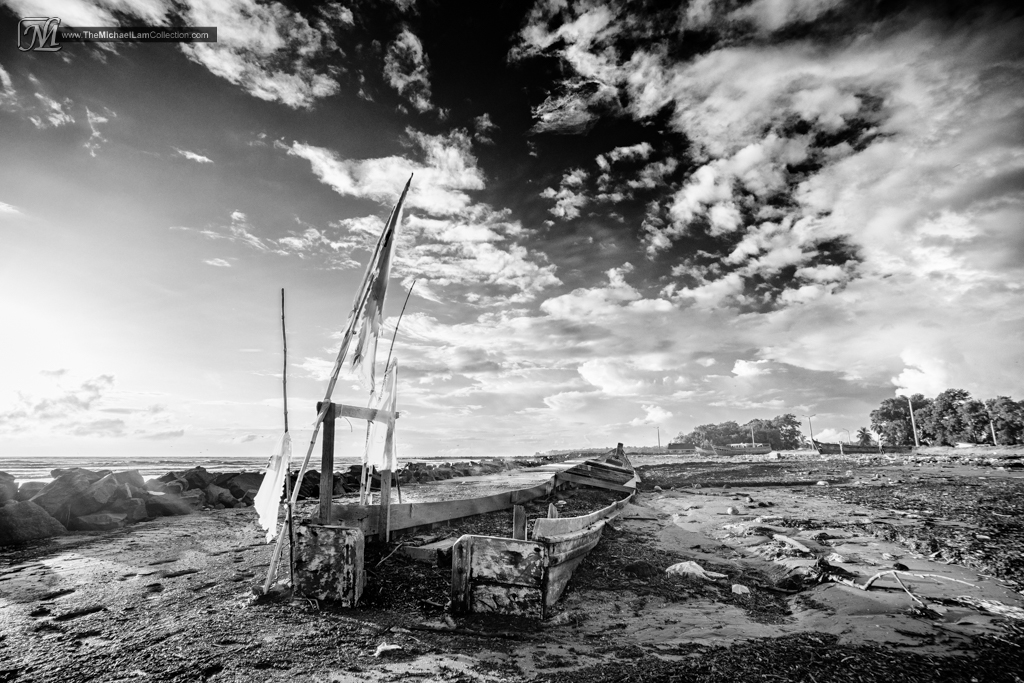
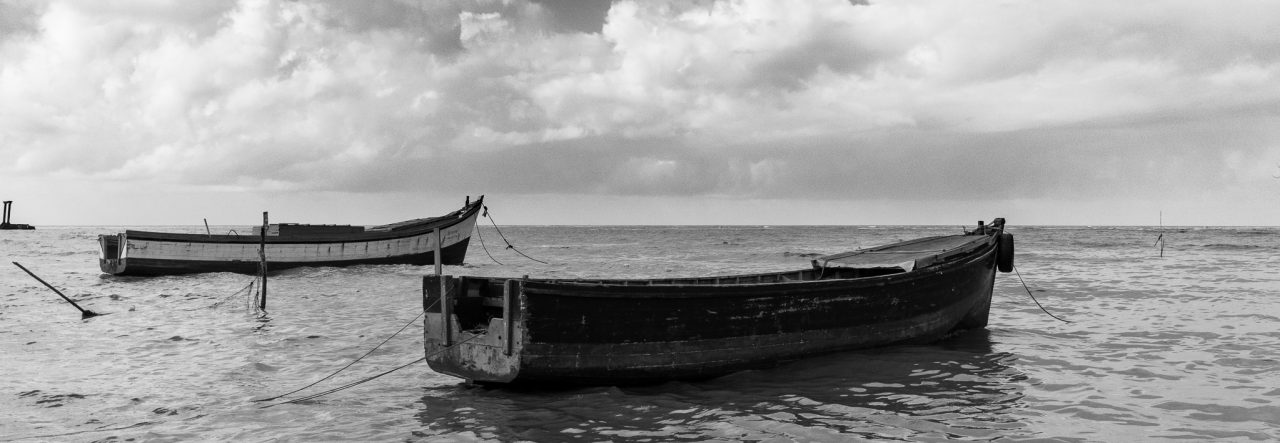
Unity, Mahaica, East Coast Demerara, Guyana

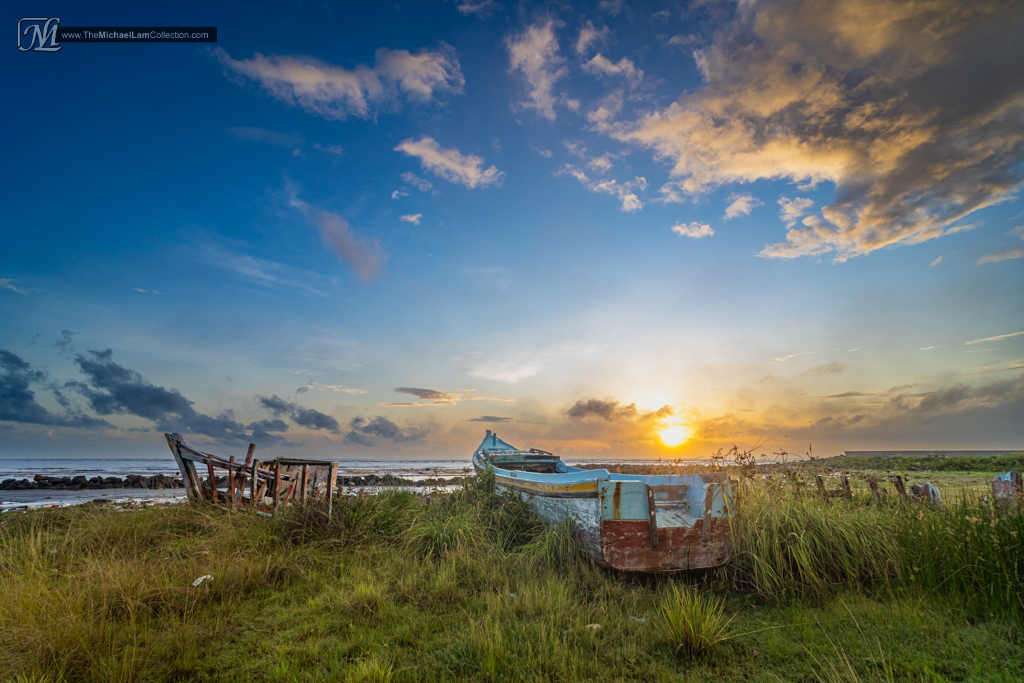
I think that the form, structure and texture that boats offer photographers is understandable, and on a relatively empty beach, the inclusion of a boat as a secondary subject can add to a composition. I am fairly well known for my black and white renditions, so today I’ve share one recent capture in Black and White, but I’ll also share a capture from the same time in Colour.

I have found that because I have not been shooting as frequently in recent years (you can read that as “since the Pandemic” ), I sometimes walk around with the camera in hand and almost have to force myself to take photos, I am not sure if its because I am not seeing the shots I want or if its something else. Also (for more than a year now) since my camera bag was stolen, I have been using a new mirrorless camera and a manual wide-angle lens for images like these, and the feel is not as with the old combination, I think I just miss my old gear.

Sunrise at Unity, Mahaica, East Coast Demerara, Guyana.

I think the next time I go out to a beach such as this I need to walk with a Tripod and do some experimenting.

Whatever the reason, I can see photographers now and in the future continuing to include boats in their composition of photos along our coasts and river banks. Making such images stand out next to others of its ilk by other gifted photographers will be the challenge for us.

As always, click on the images to see then in the Gallery, along with other Photographs.